
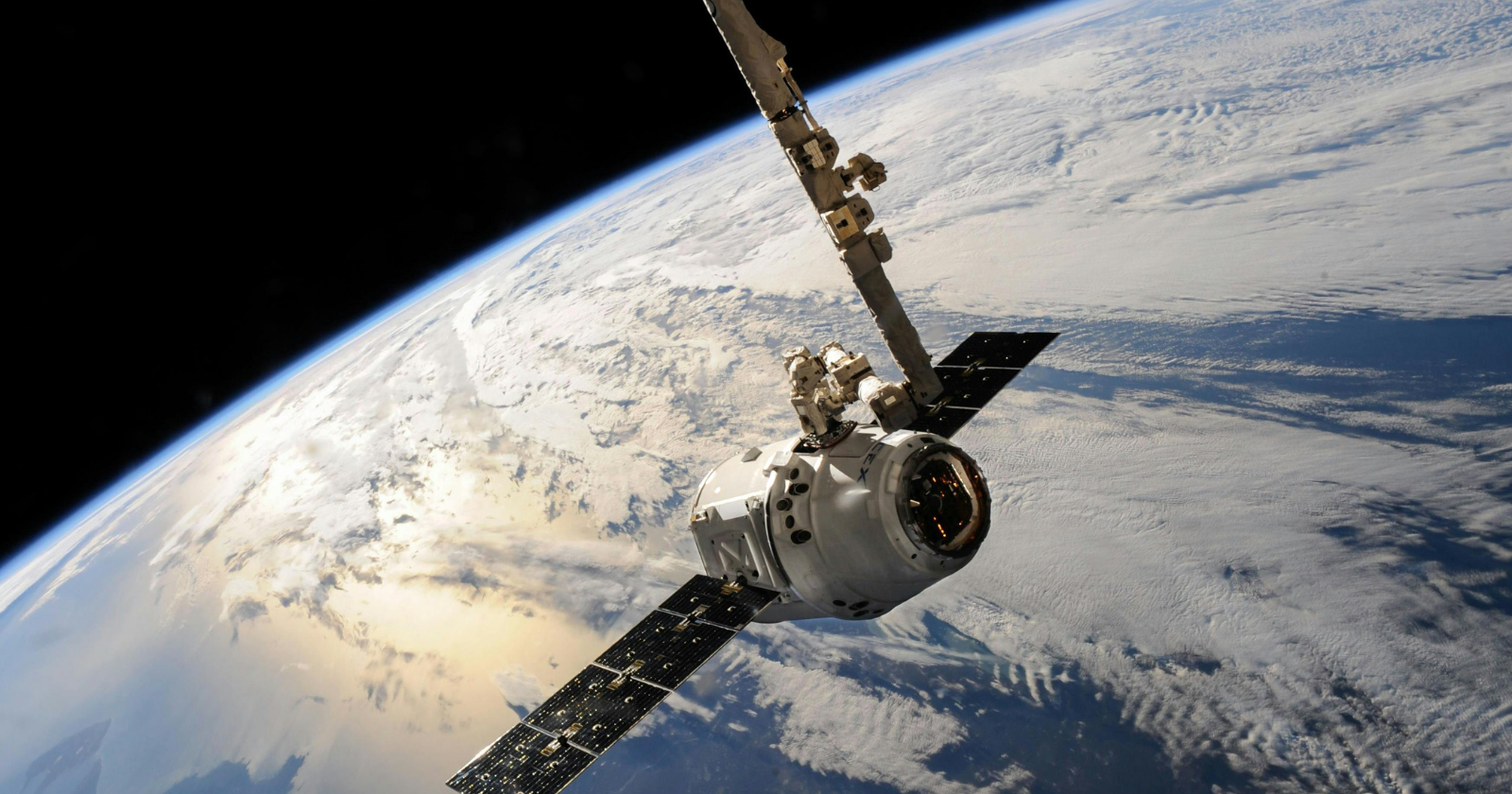
When most people picture SpaceX, they picture a rocket.
The booster landing itself on a barge. The Starship test flight. The Elon Musk press conference about Mars. Decades of news coverage have made the rockets the headline, and the headline is genuinely amazing — SpaceX now handles more than 80% of global rocket launches and over 90% of Western payload going into space.
So when the company filed confidentially for a $1.75 trillion IPO in April 2026 — the largest public offering in human history, set to surpass Saudi Aramco’s $1.7 trillion 2019 listing — the natural assumption was that investors were buying the rocket business.
They weren’t. Not really. Or at least, not mainly.
The trillion dollars sitting underneath that valuation isn’t being built by rockets. It’s being built by a satellite internet service that didn’t exist a decade ago, and that has, almost without anyone outside the industry noticing, quietly become one of the most successful tech products ever launched.
The number that explains everything
Starlink launched in public beta in 2021 with about 10,000 users.
By 2022, it had a million. By 2023, 2.3 million. By 2024, 4.6 million. As of February 2026, the service had surpassed 10 million active customers across 160 countries, territories, and markets — more subscribers than the entire population of Sweden.
That growth curve is not normal. That’s one of the steepest customer adoption curves of any tech product in history. Faster than Netflix’s early years. Faster than most streaming services. Faster than any telecom network ever rolled out.
And the revenue followed. Starlink generated about $7.7 billion in revenue in 2024. In 2025, that number jumped to $11.4 billion — making Starlink alone responsible for the majority of SpaceX’s total revenue, and more than doubling its profit to $4.4 billion in the process.
Read those numbers again. A service that didn’t exist five years ago is now generating eleven billion dollars a year and turning a four-billion-dollar profit. That isn’t a rocket-company side project anymore. That’s one of the most profitable infrastructure businesses on the planet.
Why the rockets are the wrong story
The rockets get the attention because rockets are visible. They take off. They land. They go viral.
The reason the rockets matter to the valuation isn’t that they’re a great business on their own — they’re not, particularly. The launch business is still close to breakeven by most analyst estimates, even with SpaceX dominating the market.
The rockets matter because they’re the thing that makes Starlink possible.
SpaceX has reduced the cost of getting a kilogram of payload to orbit from roughly $15,600 in 2008 to under $1,000 today, using reusable Falcon 9 boosters. That cost collapse is what lets the company keep launching new Starlink satellites at a price no competitor can match. SpaceX has over 10,000 Starlink satellites in orbit, and adds more every week.
Amazon’s competing Project Kuiper has 3,200 satellites. Eutelsat’s OneWeb has 648. China’s Guowang constellation is targeting 13,000 but currently has around 200. Starlink isn’t just ahead — it’s running a different race, and the gap is widening every month.
So the rockets aren’t the product. The rockets are the moat. They’re what makes the actual product — global satellite internet — economically unbeatable.
What investors are really paying for
At $1.75 trillion, SpaceX would be valued at roughly 95 times its trailing revenue. That’s a number that should make any reasonable investor nervous. For comparison, Apple trades at around 9 times revenue. Microsoft at around 13.
What the valuation is actually pricing in is the assumption that Starlink — and the broader satellite connectivity market — has barely begun.
Analysts at ARK Invest, which holds SpaceX as the largest position in its venture fund, estimate the total satellite connectivity market at roughly $160 billion annually at scale. Starlink currently has under 5% of global internet penetration. Maritime markets where Starlink charges around $34,000 per subscriber per year? It has 0.7% market share. Aviation, where it charges around $300,000 per subscriber per year? Also 0.7%.
In other words, the most successful tech product launch of the decade is still, by any reasonable measure, just getting started.
That’s what the trillion dollars is buying. Not the rockets. The seat at the head of a market that didn’t exist five years ago and that almost nobody else can credibly enter.
The thing that made all this possible
Here’s the part of the story that doesn’t get told enough.
Starlink could not have existed without the rocket-cost collapse SpaceX engineered between 2008 and 2020. To make a satellite internet network work, you need to launch thousands of satellites, replace them regularly as they fall back to earth, and do it cheaply enough that the subscription price stays reasonable.
Before SpaceX, that math was impossible. Iridium tried it in the 1990s and went bankrupt. Teledesic tried it. Globalstar tried it. They all failed, not because the technology didn’t work, but because launching the satellites cost more than the business could ever recover.
SpaceX spent fifteen years grinding down the cost of getting things to orbit. Most observers thought they were doing it to enable Mars missions, or to win government contracts. They were doing it for Mars and government contracts.
They were also, quietly, building the only company on earth that could profitably run a satellite internet network. By the time the rest of the industry noticed what was happening, Starlink had a five-year head start nobody could close.
That’s the part that makes the valuation, for all its eye-watering size, not entirely insane. The company didn’t just build a great product. It built a great product on top of an infrastructure advantage nobody else can match for the better part of this decade.
What the IPO actually represents
When SpaceX lists on the Nasdaq this June under the ticker SPCX, investors won’t really be buying a rocket company. They’ll be buying:
- A satellite internet network with 10 million paying subscribers and a 95% growth rate.
- The only launch infrastructure on earth that makes the network economically viable.
- A satellite constellation worth more than any of its competitors combined.
- A company that controls the floor of an entire industry, and prices the floor.
The rockets are the show. Starlink is the business.
Saudi Aramco’s $1.7 trillion record was built on a century of oil infrastructure. SpaceX is on track to surpass it with a satellite network that took about five years to scale from ten thousand users to ten million.
That’s not a rocket story. That’s the largest IPO in history being driven, almost entirely, by a product most people still think of as a niche internet service for remote cabins.
The rest of the world is about to find out it was never niche. It was just early.
