
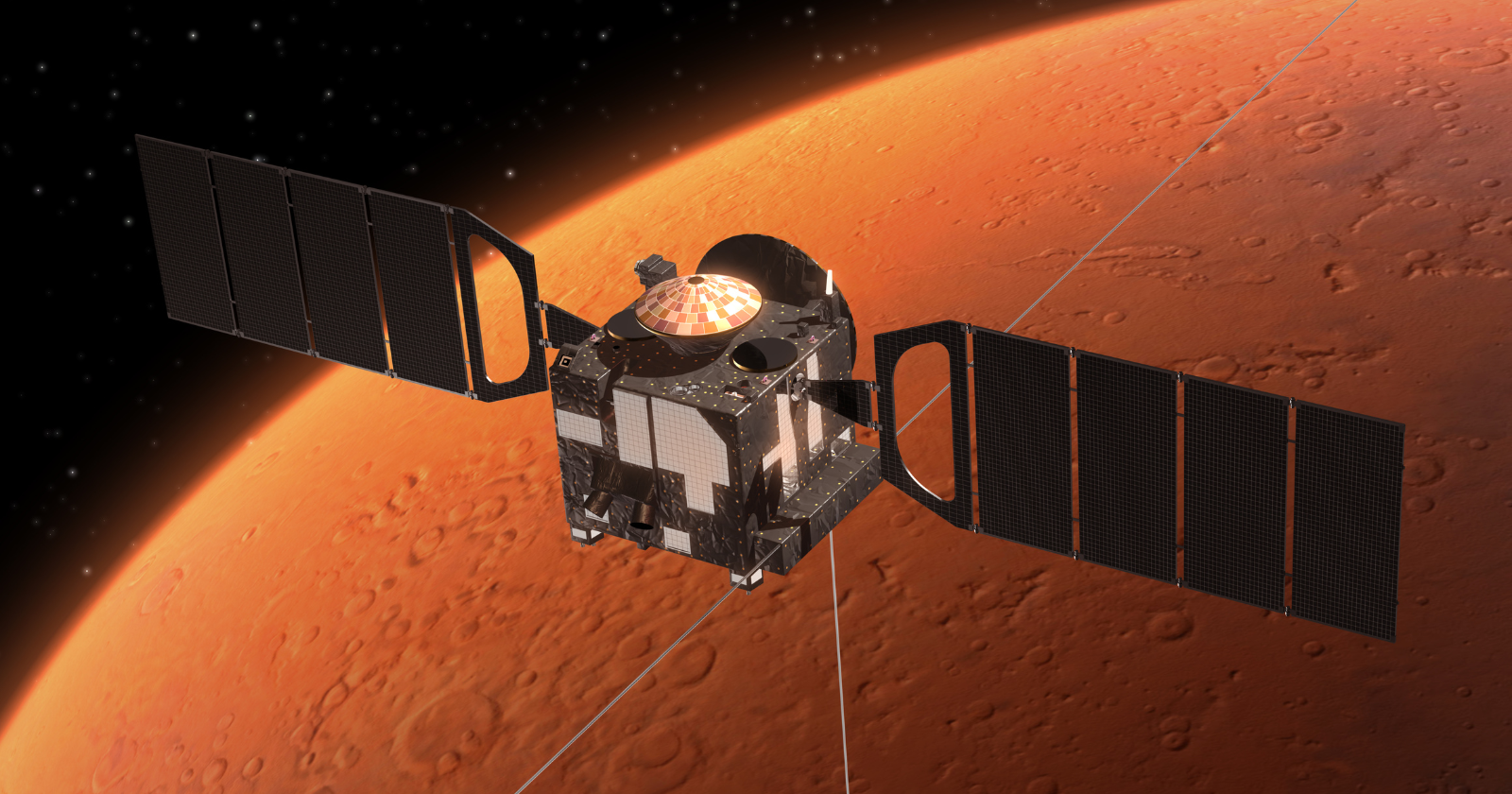
In November 2013, the Indian Space Research Organisation launched its Mars Orbiter Mission from Sriharikota on a Polar Satellite Launch Vehicle. The spacecraft, also known as Mangalyaan, entered Mars orbit on 24 September 2014 at the first attempt. The total approved project budget was approximately ₹454 crore, around $74 million USD at the time. The 2013 film Gravity reportedly cost about $100 million to produce, with some industry trackers listing the figure closer to $110 million.
That comparison has done a lot of work in the years since.
It is repeated in features, on television, in policy speeches, and as a kind of standing shorthand for what is possible when a space programme approaches its work differently. The framing that it tells us something about who owns the future of space exploration is one we have seen versions of many times. We want to take the comparison seriously, then examine what it does and does not actually tell us.
Inside the $74 million figure
In our reading of the ISRO budget breakdown, the headline figure is broader than the spacecraft itself. The satellite alone cost ₹153 crore, around $16 million at the time. The remainder, roughly two-thirds of the budget, went on ground stations and relay upgrades. That infrastructure has continued to serve other ISRO missions, including subsequent lunar work.
This does not undermine the comparison. It complicates it. The spacecraft-only number is even more striking than $74 million. The total project number folds in fixed infrastructure that any space programme needs whether it goes to Mars or not.
NASA’s MAVEN, the American Mars orbiter that arrived at Mars two days before Mangalyaan, was budgeted at roughly $671 million. The two craft are not the same kind of vehicle. MAVEN carried eight scientific instruments and was designed primarily to study the loss of the Martian atmosphere to space over time. Mangalyaan carried five smaller instruments and was, in ISRO’s own framing, a technology demonstrator. The point of the mission was to prove that India could get to Mars, manage interplanetary navigation, and bring back useful science along the way.
It did all three.
How ISRO gets the cost down
Several factors compound to produce the low headline number.
ISRO performs most operations in-house rather than contracting out to private manufacturers. It does not take out mission insurance. It develops most of its hardware domestically, a habit shaped after international sanctions following India’s 1974 nuclear test made imported aerospace components difficult to obtain. Engineering teams are relatively small and reportedly work long hours without overtime pay. ISRO drew on flight-proven spacecraft designs and hardware heritage from earlier Indian satellite and lunar missions, rather than building every subsystem from scratch. The PSLV rocket is comparatively small, which forced the mission to use a long, fuel-efficient transfer trajectory with a month of Earth-orbit raising before injection toward Mars.
Mylswamy Annadurai, who led India’s Moon and Mars missions, has put it plainly: budget constraints force the engineering teams to innovate. The cost is partly a function of constraint, partly of an organisational model that does not look like NASA’s.
The science return, in context
Mangalyaan reached Mars orbit, operated for nearly eight years against a designed life of six months, and returned data on the Martian surface, atmosphere, and exospheric particle environment. Its methane sensor did not detect methane in the way some had hoped, which is itself a useful result. The Mars Colour Camera produced widely circulated images of the planet’s surface and dust patterns.
What it did not do is carry the heavier instrument suites used for the deeper atmospheric and geological work done by MAVEN, ESA’s Mars Express, or the various NASA surface missions. The science return per dollar was high. The science return in absolute terms was modest.
This is the part the cost comparison tends to flatten.
The spacecraft entered an unrecoverable communications loss in April 2022, after a long eclipse period it was not designed to survive. ISRO reported the end of the mission publicly in October that year.
On who “owns” space
Reading the coverage over the past decade, our observation is that the cost framing has produced two unhelpful reflexes. One is a triumphalist reading in which Mangalyaan is taken to mean Western space agencies are obsolete. The other is a defensive reading in which the achievement is minimised because the spacecraft was small.
Both miss the actual development.
The number of organisations that have reached Mars orbit at all remains small: the Soviet programme, NASA, ESA, ISRO, the UAE, and China. The UAE’s Hope Probe entered Mars orbit on 9 February 2021, followed the next day by China’s Tianwen-1. The list of agencies that have succeeded on a first attempt is shorter still: ISRO with Mangalyaan and ESA with Mars Express, the latter using a Russian Soyuz/Fregat rocket.
The more useful question the comparison points at is not who owns the future. It is what kinds of missions different organisational models are best suited to fly, and what mix of those models is likely to produce useful science in the next decade.
What to watch next
ISRO has announced a follow-up, variously referred to as Mangalyaan-2 or the Mars Lander Mission, with a launch now targeted for 2030. ISRO Chairman V. Narayanan confirmed the timeline publicly in November 2025. The proposed profile is more ambitious than the first mission. It carries an orbiter and a lander, with reporting also describing a possible small rover. The orbiter is intended to use aerobraking, a technique ISRO has not previously demonstrated at Mars. The lander would be India’s first attempt at a soft landing on another planet.
How much the second mission costs, and what it actually returns, will say more about ISRO’s model than the first one did. The first proved getting there was possible. The next will test whether the cost structure holds when the engineering gets harder.
