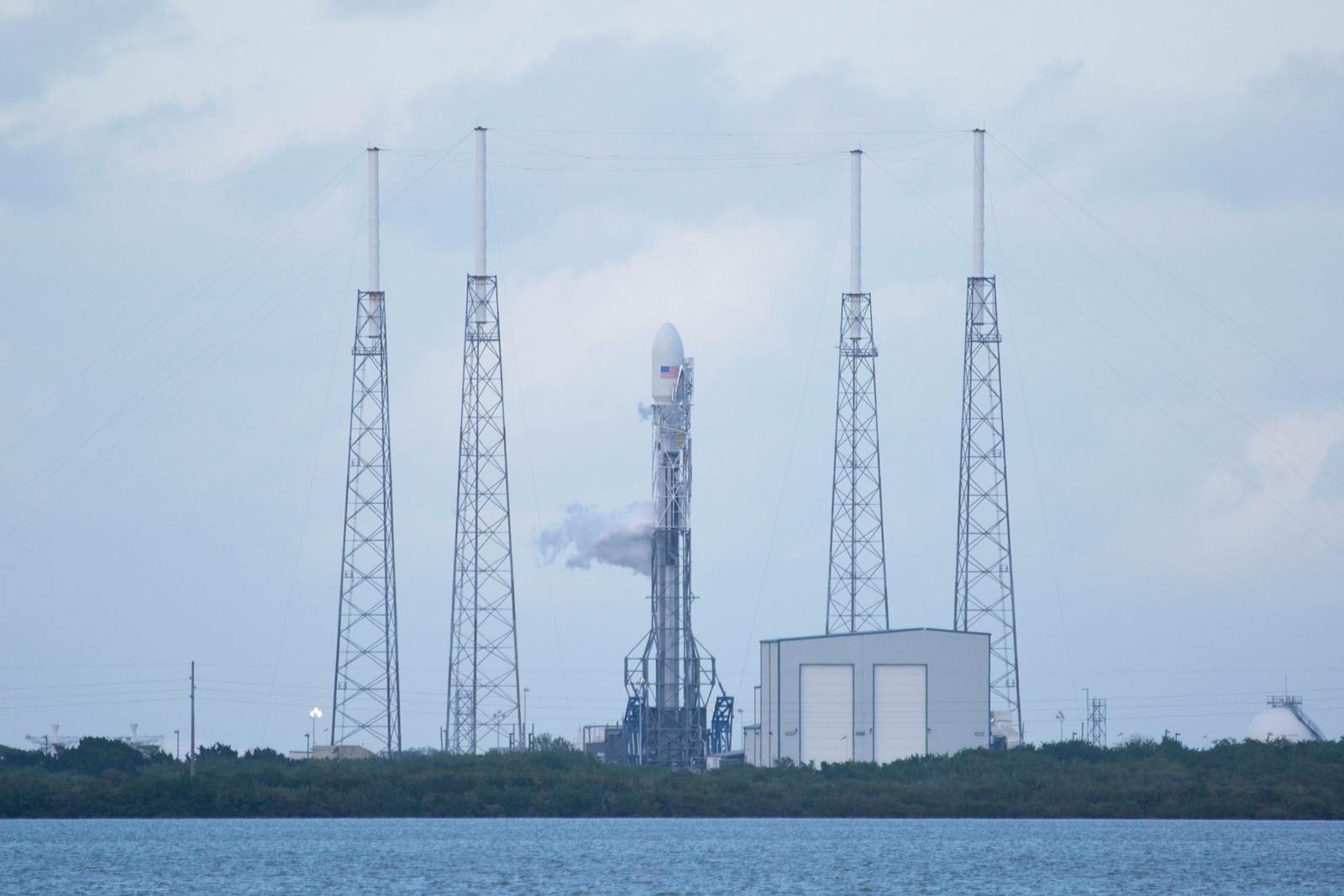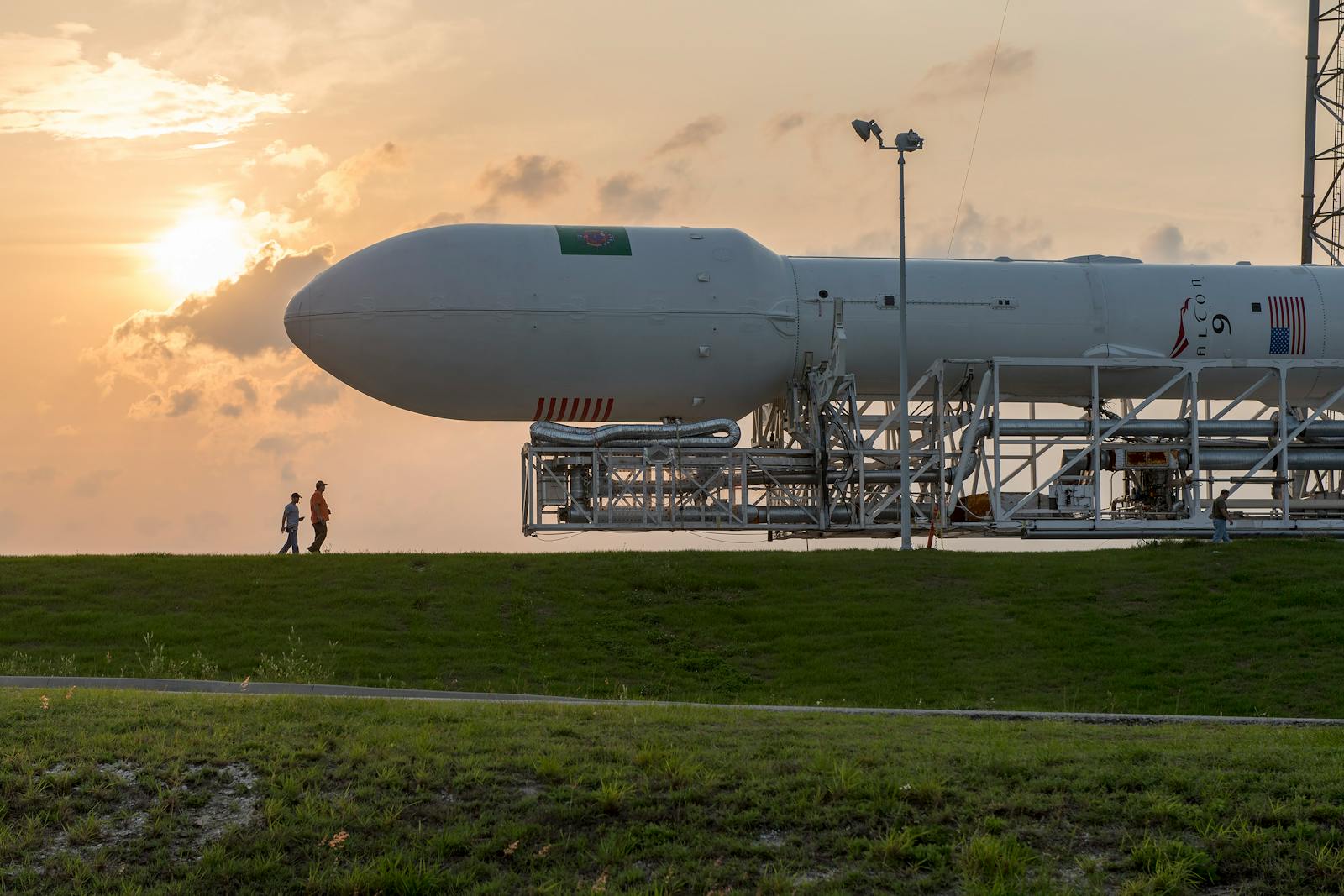
NASA confirmed on May 13 that the Space Launch System rocket for Artemis 3 will fly without a functioning upper stage. In place of the Interim Cryogenic Propulsion Stage that powered Artemis 1 toward the Moon, the rocket will carry an inert structural “spacer” of the same dimensions and interface connection points, currently being machined at Marshall Space Flight Center in Huntsville. It is a small piece of hardware with an outsized meaning. Artemis 3 is no longer the mission that puts Americans back on the lunar surface. That milestone has officially shifted to Artemis 4 in 2028.
The agency had already signalled the change in February, when it announced a restructured Artemis cadence that added a new mission in 2027 and committed to at least one lunar surface landing per year thereafter. The May 13 update fills in the hardware detail. Artemis 3 will fly to low Earth orbit, not the Moon, and will function as a rendezvous and docking exercise between the Orion spacecraft and pathfinder versions of the Blue Origin Blue Moon Mark 2 and SpaceX Starship lunar landers.
An inert stage for an orbital mission
The ICPS exists for one reason: to push Orion out of Earth orbit toward the Moon. If Artemis 3 does not leave low Earth orbit, the stage is redundant. The inert spacer preserves the rocket’s structural geometry and interfaces between the Orion stage adapter and the launch vehicle stage adapter, without the cryogenic propulsion hardware. After SLS delivers Orion to orbit, the spacecraft’s European-built service module will provide the burn to circularize its orbit. According to a NASA request for information published May 7, Artemis 3 will operate in a roughly 463-kilometre orbit at an inclination of 33 degrees.
The choice is also a programmatic one. ULA built three ICPS stages under its partnership with Boeing, one each for the first three Artemis missions. With Artemis 3 no longer needing one, the third and final ICPS is freed up for Artemis 4, the first crewed landing attempt now scheduled for 2028. From Artemis 5 onward, NASA plans to use a Centaur-derived upper stage, following the cancellation of the larger Exploration Upper Stage. EUS, originally intended for the Block 1B configuration, was terminated after the 2025 Trump administration proposed ending SLS and Orion after Artemis 3. Congress later funded Artemis 4 and 5 in the One Big Beautiful Bill Act of July 2025 but directed NASA to study commercial alternatives to EUS.
Three launches, one orbital meet-up
The restructured Artemis 3 will require three separate launches into compatible orbits within a workable window. SLS will carry Orion and a crew of four. Blue Origin will launch its Blue Moon Mark 2 pathfinder. SpaceX will launch a Starship lander pathfinder. NASA has indicated that astronauts could potentially enter at least one of the lander test articles during the mission, though many operational details remain undecided. Crew has not yet been named.
“While this is a mission to Earth orbit, it is an important stepping stone to successfully landing on the Moon with Artemis 4. Artemis 3 is one of the most highly complex missions NASA has undertaken,” said Jeremy Parsons, the Moon to Mars acting assistant deputy administrator at NASA’s Exploration Systems Development Mission Directorate. “For the first time, NASA will coordinate a launch campaign involving multiple spacecraft integrating new capabilities into Artemis operations.”
What the mission no longer does
The original Artemis 3 was meant to put two astronauts on the lunar south pole using a SpaceX Starship Human Landing System. That goal has moved to Artemis 4. The reframed Artemis 3 is a coordination test, a proof that NASA, Blue Origin and SpaceX can fly the choreography required for a real landing.
The change matters because it acknowledges, rather than masks, the schedule reality. Starship has not yet demonstrated the orbital refuelling cadence required to support a lunar landing. Blue Moon Mark 2 has not flown. Treating Artemis 3 as a rehearsal converts a mission that was at risk of indefinite delay into one that can fly with the hardware actually available.
A program restructured in public
The architecture changes have not arrived through a single restructuring decision but through a sequence of public announcements: the February cadence reset under NASA Administrator Jared Isaacman, the May 13 hardware update under Jeremy Parsons, and the workforce directive aimed at rebuilding in-house engineering capability that Lori Glaze, then acting associate administrator for Exploration Systems Development, framed in February as a key enabler of the new pace.
Taken together, those signals describe a program being rebuilt around what its contractors can actually deliver, rather than what its original timeline demanded.
The timeline question
Artemis 3 is now targeted for 2027. Artemis 4, the first crewed surface landing, is planned for 2028. From 2028 onward, NASA has committed to at least one surface landing per year. The gap between Artemis 2, currently being prepared for an April launch window after a rollback to the Vehicle Assembly Building in late February to address a helium issue on its ICPS, and Artemis 3 gives NASA time to absorb operational lessons and finalize procedures for the triple-launch rendezvous.
Even so, three independent launches by three different organizations, converging on the same orbit, is an operational challenge the U.S. human spaceflight program has not attempted before. The closest analog, Apollo’s lunar orbit rendezvous, involved a single launch vehicle and a single integrated stack.
What it reveals
The Artemis 3 redesign offers a concrete window into how NASA now manages risk and reputation. The old approach was visible in Constellation and in the early years of SLS itself: hold the mission’s name and stated goal constant while letting the schedule slip year after year. The new approach inverts that. Hold the schedule, change what the mission actually does.
That is a meaningful institutional shift, and it is visible in specifics. Flying an inert spacer rather than a working ICPS is a public admission that a flagship vehicle is being launched in a configuration it was not designed for. Splitting the landing across to Artemis 4 detaches the public-facing milestone, boots on the Moon, from the engineering milestone of proving the architecture works. Building the mission around lander hardware that has not yet flown, instead of waiting for it to mature, treats Artemis 3 as a system test rather than a crowning achievement.
Whether the trade pays off depends on execution. A successful triple-launch rendezvous would demonstrate exactly the kind of multi-vendor orchestration that any sustained lunar presence requires. A failed or delayed rendezvous would compound the program’s credibility problems and push the first crewed landing further out still.
For now, the inert spacer being machined at Marshall may end up being the most honest piece of hardware in the program. It is a placeholder that admits what it is, a structural stand-in for ambitions that have been deferred, on a rocket flying a mission it was not designed to fly.