
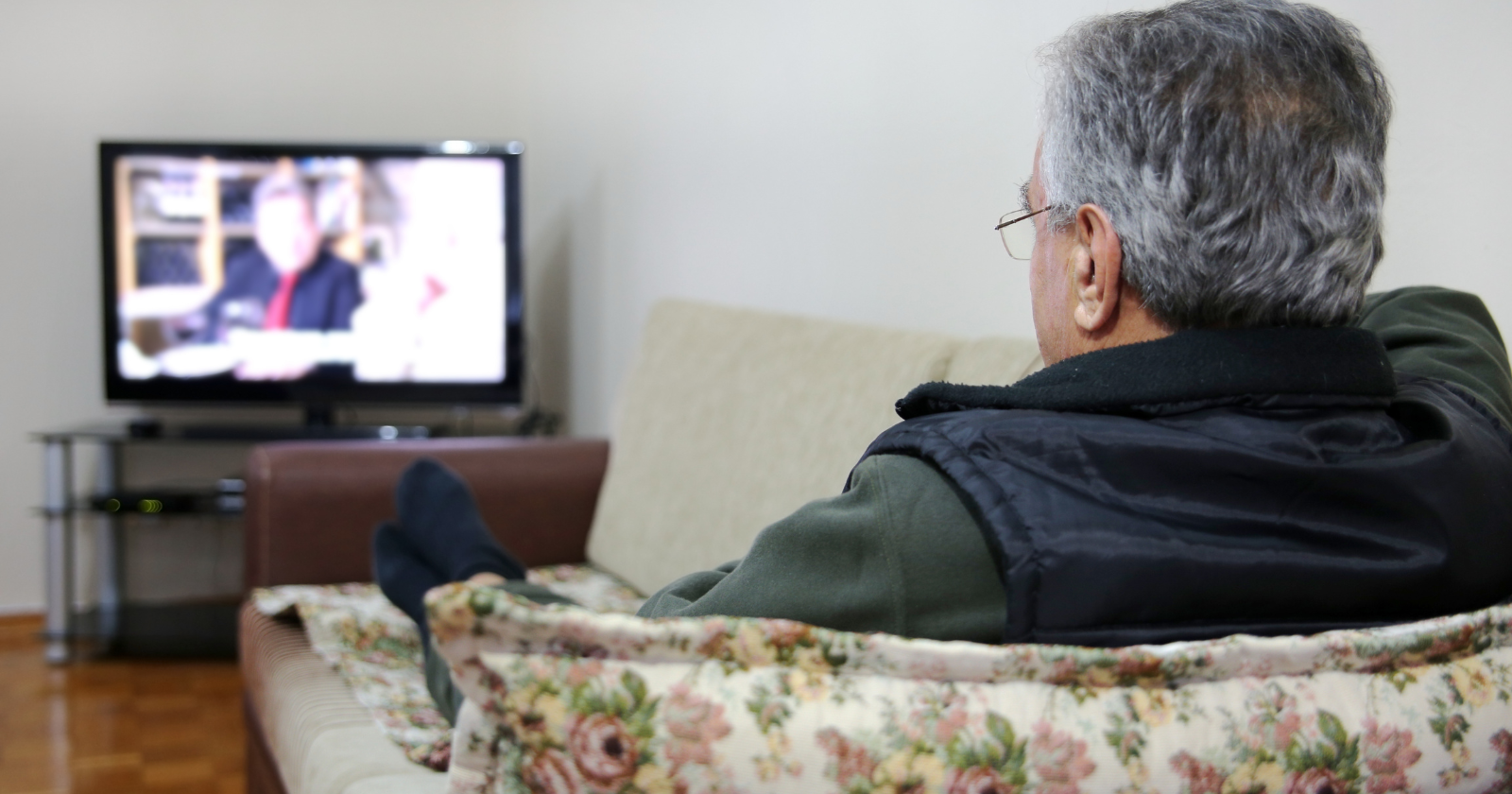
The cultural framing of older people who watch many hours of television each day tends to read the behavior as a sign of decline. The framing treats the heavy television viewing as either a sign of loneliness, a contributor to it, or a passive habit that the older person should be encouraged to replace with something more active. The framing carries a small note of concern, and a quieter note of judgment about how the older person is currently spending their time.
The framing misses, on close examination, what the older person may actually be doing. The older person who watches several hours of television a day is not necessarily failing at late life. They may be making a practical adaptation to the conditions of their lives. They are filling the unstructured middle of the day with company, because the company that used to arrive through work, neighbors, and a busier household may no longer show up in the same way. Television can become the substitute that is most reliably available.
What the structural conditions actually are
It is worth being precise about the structural conditions of late life, because the cultural framing tends to evaluate the older person’s behavior without taking into account the conditions in which the behavior is occurring.
An older person in their seventies, in most cases, is operating in a daily environment that has, across the previous decade, been progressively emptied of the various sources of ambient company that constituted the texture of their earlier adult life. The workplace, which provided eight hours a day of low-grade ongoing social contact for forty or fifty years, is gone. The neighborhood, which used to involve daily small interactions with people who recognized them on sight, has, in most cases, been thinned by various combinations of urban change, the deaths of long-standing neighbors, and the general retreat of community life over the previous several decades. The household, which used to contain a spouse, children, and the rotating presence of various extended family members, has, in most cases, contracted to either one person alone or two people who have, by long marriage, settled into a configuration that does not produce much active conversation.
The cumulative effect is that the older person, on any given Tuesday, is sitting in a quiet house with no clear social input scheduled for the day. The quiet is not the quiet of chosen solitude. The quiet is, more accurately, the structural quiet that has been produced by the progressive removal of the various ambient sources of company that used to fill the day without anyone having to actively arrange them. The arranging, in earlier decades, was not required. The company arrived by default. By the seventies, the default has, in most cases, gone offline.
This is the configuration in which the television operates. The television is not, on close examination, being chosen over more substantive alternatives. The television is being chosen over the alternative of sitting in a quiet house for six or eight hours with no human voice in the room at all. The choice is not, in most cases, a difficult one. The choice is, more accurately, what any reasonably calibrated person would make in the same conditions.
What the television actually provides
It is worth thinking about what the television, specifically, is providing the older person, because the cultural framing tends to assume it is providing entertainment, and the assumption misses what the older person is, in fact, getting.
The television is providing, in most cases, the simulation of company. The voices of the presenters, the panel-show hosts, the news anchors, the actors in the soap operas the older person has been watching for forty years, are functioning, in the older person’s daily life, as a kind of pseudo-social presence. Research on television viewing in late life has documented this directly: studies in the Netherlands and Belgium have found that widowed older adults are more likely to watch television than married older adults, and that they explicitly report using television for companionship and to structure their day. The functional purpose of the television is not, in many of these cases, entertainment. The functional purpose is the provision of human voices in the room.
This is, on close examination, exactly the function that the workplace, the neighborhood, and the household used to provide. The voices in those venues were the voices of actual people the older person knew. The voices on the television are the voices of strangers. The difference matters less than the cultural framing assumes. The pseudo-social presence of the television voices is, on the available evidence, partially restorative of the experience that the actual voices used to produce. The restoration is partial. The restoration is also, in some real way, considerable. The older person, with the television on, is not in the same configuration as the older person sitting in absolute silence. The configuration with the television is structurally less lonely. The structural difference is real.
The other thing the television provides is structure. The day, for an older person without external commitments, has a tendency to lose shape. The morning becomes the early afternoon becomes the late afternoon becomes the evening, without any of the usual markers that the working life used to provide. The television, with its scheduled programs, restores some of the lost markers. The morning shows happen in the morning. The afternoon programs happen in the afternoon. The evening news arrives at the evening. The structure is artificial. The structure is also, on examination, more than the older person has access to from any other source. The compensation model of social engagement documents this systematically: older adults seek different activities to substitute for the functions of absent social partners, including companionship and the imposition of temporal structure on otherwise unstructured days. The television, on this reading, is not a failure of late-life adaptation. The television is, more accurately, an adaptation that is doing what it can with what is available.
Why the alternatives are harder than they sound
The standard cultural advice, when the heavy television viewing of older people comes up, is that the older person should be doing something else. Joining a club. Taking up a hobby. Volunteering. Calling friends. The advice is well-intentioned. The advice is also, on close examination, calibrated to a vision of late life that does not, in many cases, match the conditions the older person is actually operating in.
The clubs and hobbies and volunteer activities require, in most cases, mobility that the older person may or may not have, social energy that the older person may or may not have, and an existing network of contacts that, by the seventies, has often thinned to the point where the older person does not, in fact, have a clear entry point into the relevant communities. The friends the older person could, in principle, call are, in many cases, either dead or in similarly diminished configurations of their own and not particularly available for the kind of ongoing daily contact that would, in fact, replace what the television is currently providing.
The alternative to the television, for many older people, is not a richer social life. The alternative, on the available evidence, is a quieter house. The quieter house is the actual comparison the older person is making when they reach for the remote in the morning. The comparison is not between television and book club. The comparison is between television and the small ongoing isolation that has been the default condition of their daily life for the previous decade. The television, in this comparison, wins reliably. The winning is not a failure of imagination. The winning is, more accurately, the older person’s accurate assessment of what is actually on offer.
What the cultural register has been getting wrong
The cultural register, in classifying the heavy television viewing of older people as a problem, has been making a particular kind of category error. It has been treating the television as the cause of the older person’s diminished social life, when the television is, more accurately, a response to the diminished social life. The diminished social life is the cause. The television is the partial mitigation.
This means that the standard interventions, which tend to focus on reducing the television viewing in the hope of producing a healthier configuration, are, on close examination, attacking the mitigation rather than the cause. If the television viewing is reduced and no replacement source of ambient company is provided, the older person is, by structural necessity, left with a quieter house and less mitigation of the underlying condition. The intervention has made the situation worse, not better, by removing the partial substitute without providing anything to replace what the substitute was providing.
What would actually help, on the available evidence, is the provision of the company the television may be substituting for. This is, however, structurally difficult, because the company in question used to arrive by default, through structural conditions that no longer exist. Replacing the default with deliberate construction requires the kind of ongoing effort that the older person may not be in a position to perform alone. The deliberate construction requires the wider community, the family, the neighborhood, and the various institutions that used to support older people to actually provide the company that used to arrive structurally. In the absence of this provision, television can remain the substitute that is most reliably available.
The honest acknowledgment this article wants to leave
The older person in their seventies watching several hours of television a day is not, in any reasonable accounting, failing at late life. They are, more accurately, doing one of the most structurally accurate things available to them given the conditions of late life as currently constructed. They have a quiet house. They have a long unstructured day. They have a generation’s worth of accumulated ambient company that has, across the previous decade, progressively gone offline. The television is the substitute. The substitute is partial. The substitute is also, on the available evidence, doing real work in the absence of the original.
For the families of older people who are watching what looks, from the outside, like too much television, the most useful framing is not to encourage less television but to provide more of the actual company the television is substituting for. The visit. The phone call. The afternoon spent in the older person’s living room, with the television on, simply being present in the room. The presence is what was missing. The television was filling, as best it could, the structural shape of what was missing. The actual company, when provided, does not eliminate the need for the television. It does, however, partially reduce the amount of structural work the television is currently being asked to do alone.
The television is not necessarily the problem. The conditions that produced the need for the television may be the real issue. The older person, watching the afternoon program, is not automatically failing at late life. They may be making one of the few small adaptations the wider environment has currently made available to them. That adaptation deserves more recognition than the cultural register has so far been willing to give it.
