
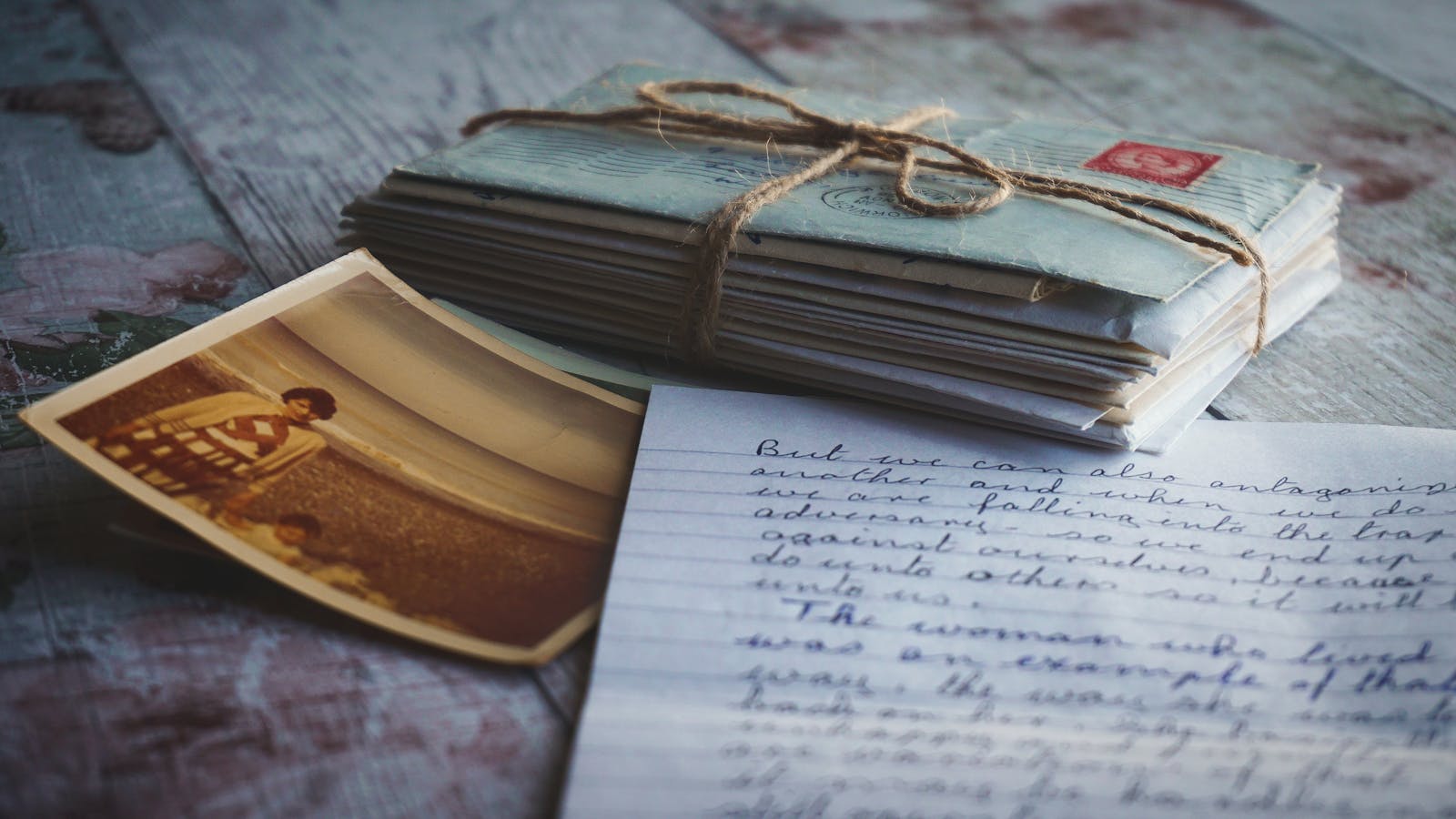
The shoebox under the bed, the drawer that won’t fully close, the binder of postcards from a trip a friend took to Lisbon in 2003 — these aren’t the artifacts of a person who can’t let go of clutter. They are often the carefully maintained evidence files of someone who needed proof that affection had once arrived unprompted. For people who grew up having to earn warmth, a handwritten note is not paper. It is documentation.
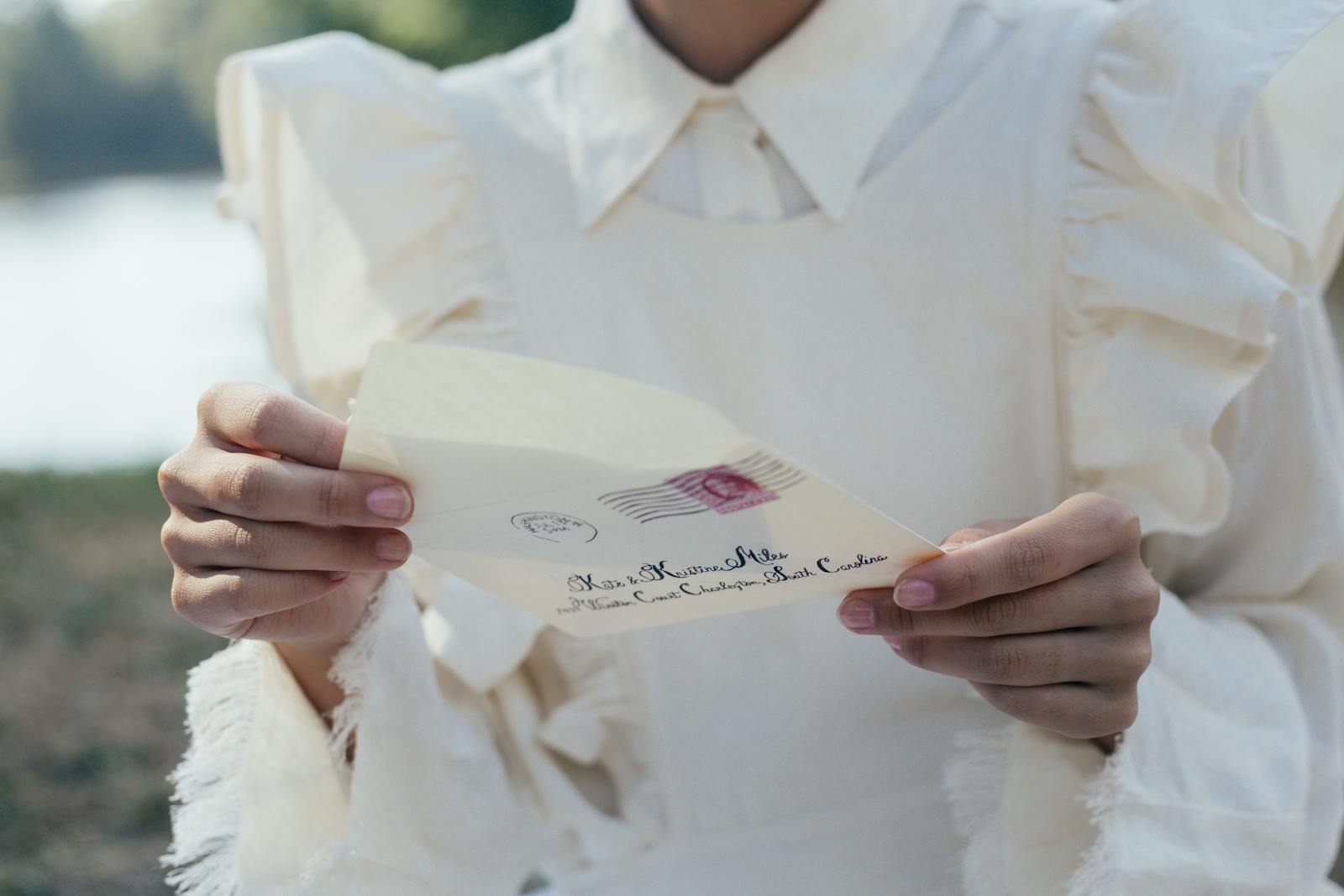
The difference between keeping things and keeping evidence
Keeping every card someone ever sent you is an archive built around a particular kind of doubt. The doubt is not whether people exist who care. The doubt is whether anyone has ever cared without being prompted, reminded, or socially obligated. A birthday card is suspect on this front, because birthdays come with cultural pressure. A postcard from a trip is different. Nobody is required to think of you while standing in a stationery shop in another country.
That distinction matters more than it sounds. People who keep everything are often quietly sorting their archive by a single criterion: which of these arrived because someone thought of me when they didn’t have to.
Why the brain treats a postcard like load-bearing structure
Emotionally charged memories, particularly those connected to belonging or rejection, get encoded and retrieved differently across the lifespan. The brain doesn’t store the warmth itself. It stores fragments, and the fragments fade.
Physical objects work around that decay. A card with someone’s handwriting on it is a memory aid the brain cannot easily corrode. You can pick it up in fifteen years and the proof is still there. Someone sat down. Someone picked up a pen. Someone wrote your name.
This is why these objects function less like souvenirs and more like external hard drives for a specific kind of certainty.
The neuroscience of needing receipts
Social pain and physical pain share neural real estate. Research on the shared neural underpinnings of social disconnection showed that being left out activates regions overlapping with those that respond to physical injury. If feeling forgotten genuinely hurts in a way the body registers, then keeping evidence that you weren’t forgotten is not sentimentality. It is analgesic.
There’s a related finding worth sitting with. Researchers have documented an analgesic effect of nostalgia, in which recalling fond memories reduces the subjective experience of pain. A drawer full of cards isn’t decoration. For some people, it’s a small dispensary.
What gets kept, and what quietly gets thrown away
Pay attention to what the archivists actually save. It isn’t every piece of paper that ever crossed the threshold. Mass-printed Christmas cards with a signature scrawled at the bottom often don’t make it. Receipts get tossed. The keepers are selective in a way that reveals the underlying logic.
What gets kept tends to share certain features. Personalization, for one — a sentence that could only have been written to this specific person. Effort, for another — the visible labor of choosing, writing, mailing. And unprompted timing. A note that arrives in March for no reason is worth ten birthday cards, because March requires the sender to have generated the impulse internally.
The archive, in other words, is curated by someone testing for one variable: did this person think of me on their own?
The childhood arithmetic underneath
Adults who maintain these archives often come from households where affection was real but conditional on performance. Good grades got celebrated. Helpfulness got praised. Being quiet and self-contained got rewarded with peace. What rarely happened was unprompted noticing — being thought of, asked after, or written to without having done something to earn it.
Children adapt to this. They learn that love arrives in response to output, which is a workable system but produces a particular kind of adult: someone who can accept affection but can never quite trust it, because there’s always a chance it was a transaction rather than a gift.
Space Daily has explored related patterns before, including how generosity gets mistaken for not needing anything back. The archive is the flip side of that dynamic. If you grew up giving without being asked, you developed a sharp eye for the rare moments when someone did the same for you. And you kept the proof.
Why digital doesn’t satisfy the same hunger
A birthday text, even a thoughtful one, doesn’t get archived the same way. Most people delete texts eventually. The keepers know this, even if they don’t articulate it. Digital affection feels lower-cost, which makes it less probative.
This isn’t generational snobbery. It’s a recognition that handwriting is a strange kind of biometric. Each card carries the unique motor signature of a specific person on a specific day. You can hold it. The keeper isn’t being precious about paper. They’re holding the only form of proof that doesn’t compress, doesn’t disappear when an account is closed, and doesn’t require a working battery to retrieve.
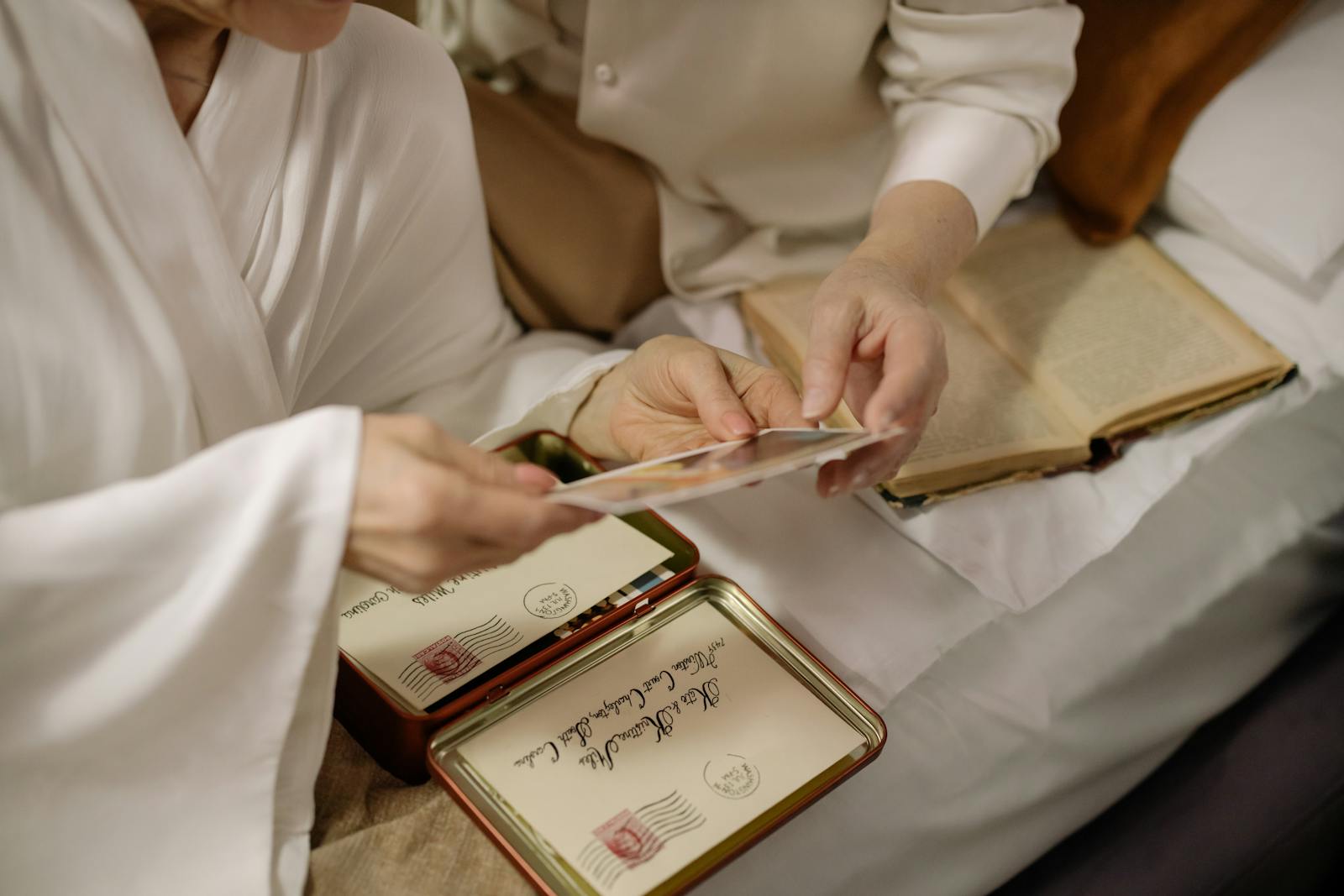
Nostalgia is doing more work than it gets credit for
The popular framing of nostalgia treats it as soft, indulgent, a little embarrassing. The research treats it differently. A 2024 review in Frontiers in Psychology framed nostalgia as a future-oriented experience as much as a backward-looking one, arguing that recalling meaningful past connections reinforces social motivation in the present. People who revisit their archive aren’t stuck. They’re refueling.
There’s also a geographical strand to this. Researchers have found that nostalgic memories cluster around places near water at unusually high rates, suggesting that the brain ties belonging to specific physical settings. A postcard of a lake from someone you loved twenty years ago is doing two kinds of work at once. It anchors a person and it anchors a place.
The fear underneath the filing system
Ask someone with a thick archive what they’re afraid would happen if it burned in a fire. The answers tend to converge. They’re not afraid of losing the cards themselves. They’re afraid of losing the ability to verify that the warmth was real.
This is the part that distinguishes archive-keepers from collectors. A stamp collector loves the stamps. An archive-keeper doesn’t love the paper. They love what the paper certifies. Without the certification, memory alone feels insufficient, because memory can be rewritten by a bad year, a depressive episode, or a single argument that retroactively colors everything.
The cards are a hedge against the brain’s tendency to revise history downward when things go badly.
Loneliness, remembered and current
Loneliness has moved well past the simple equation of being alone with feeling lonely. The experience is fundamentally about whether you feel held in someone’s mind. You can be in a crowded room and feel unseen. You can also be alone in a quiet kitchen and feel completely accompanied, if you have reason to believe people are thinking about you elsewhere.
The archive is a tool for the second state. On bad nights, it provides imported evidence of being held in mind. Even if no one has called in weeks, the proof is in the drawer.
This becomes more important as adults age and social networks contract. Research suggests that online friendships with strangers are linked to greater adult loneliness, not less. The archive is durable in a way that algorithmic connection is not. A card from 2004 doesn’t get deplatformed.
The cards from people who are gone
There’s a subset of the archive that operates by different rules entirely — the notes and letters from people who have died. These get a different drawer, or a different box, or a specific corner of the closet. They are not consulted casually.
For these objects, the archive function shifts. The card is no longer evidence that someone thinks of you. It is the last available evidence that someone ever did. The handwriting becomes irreplaceable in a literal sense; no more will ever be produced. People who lose someone often discover, sometimes years later, that they cannot throw away even the most ordinary scrap if it carries that handwriting.
The grief researcher’s term for this is continuing bonds — the recognition that healthy mourning doesn’t require severance, and that physical objects can serve as legitimate ongoing connections. The card in the drawer isn’t a refusal to move forward. It’s a refusal to pretend the relationship didn’t exist.
What the archive is not
It would be wrong to romanticize this. Some people genuinely accumulate paper they don’t need, and the keeping becomes an avoidance of confronting what’s there. The pattern described here is different in a specific way: the archive is selective, the keeper can usually locate any specific item if asked, and the objects produce comfort rather than dread.
If opening the box feels suffocating rather than steadying, that’s a different psychological situation that warrants its own attention. The healthy version of this behavior produces a sense of being accompanied. The unhealthy version produces a sense of being trapped by the past.
What to do if you recognize yourself
Nothing, necessarily. Keeping the cards is not the problem. The thing worth examining is the belief underneath: that unprompted affection is so rare it must be preserved like an endangered species. That belief was probably accurate in the household you grew up in. It may not be accurate in the life you have now.
One useful exercise is to notice, in real time, when someone does something unprompted for you in the present. A text that arrives for no reason. A friend remembering a detail you mentioned once. The instinct will be to file it as remarkable. Try instead to file it as ordinary, because in functional adult relationships, it often is.
The archive in the drawer was built when the evidence was scarce. It doesn’t have to be the only proof anymore. But there is also no reason to throw it away. Those cards earned their place. Someone sat down. Someone picked up a pen. Someone wrote your name when nothing required them to.
That deserves a drawer.
Articles cover space industry news and the Mind & Meaning pillar (human psychology, ambition, isolation, meaning under extremes). The Space Daily Editorial Team produces content through a collective process: research, source verification, drafting, technical review, and editing. Articles under this byline reflect the team’s editorial judgment rather than a single writer’s. Space Daily takes editorial responsibility for content published under this byline. See our editorial policy for more on how we work.
Photo by Suzy Hazelwood on Pexels
