
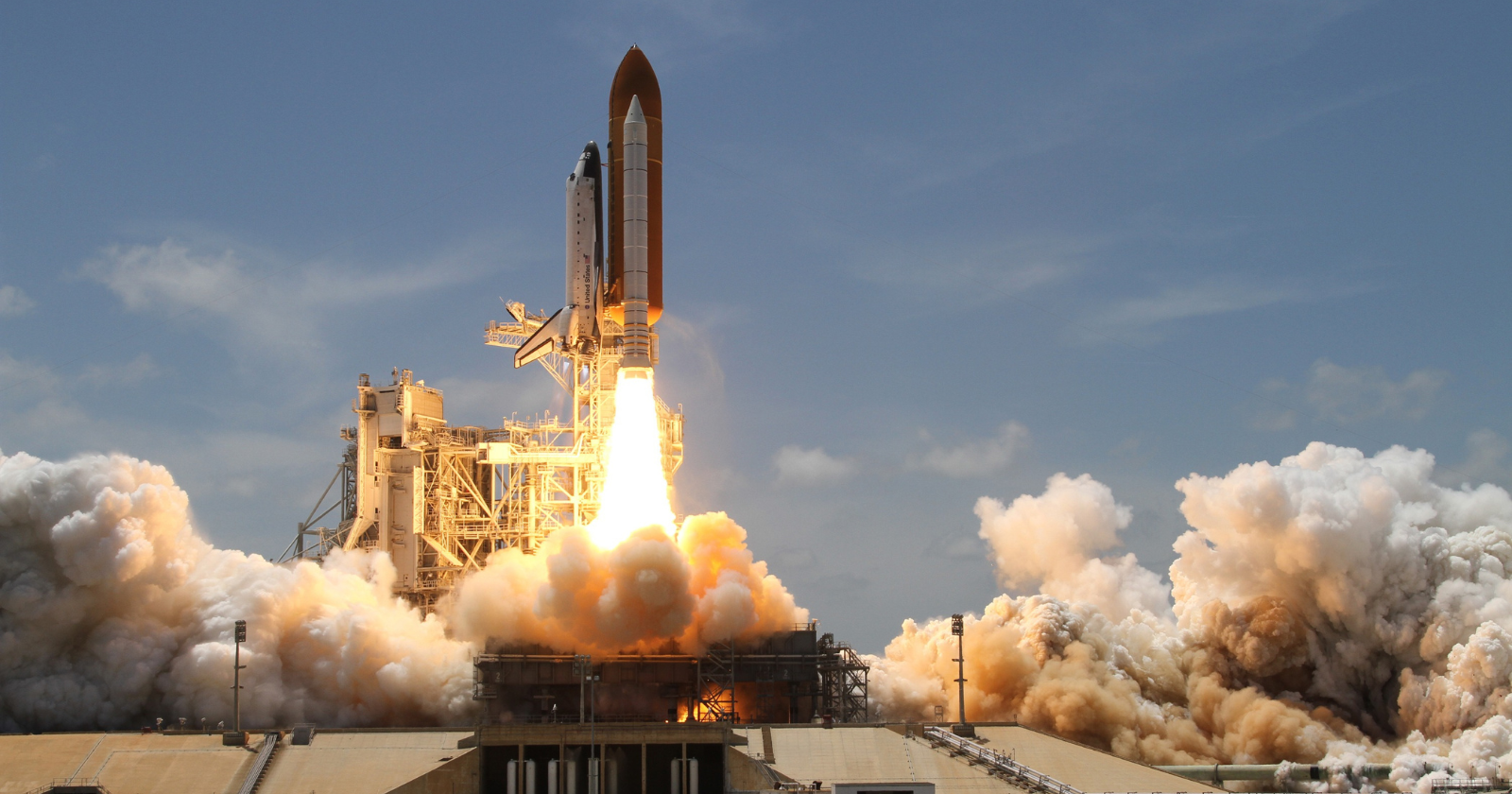
For the first sixty years of the space age, the math of getting to orbit was simple and brutal: build a rocket, launch a rocket, lose a rocket. Every flight ended with tens of millions of dollars worth of engines, tanks, and avionics either sinking into the ocean or burning up on re-entry. The only serious attempt at reusability, NASA’s Space Shuttle, became a cautionary tale rather than a template. Refurbishing the orbiter between flights cost more than building a new expendable rocket would have, and the program ended in 2011 having never come close to its original cost-per-kilogram targets.
That long consensus quietly broke sometime around 2022, and 2025 is the year the data made it undeniable. A used Falcon 9 booster on its tenth or twentieth or thirtieth flight now costs SpaceX less to launch than it would cost any of its competitors to build and throw away a brand-new rocket of equivalent capability. The inversion is real, it is sustained, and it is rewriting the global launch industry one bankruptcy and one cancelled programme at a time.
The number that broke the industry
Begin with the marginal cost. Independent estimates, drawn from public statements by SpaceX executives and detailed teardowns of the Falcon 9 supply chain, put the marginal cost of a reused Falcon 9 launch somewhere in the region of 15 million dollars. That figure includes the new expendable upper stage (around seven million), propellant (a quarter of a million), the amortised cost of the recovered booster (about a million per flight at current reuse rates), fairing refurbishment, and range fees.
Compare that to the cost structure of an expendable competitor. United Launch Alliance’s Vulcan Centaur is priced around 110 million dollars per launch. Europe’s Ariane 6, which made its first flight in 2024 and is fully expendable by design, costs the European Space Agency roughly 70 to 90 million euros to build before a single satellite is loaded. The retired Atlas V regularly cleared 110 to 160 million dollars per mission. Even the Falcon 9 itself, when SpaceX flies it in fully expendable mode at customer request, jumps in cost because the booster is sacrificed.
The inversion is not subtle. The marginal cost of flying a recovered Falcon 9 is lower than the manufacturing cost of the rocket alone for any expendable Western competitor. That is before you factor in the price of the engines, the avionics, or the labour to assemble it. SpaceX’s published Falcon 9 price is now 74 million dollars, though its internal marginal cost for reused Falcon 9 missions is widely reported to be far lower.
How SpaceX got the maths to work
The key insight, in retrospect, was deciding which parts of the rocket to reuse and which to throw away. The Shuttle tried to recover everything, including the orbiter and the solid rocket boosters, and ended up with a system whose refurbishment costs were dominated by inspecting and replacing thousands of unique heat-shield tiles after every flight. SpaceX took the opposite approach. The first stage, which represents about 60 percent of the cost of a new Falcon 9, is recovered and reflown. The upper stage and its single Merlin Vacuum engine are written off. The payload fairings are recovered when geometry permits and reused when they survive intact.
The other piece was vertical landing. Wings and runways are heavy. Parachutes drop the booster into salt water that ruins it. A controlled propulsive landing on a barge or a concrete pad keeps the hardware dry, intact, and structurally fresh enough to fly again with minimal refurbishment. The first successful Falcon 9 first-stage landing happened in December 2015. By spring 2026, SpaceX had passed 600 successful orbital-class rocket landings.
One booster, designated B1067, has now flown 34 missions. It has carried two crewed Dragon flights to the International Space Station, two cargo missions, and dozens of Starlink batches. SpaceX is currently certifying its Block 5 boosters for up to 40 flights, with internal targets pushing toward 100. Every additional flight pushes the amortised hardware cost per launch closer to zero.
The cadence weapon
Cost per launch is only half the story. The other half is launch rate. SpaceX flew 165 Falcon missions in 2025, a single-year record for any launch provider in history, and put roughly 2,400 tonnes into orbit. The same year, ULA managed a handful of Vulcan flights. Arianespace conducted a small number of Ariane 6 missions and is targeting around 10 launches per year at full operational tempo. Russia, once the dominant provider of commercial launches, has seen its cadence collapse since the start of the Ukraine war and the loss of its Western customer base.
Cadence compounds. A booster that flies every 25 to 30 days, as several Falcon 9 first stages now do, generates more revenue per unit of capital than a booster that flies once and is destroyed. The fastest turnaround on a Falcon 9 booster is currently nine days, three hours. The fastest turnaround on any expendable rocket is the time it takes to build a new one, which for Ariane 6 is measured in months.
This is the dynamic that has gutted the legacy industry. Arianespace, which commanded 30 to 40 percent of the international launch market in 2014, has watched its commercial position erode sharply in the SpaceX era. ULA has retreated almost entirely to subsidised national-security launches at prices roughly triple the commercial market. Roscosmos has effectively exited the commercial market. Japan’s H3, India’s LVM3, and China’s Long March family continue to fly, but each has its own constraints around customer base, geopolitics, or capacity.
Who is trying to follow
The competitive response has, finally, started. Blue Origin’s New Glenn made its first flight in January 2025 with a reusable first stage modeled explicitly on the Falcon 9 architecture. Rocket Lab’s Neutron, designed for medium-lift constellation deployment with a reusable booster, is targeting a first flight in late 2026. ULA’s Vulcan attempts a partial form of reusability by recovering only its main engines, separated from the rest of the booster mid-flight, an approach the company calls SMART reuse. Relativity has pivoted from its smaller Terran 1 to the larger, partially reusable Terran R. China has also accelerated work on reusable launch vehicles, including Long March 12A recovery attempts and commercial efforts such as LandSpace’s Zhuque-3.
None of these vehicles is yet flying at anything close to Falcon 9 cadence, and none has demonstrated more than a handful of reuses on a single airframe. SpaceX’s lead is several years and several hundred flights deep, and the gap is widening rather than closing.
Ariane 6 is the most striking outlier. Europe’s flagship rocket was designed in the mid-2010s, after Falcon 9 had already begun landing and reusing first stages, and yet it was built fully expendable on the assumption that recovery economics would not work for European launch volumes. That bet has aged poorly. ESA is now funding the Themis demonstrator as a path toward a future reusable European rocket, but a flight-ready successor to Ariane 6 is unlikely before the early 2030s, by which point the Falcon family will have flown well over a thousand times.
What the inversion means downstream
The cost collapse changes more than the launch business. The effective cost of putting a kilogram of mass into low Earth orbit has fallen from roughly 54,000 dollars on the Space Shuttle to around 2,720 dollars on the reusable Falcon 9, a reduction of more than 90 percent in twenty years. Constellations of thousands of satellites, which would have been financially unthinkable in 2010, are now routine. Starlink alone now operates more than 8,000 spacecraft. Amazon’s Kuiper, the Chinese Guowang and Qianfan constellations, and a half-dozen smaller projects are all premised on launch prices that did not exist a decade ago.
That is the second-order effect of the inversion. The first-order effect is simpler and harder for incumbents to absorb. Every kilogram of payload still flying on an expendable rocket is now flying on a vehicle whose underlying cost structure cannot match a competitor’s. The companies still building one-shot launchers are not losing because they are doing it badly. They are losing because the basic economic premise of their business has been turned inside out, and the ground beneath them has not stopped moving.
