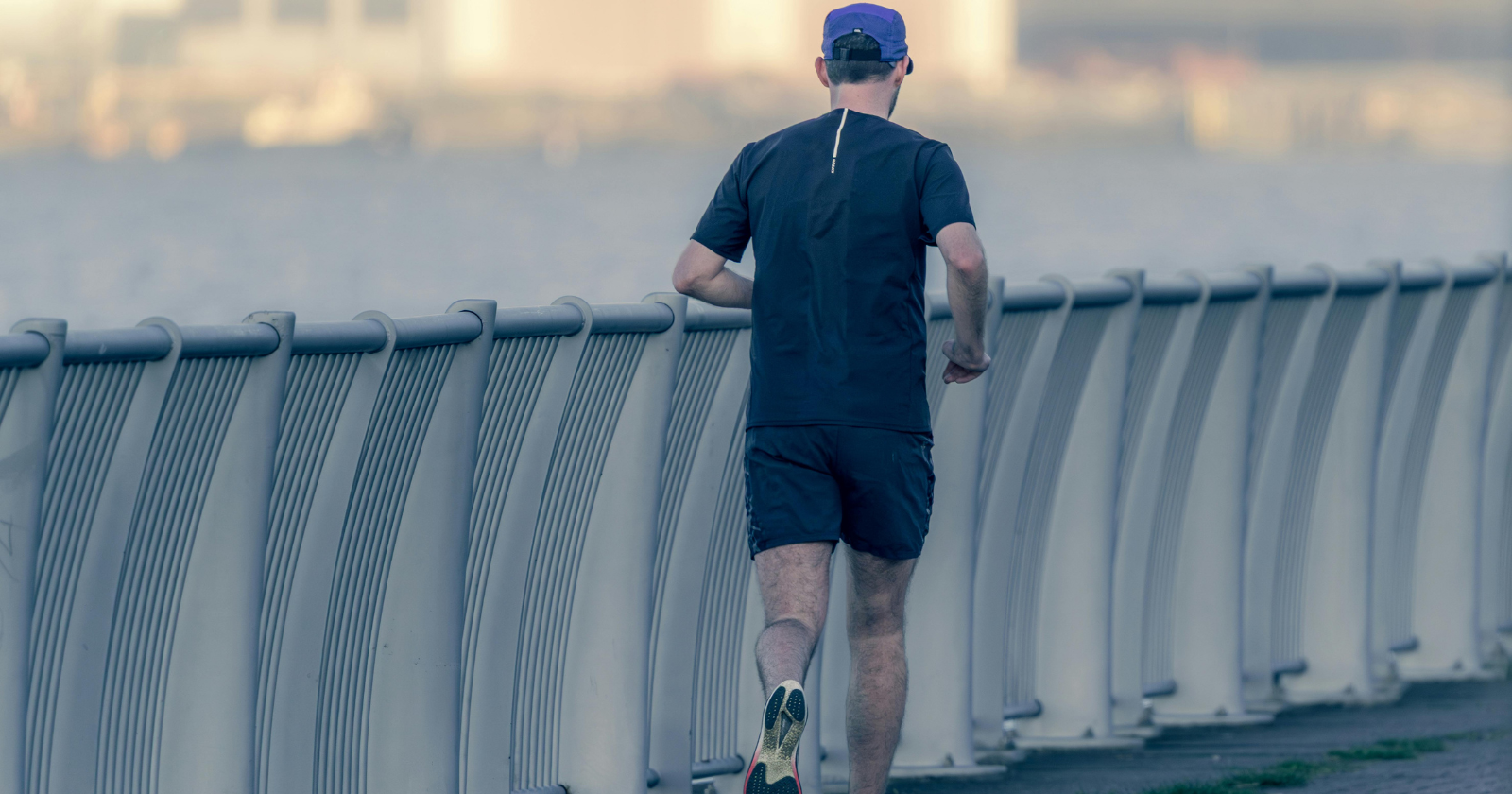
It’s 5:40am in Saigon. The city is just starting to stretch. The motorbikes are still rare, the food stalls are flicking on their fluorescent lights, and the river path is empty except for me and a handful of other runners doing the same thing for, I suspect, the same unspoken reason.
I run every morning. Have done for years. And if you asked me why, I’d probably mumble something about cardiovascular health or staying sharp for work. That answer would be technically true and almost completely beside the point.
The truth is simpler and a little harder to admit. That hour by the river is the only part of my day that belongs entirely to me.
The fitness story is a polite cover
When you tell people you run every morning, they nod approvingly and assume you’re chasing some target. A weight, a pace, a marathon, a longer life. It’s a clean, socially acceptable answer. Nobody pushes back on health.
The actual research on running and mental health goes deeper than this. A scoping review of 116 studies found that running improves mood and mental health across a wide range of populations and intensities. A 2023 study cited by the American Psychiatric Association that a 16-week running therapy program produced similar effects on depression symptoms to antidepressant medication in people with depression and/or anxiety, while showing stronger physical health benefits.
So yes, there is a strong body of evidence linking running with better mood and mental health. But that still doesn’t fully explain the specific pull of doing it at sunrise, alone, before the rest of the world even knows you’re awake.
There’s something else going on.
An hour with no audience
I’m 37, married to a Vietnamese woman I adore, with a small daughter who has a habit of waking up demanding songs in two languages. I run a publishing business with my brothers across multiple time zones, which means by the time I’m having lunch in Saigon, someone in another country is messaging me about something that needs my attention. My phone is, on a normal day, a small handheld machine for distributing other people’s priorities into my brain.
The hour I run is the only window where none of that reaches me.
No emails. No Slack. No requests. No obligations to be a husband, a father, a brother, a boss, or a friend. Just feet on pavement, breath on the river air, and the weird private theatre of my own thoughts working themselves out at six minutes per kilometre.
I think a lot of morning runners are doing exactly this and just don’t have a good way to say it. They’re not running away from anything. They’re running toward the only sliver of the day they get to spend without being someone for somebody.
Why the alone part matters
Researchers at the University of Reading published a study in 2023 that tracked 178 adults over three weeks and found that people who spent more time alone reported less stress and a stronger sense of autonomy, especially when that solitude was chosen rather than imposed. The lead researcher, Netta Weinstein, summed it up beautifully: time alone can leave us feeling less stress and free to be ourselves.
Free to be ourselves. That’s the bit.
The full Scientific Reports paper behind that finding adds an important nuance: solitude was not purely good or bad. On days when people spent more time alone, they reported lower stress and greater autonomy, but also more loneliness and lower satisfaction in some cases. It’s not about being a hermit. It’s about having a small window where your mind isn’t being shaped, interrupted, or asked to perform.
Morning running gives you that window without making you sit still for it. For people who can’t quite manage seated meditation, the run becomes the meditation. The rhythm of footfall replaces the breath as the anchor. The river replaces the candle.
What the run actually does
The Buddhist tradition I write about has a concept called viveka, which broadly means seclusion or discrimination. There are three classical forms of it: physical seclusion, mental seclusion, and seclusion from defilements. A morning run, if you do it right, gives you the first two for free.
Physical seclusion is just the obvious part. You’re alone, on a path, away from everyone who wants something from you. Mental seclusion is the harder thing. It’s when the constant inner chatter starts to slow down because the body is busy doing something else and the mind, finally, has nowhere to go.
You don’t need a mountaintop or a meditation cushion. You just need a small daily practice that returns you to yourself before the world starts asking you to be something else.
For me, that’s the river path. For my friend Mal, who lives a few suburbs over, it’s the same thing on different streets. Most mornings we don’t even text about it. We just both go.
Why it tends to be the morning
You could, in theory, get the same benefit from an evening run. Some people do. But there’s a particular reason mornings dominate this category of runner.
By evening, the day has already happened to you. You’ve absorbed everyone else’s energy, opinions, requests, and moods. An evening run is recovery. A morning run is something quieter. It’s a kind of pre-emptive strike against the day, a way of saying, “Before I become useful to anyone else, I get to spend an hour being useful only to myself.”
That distinction matters more than people realise. Research on solitude consistently shows that positive solitude is enjoyable in part because it is relaxing and tied to a sense of self-determination. The morning run hits all three notes: relaxation, autonomy, and the rare luxury of being the only person in charge of your attention.
The small territory you keep for yourself
Modern life has a way of colonising every available hour. Work bleeds into family time. Family time bleeds into sleep. Sleep gets eaten by the phone. Most of us have very little floor space left in the day that we genuinely own.
The morning run is a refusal of that. It’s a small, defendable territory. An hour you draw a fence around and say, this is mine. The fitness is real. The mental health benefits are real. But underneath both of those, there’s something quieter and more honest going on.
For some of us, those forty-five minutes by the river aren’t a workout. They’re the last ungoverned hour we have left. And we will protect them with everything we’ve got.