
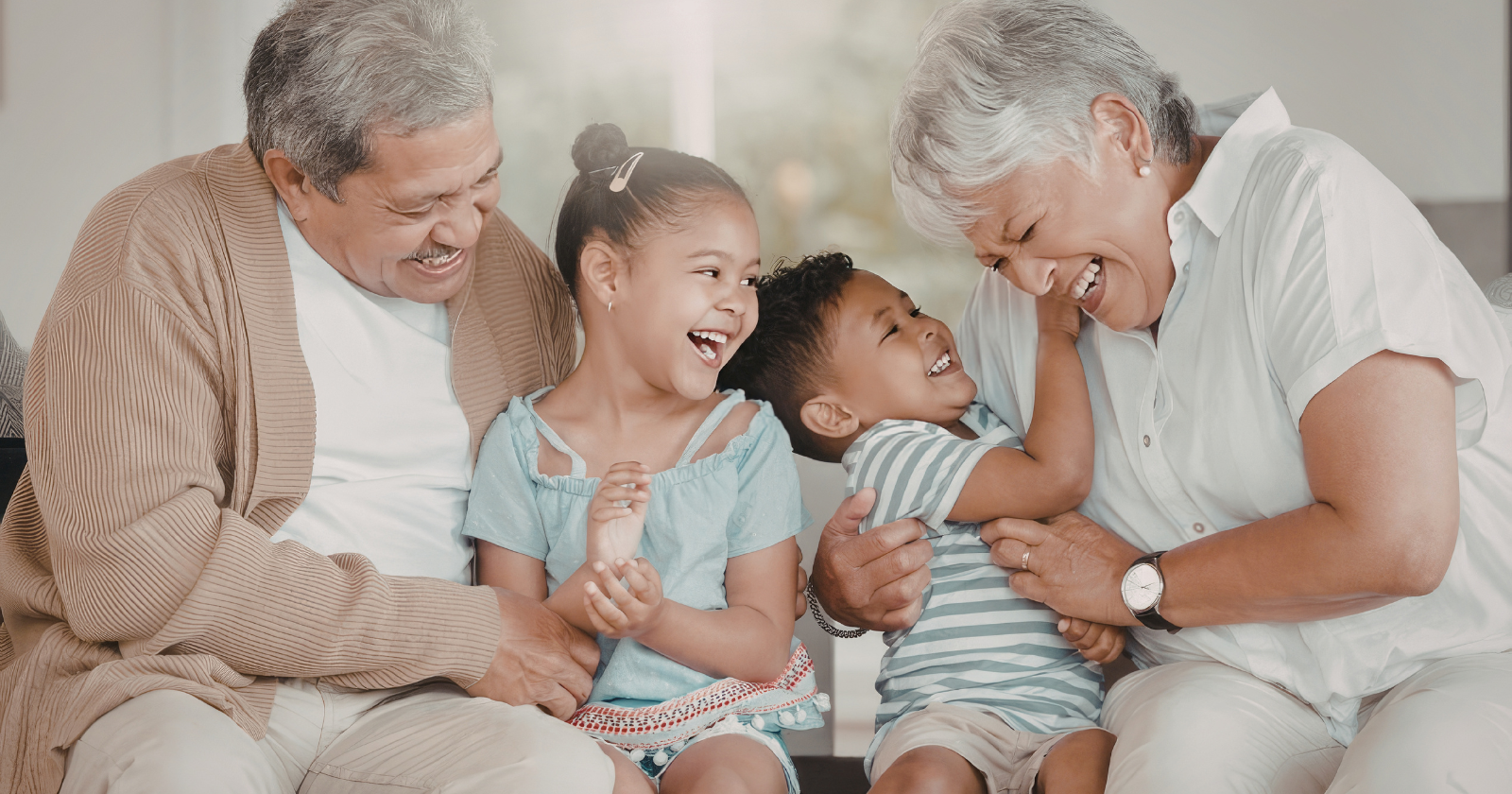
You can usually tell which grandparent is the favorite without anyone having to say so. The grandchildren make the choice visible. They angle for the weekends at one house and accept the visits to the other dutifully. They call one grandparent first when something goes wrong at school. They linger after dinner with one and ask to leave halfway through with the other.
The interesting part, and the part most adults get wrong, is that the favored grandparent is rarely the one with the bigger budget. Not the one with the swimming pool, the trampoline, the steady supply of new toys. Not the one who plans the spectacular outings to amusement parks and aquariums. Not even necessarily the one whose house has the warmest atmosphere or the best food. Those things are pleasant. They do not, by themselves, build the bond.
What builds it is something quieter and considerably harder to fake. The grandparent the grandchildren genuinely want to spend time with is the one who treats them, consistently and from a young age, as a real person whose thoughts and feelings are worth taking seriously.
What children are actually paying attention to
Children are not difficult to read on this point. They are usually clearer-eyed about the adults in their lives than the adults are about themselves. They know exactly which grown-ups address them as full human beings and which grown-ups address them as a category. They know which questions are real and which are reflexive. They know when an adult has remembered something they said last visit, and they know when the adult is performing remembering.
The favored grandparent is, almost without exception, the one who asks an actual question. Not “how is school,” which is a verbal handshake, but the question that follows. The grandparent who knows the name of the teacher the grandchild does not get along with. The one who remembers, six months later, that the grandchild was nervous about the school play, and asks how it went. The one who treats the grandchild’s hobby, however unfashionable, as a topic worth understanding.
The psychology of mattering
The clinical concept underneath this dynamic is called mattering. Sociologist Morris Rosenberg first formalized the idea in the late 1970s, describing relational mattering as the felt sense that one is an object of genuine interest to another person, that one is important to them, that one’s opinions count.
Researchers have spent the decades since accumulating evidence on how powerful that felt sense is. As psychologist Gordon Flett, Canada Research Chair in Personality and Health at York University, summarizes in an overview of the research, mattering predicts a wide range of positive outcomes in young people. High school students who feel that they matter are relatively protected from anxiety and depression, engage in fewer risky behaviors, and perform better academically. Flett’s recommendation to parents is simple, and it applies just as exactly to grandparents. Spend time with the child and be fully engaged. Listen, and give them a voice. Ask what is really going on inside them.
Why gifts and outings cannot do the work
This is why the gift-heavy strategy tends to underperform. A gift is a transaction. The child receives, the grandparent gives, the moment is satisfying for both, and then it is over. Nothing about the exchange tells the child that they have been seen as a person. They have been seen as a recipient.
The same goes, slightly more counterintuitively, for the lavish outing. Theme parks and aquariums are wonderful, but they are environments. The child is responding to the environment, not to the grandparent. The relationship runs in the background while the foreground is taken up by stimulation. When the outing ends, the child often has no clearer sense of who their grandparent is than they did at the start.
The relationship is built in the unspectacular spaces. The car ride. The kitchen. The walk back from the shop. The ten minutes before dinner when the grandparent puts the phone down and asks what the grandchild has been thinking about lately, and then waits for the real answer.
What the long-term research shows
The benefits of this kind of bond are not nostalgic. They are measurable, and they extend deep into adulthood. Stanford researchers Jane Stephenson and Laura Carstensen, working in the Stanford Department of Psychology, recently published a 2025 study in Frontiers in Psychology examining how childhood relationships with grandparents predict emotional wellbeing in emerging adulthood. The pattern they describe is consistent. Close grandparent relationships in early life are associated with better emotional regulation, higher life satisfaction, greater resilience, and lower rates of anxiety and depression in young adults aged 18 to 29.
The grandparents who produce this effect are the ones who are emotionally available. They model emotional regulation. They take the grandchild’s inner life seriously. The mechanism is not the time spent. It is the quality of attention given during whatever time there is.
The frontier connection
This same dynamic shows up beyond family life, in any context where an older generation transmits something meaningful to a younger one. In scientific lineages, mission programs, research labs, polar stations, and the long mentor-apprentice chains that move expertise across decades, the senior figures who are remembered with deep affection are not usually the ones who handed out the most opportunities or the loudest praise. They are the ones who, at twenty-three or twenty-four, treated the new arrival as a person whose thinking was worth taking seriously. They asked real questions. They remembered the answers.
The grandparent dynamic and the mentor dynamic are, in this sense, the same dynamic. Adults who can offer a younger person the experience of being seen as a real human being, rather than as a recipient of attention, leave a mark that lasts decades.
The reframe
Adults who are wondering why the grandchildren are not closer rarely need a bigger gift budget or a more impressive outing list. What they need is to ask one specific question, and to wait, without filling the silence, for the real answer. They need to remember that answer the next time. They need to treat the grandchild, repeatedly and unmistakably, as a full person whose interior life matters.
The grandparent the grandchildren actually want to see is the one who, somehow, makes them feel like the most interesting person in the room as soon as they walk in. That is not a thing money can buy or excitement can manufacture. It is the simplest and rarest gift any adult can give a child, and the children, for their part, can always tell.
