

The United States warned Iran Monday that it must abide by international accords on nuclear programs or face possible UN sanctions if it persists in a “pattern of deception and concealment.”
“It is unacceptable the way Iran is behaving. And if it does not come into compliance, then the matter is going to be referred to the United Nations Security Council,” said White House spokesman Scott McClellan.
His comments came before Iran threatened to cease application of the additional protocol to allow nuclear inspections if the UN nuclear watchdog pursued a resolution which could take Iran before the UN Security Council.
McClellan, referring to that International Atomic Energy Agency resolution, said: “The world is saying to Iran that it is time to come clean. The world has put Iran on notice with this resolution.
“That was clearly stated in the resolution that was passed. The resolution reflects the international community’s deep concern about Iran’s pattern of deception and concealment. And we will not tolerate it,” he said.
“We continue to support the diplomatic efforts of the Europeans to resolve this matter,” he told reporters. “There is a growing majority of nations that recognize Iran’s noncompliance must be addressed.
“And if they continue to fail to comply with their international obligations, then the matter is going to the United Nations Security Council,” said the spokesman.
related report
Iran Says UN Referral Would Raise Middle East Tensions
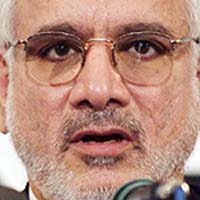
Vienna (AFP) Sep 26 – Reporting Iran to the United Nations Security Council over its nuclear program would “breed tension” in the already volatile Middle East, the Islamic republic’s vice-president warned Monday.
“There is no doubt that a report to the Security Council initiates a chain of events, of actions and reactions that breed tension and add volatility to an already vulnerable political situation in the region,” Gholamreza Aghazadeh told a meeting of the UN nuclear watchdog in Vienna.
In Tehran, the foreign ministry threatened to cease application of a protocol allowing tougher nuclear inspections if the UN nuclear watchdog insisted on reporting Iran to the Security Council.
Iran in 2003 signed — but did not ratify — the nuclear Non-Proliferation Treaty’s (NPT) additional protocol that gives reinforced inspection powers to the International Atomic Energy Agency (IAEA).
The body’s 35-nation board of governors on Saturday adopted a resolution that threatens to take Iran before the world body for violations of the NPT.
Aghazadeh said that engaging the Security Council “abrogates” a 2003 agreement to suspend the enriching of uranium, a nuclear reactor fuel that can also be bomb material.
That agreement was made in Tehran with European Union negotiators Britain, France and Germany, the same countries which drafted the IAEA resolution.
Iran says its nuclear program is peaceful but the United States claims it hides a covert weapons program.
Washington warned Iran on Monday that it must abide by international accords or face possible UN sanctions if it persists in a “pattern of deception and concealment.”
“It is unacceptable the way Iran is behaving. And if it does not come into compliance, then the matter is going to be referred to the United Nations Security Council,” said White House spokesman Scott McClellan.
Iran’s vice president, who is also head of Iran’s atomic energy agency, did not say what measures his country would take in response to the resolution, with the IAEA board to hear a report on Iran in November before any referral.
The Council could impose a range of measures, ranging from at first asking Iran to cooperate with the nuclear watchdog to eventually imposing trade sanctions.
Before the IAEA resolution was passed, Iran had threatened to respond by ceasing to apply the NPT additional protocol and even by resuming making enriched uranium.
In Tehran, right-wing member of parliament Hamid Reza Haji Babaie said the Majlis would on Tuesday present a bill aimed at halting application of the additional protocol to the NPT, the state news agency IRNA reported.
