
Humanetics and the Henry M. Jackson Foundation for the Advancement of Military Medicine have announced an agreement to develop and commercialize nutritional supplements and drugs that show promise in protecting the immune system against exposure to radiation resulting from a nuclear terrorist attack.
Through a unique Master Cooperative Research and Development Agreement (CRADA), Humanetics will sponsor a new research program with two branches of USU: the Armed Forces Radiobiology Research Institute (AFRRI); and the F. Edward Ebert School of Medicine.
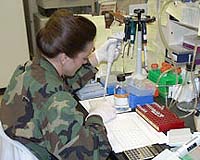
Building on DoD expertise, Humanetics and AFRRI are currently targeting several compounds – some of which have already been shown to be effective in initial trials – to increase survival in mice receiving lethal doses of radiation.
“The nutritional supplements we intend to investigate have, generally, a history of safety, are orally administered, are cost effective and easily stored, and can be readily distributed to large numbers of people,” stated Ronald Zenk, President and CEO of Humanetics.
“The Master CRADA enables Humanetics to collaborate with DoD scientists to facilitate discovery and development of promising new compounds to protect people exposed to radiation. We look forward to this joint project to research and develop products that provide a level of protection to the military, first responders, and civilians.”
U. S. Army Colonel David G. Jarrett, M.D., Director of the AFRRI, stated, “This project will allow expansion of our research. We believe this program will accelerate the development of new ways to address radiation-related terrorism threats, and may provide a safe, cost-effective means of diminishing radiation injury for large numbers of people.”
In July 2004, Humanetics signed its first CRADA with USU and HJF to develop a nutritional supplement to support immune system function. Under this initial CRADA, Humanetics is collaborating with AFRRI researchers to develop a compound to support immune function and to explore the potential benefits for military personnel.
This nutritional supplement may be able to increase the readiness and performance of troops by improving their response to a variety of challenges to their immune system – like chronic stress resulting from psychological factors, military training, and combat.
Early in its collaboration with the AFRRI, Humanetics recognized the potential for nutritional supplements to strengthen immune function to exposure to radiation.
This led to the design and implementation of a unique joint research program within the AFRRI to screen, test and develop several such nutritional supplements. Unlike a standard CRADA, the Master CRADA is not limited to one compound and provides the ability to rapidly incorporate new candidate compounds into the joint Humanetics/AFRRI research program.
“Our mouse irradiation paradigm is a rigorous model to mimic radiation exposure from a terrorist attack,” stated Dr. Mark Whitnall, the principal investigator on the project at the AFRRI. “Our collaborative effort with Humanetics under the Master CRADA will enable rapid screening of promising nutritional supplements using this model.”
In addition to approximately 10 million U.S. military and first responders responsible for dealing with a terrorist attack, 90 million civilians in the top 10 metropolitan areas are also considered potential victims.
If these nutritional supplements are proven to be effective in protecting the immune system against the harmful effects of radiation, Humanetics believes that these supplements would be recommended for consumption during the highest alert periods as established by the U.S. Department of Homeland Security. If any of these compounds demonstrate therapeutic properties, Humanetics intends to further develop them as radioprotective drugs.
