

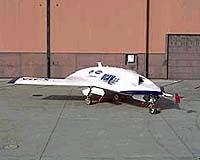
The X-45A Unmanned Combat Aerial Vehicle technology demonstration aircraft completed its first flight here May 22.
The 14-minute flight is a key step to provide a transformational combat capability for the Air Force later this decade, said Air Force Flight Test Center officials.
Reaching an airspeed of 195 knots and an altitude of 7,500 feet, the X-45A flew at NASA Dryden Flight Research Center here. This first flight successfully demonstrated the UCAV’s flight characteristics and the basic aspects of aircraft operations, particularly the command and control link between the aircraft and its mission-control station.
“This flight represents a step jump in our quest to mature the technologies, processes and system attributes required to integrate UCAVs into the future Air Force,” said Col. Michael Leahy, the Defense Advanced Research Projects Agency’s UCAV program manager. “UCAVs will effectively and affordably perform extremely hazardous missions, such as suppressing enemy air defense, while greatly reducing the risk our aircrews have to face.”
Later this year, a second X-45A will begin flying, leading to the start of several aircraft flight-test demonstrations next year. The coordinated flight tests are the technical heart of the program and the key to unlocking the transformational potential of the weapon system, said program officials.
Further testing will continue to explore the boundaries of intelligent unmanned combat operations, culminating in fiscal 2006 with UCAVs and manned aircraft operating together during an exercise.
The X-45A is an initial demonstrator for the UCAV system, with the next step focusing on the X-45B, which is currently being designed. According to program officials, the X-45B will be larger and more capable than it predecessor and will incorporate low-observable technologies. The X-45B will be a prototype aircraft that will lay the foundation for an initial operational system toward the end of the decade.
The demonstration aircraft is a combined effort involving the Defense Advanced Research Projects Agency, the U.S. Air Force, and lead government contractor, Boeing.
