
The explosion that gave birth to the Universe sounded not so much like a Big Bang than a Deep Hum, it was reported.
A computer model of the likely audio frequencies generated by the explosive start to the cosmos has been created by physicist John Cramer of the University of Washington in Seattle.
“The sound is rather like a large jet plane flying 100 feet (30 metres) above your house in the middle of the night,” he told the British weekly New Scientist.
The Big Bang unleashed gigantic waves of energy and blazing hot matter. Some of the energy was in the audio part of the spectrum, and these giant sound waves squeezed and compressed matter, heating compressed regions and cooling the rarefied ones.
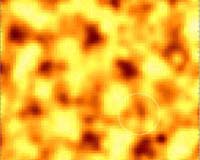
Even though the event occurred 13.7 billion years ago, the sound waves have left an imprint in tiny temperature variations that can be measurable in different parts of the sky.
Cramer based his model on temperature data send by a NASA (news – web sites) satellite, the Wilkinson Microwave Anisotropy Probe, which was launched in 2001.
His calculation is based on the frequencies that rampaged through the Universe during its first 760,000 years, when it was a cosmic stripling measuring just 18 million light years across.
The frequencies would have been too low to be heard by the human ear, so Cramer has scaled them up 100,000 billion billion times to give an approximation.
The long hum becomes progressively deeper in tone because the sound waves become longer, and thus lower in frequency, as they range across the fast-expanding Universe.
