

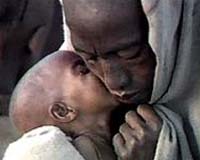
UN agencies on Wednesday renewed desperate appeals for help in saving nearly three million Kenyans as well as more than a million children across drought-stricken east Africa who face impending famine.
In separate statements, the World Food Programme (WFP) and UN Children’s Agency (UNICEF) offered bleak assessments of the prospects without urgent donations for 2.5 million Kenyans, some of whom are among 1.2 million children in three countries in the region who are threatened with malnutrition.
WFP said it would run out of food aid for hungry Kenyans in the worst-hit north and northeast by mid-February if donors do not respond to unmet previous appeals for 238 million dollars (194 million euros) worth of assistance required to meet the expected need.
Only a fraction of that amount has been received, it said.
“We have warned and appealed for months for contributions to save lives in drought-hit Kenya,” WFP said in a statement. “We are in the midst of an emergency. If we receive no new donations now, it is extremely likely that Kenya will be hit by a humanitarian disaster in the months to come.”
“Since our last appeal in December, we have received very little against the growing needs,” it said. “We dont have enough for the 1.2 million people we are currently feeding, let alone the expected increase to 2.5 million or more in February,” it said.
The Kenyan government has declared the drought a national disaster and at least 40 people, mainly children in the northeast, have died of drought-related malnutrition and associated diseases since December as have thousands of cattle, sheep and goats.
It estimates up to four million people will soon need food aid to survive and while the UN agencies have yet to adopt that figure they have said they expect to the numbers to rise above 2.5 million.
Meanwhile, UNICEF appealed for 14.7 million dollars (12 million euros) to help prevent 1.2 million children under the age of five from dying of malnutrition and associated illness in Ethiopia, Kenya and Somalia due to the drought over the next three months.
“This drought ominously compounds an already dismal humanitarian situation,” it said.
More than 56,000 young children face malnutrition in the Somali and Oromiya regions of southern Ethiopia, between 40,000 and 60,000 women and children in northern Kenya and as many as 30 percent of children in southern Somalia were affected, UNICEF said.
Health experts fear that low rates of measles vaccination and the children’s poor health could expose them to devastating measles outbreak.
“The combination of high malnutrition rates or wasting with generally low measles immunization rates portends the real possibility of a major measles outbreak,” UNICEF said.
More than six million people throughout the Horn of Africa region are on the brink of starvation, according to various UN agencies.
Source: Agence France-Presse
