
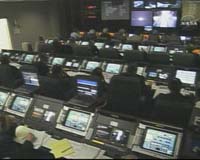
NASA controllers aborted the Space Technology 5 mission less than one minute before launch because of a malfunctioning release pin in the spacecraft’s steering facility. The next launch attempt will be no earlier than Friday.
Controllers scrubbed the launch at 6:27 a.m. Pacific Time, just before the Pegasus rocket carrying three micro-satellites was due to drop from its Orbital Sciences L-1011 lifting aircraft, which was flying over the Pacific Ocean off the California coast.
Controllers said they could not release the steering lock pin on the Pegasus, and the batteries that power the operation went dead after 45 seconds – their design lifetime. The pilot of the Lockheed lifting aircraft tried rocking the wings to shake the pin loose, but to no avail.
Engineers will now attempt to determine what caused the fault – ice formation is considered a possibility – and replace the batteries.
The three ST5 micro-sats are designed to monitor Earth’s magnetic field from a polar orbit during their planned mission of a minimum 90 days. Among their tasks is to attempt to determine the relationship between the planet’s magnetic field lines of force and the generation of auroras in the polar latitudes.
