
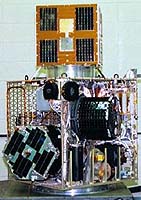
The launch of the rocket carrying the ASU student satellite planned for Dec. 7 has been postponed.
After launch dress rehearsals at Vandenberg Air Force Base Dec. 1-2 several problems were found. The first one involved a failed transponder and the second involved a resetting CPU that could cause a payload separation failure. After further investigation into the situation, the decision was made to delay the launch.
“Despite the postponement, we are very much looking forward to the launch,” says Helen Reed, faculty adviser for the ASU Satellite team. “Sending a satellite to space is certainly a complicated process and we understand everything needs to be perfect. It is simply part of the learning process for our students to see all the steps something like this takes.”
The ASU Satellite was built by students to perform numerous tasks while in space, including mapping and imaging functions. The 10-pound nano-satellite was built and retooled several times over a six-year time period while waiting for launch.
At this point the launch is expected to take place no earlier than Jan. 15, 2000. The new date is not yet firm and could change again.
Additional information, including a new launch date and time, will be distributed when it becomes available.
Previous Jawsat Report at SpaceDaily
Scheduled for launch on December 7, 1999 the JAWSAT Multi-Payload Adapter (MPA) space-frame will deploy four independent satellites, including:
- ASUSAT
from Arizona State University - Opal, a satellite from Stanford University
- The United States Air
Force Academy‘s Falconsat satellite - An Optical Calibration Sphere Experiment from the Air Force Research Laboratory under contract to L’Garde, Inc.
JAWSAT will also support two other experiments that will remain attached to its MPA frame:
- PEST,
NASA Marshall Space Flight Center‘s Plasma Experiment Satellite Test - Weber State University’s Attitude Controlled Platform
(ACP)
