
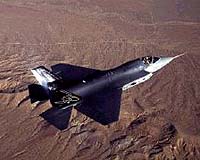
Raytheon Company’s Space and Airborne Systems (SAS) delivered the first flight-ready GPS system six weeks ahead of its need date for installation in the first F-35 test aircraft.
The F-35’s GPS sensor system was developed by the Precision Guidance Systems (PGS) unit of Raytheon SAS under a contract from Northrop Grumman Corporation, a principal teammate on the Lockheed Martin F-35 Joint Strike Fighter team.
The F-35’s GPS System supports the precision strike mission capability of the multi-role, stealthy strike fighter aircraft, providing it with unprecedented navigational accuracy at the required affordability.
The system consists of a variety of key technologies including the Raytheon digital anti-jam receiver (DAR) and a multi-element, low observable antenna developed by Ball Aerospace, under contract to Raytheon SAS.
The DAR leverages much of Raytheon’s research and development expertise in the GPS area. The F-35 GPS system is currently being integrated with the rest of the mission system suite at Lockheed Martin labs in Ft. Worth, Texas, utilizing a non-flight qualified system.
Troy Nestor, PGS program director at Raytheon, said: “This new GPS system will bring enhanced capability to the F-35 platform in the critical areas of precision landing and strike — emerging capabilities that rely on highly sophisticated and robust technology to ensure the necessary pinpoint accuracy demanded in the high-threat environments in which the F-35 will operate.
“While most people believe that GPS technology is pretty standard stuff, the type of reliable and robust GPS system we are developing for the F-35 takes the capability to a whole new level. It allows us to support the advanced needs and requirements of our customer. The digital anti-jam GPS receiver will give the F-35 platform a unique edge through utilizing the most advanced technology available today.”
PGS, a specialist division in the company’s Space and Airborne Systems business, was awarded an initial $25.8 million system design and development subcontract in 2003 by Northrop Grumman Integrated Systems. Northrop Grumman is responsible for the mission systems integration of the GPS sensor.
“The F-35 GPS system is a leap-ahead aircraft technology, integrating state-of-the-art and next generation technology. This means that the F-35 will be operating the most precise, effective navigation and tracking system out there,” said Kimberly Binegar, F-35 GPS program manager for Raytheon’s PGS business area.
“Our system provides a key precision strike capability to the United States and its allies. The GPS provides high levels of measurement accuracy, extreme time synchronization performance, and very high GPS anti-jam capability for the F-35,” said John Fleming, technical director for the JSF GPS program at Raytheon.
The F-35 is a next-generation, supersonic, multi-role stealth aircraft designed to replace the AV-8B Harrier, A-10, F-16, F/A-18 Hornet and the United Kingdom’s Harrier GR.7 and Sea Harrier.
