

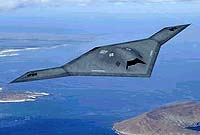
The U.S. Navy’s RQ-8A Fire Scout vertical takeoff and landing tactical unmanned aerial vehicle (VTUAV) and the U.S. Army’s Hunter tactical unmanned aerial vehicle (TUAV) have proven their ability to communicate and safely operate in the same air space at the same time.
The two UAVs, both built by Northrop Grumman Corporation (NYSE: NOC), performed simultaneous flights July 14 at the Webster Field Annex of Naval Air Station Patuxent River, Md., during the Navy’s UAV Demonstration Day.
Fire Scout and the Hunter both flew for approximately three hours demonstrating surveillance, reconnaissance and target acquisition capabilities and the ability to transmit data to separate ground control stations.
Fire Scout, produced by Northrop Grumman’s Integrated Systems sector, carried an electro-optical/infrared/laser range finder/designator (EO/IR/LDRF) sensor payload. The payload is produced by Northrop Grumman’s Electronic Systems sector, Baltimore, Md. The Hunter, produced by the company’s Mission Systems sector, carried a ground-operated synthetic aperture radar and moving target indicator (SAR/MTI) payload.
Navy Rear Adm. John Chenevey, program executive officer for strike warfare and unmanned aviation, hosted the UAV Demonstration Day. Gordon England, deputy secretary of homeland defense; Thomas H. Collins, commandant, U.S. Coast Guard; and Dyke Weatherington, deputy, UAV Planning Task Force, office of the secretary of defense, were among guests who viewed the flying demonstrations at Webster Field.
The UAV Demonstration Day was held in conjunction with 2003 Symposium and Exhibition of the Association for Unmanned Vehicle Systems International, which runs July 15-17 in Baltimore.
