
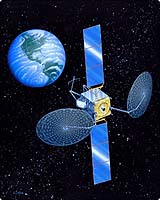
Mobile Satellite Ventures and its joint venture partner MSV Canada announced Wednesday they had reached an agreement with Boeing to accelerate deployment of their two North American satellites, intended to form the backbone of MSV’s satellite cellular-wireless communications network.
The agreement will move up construction, launch and operations of the two satellites by approximately eight months. Launch of the U.S. satellite is now scheduled for mid-2009 and the Canadian satellite in early 2010, MSV said in a statement.
The two satellites will replace and expand the current MSAT system operated by MSV and MSV Canada, and will offer consumers the most advanced wireless services.
MSV also announced it has deferred development of its South American satellite, the MSV-SA, to the third launch slot.
MSV had announced last January that it had contracted with Boeing to build the three next-generation L-band satellites for the world’s first commercial mobile satellite service using integrated space and terrestrial elements, beginning with the launch of MSV-SA.
“Our decision to amend the agreement reflects a need in the marketplace to focus on North America as a priority in launching an advanced ubiquitous network solution and reflects a better return on our investment for our shareholders,” said Alexander Good, MSV’s vice chairman, president and chief executive officer.
The network, based on MSV’s patented Ancillary Terrestrial Component technology, combines satellite and cellular technology to deliver voice and data coverage.
The Boeing satellites will be among the largest and most powerful ever built, the MSV statement said, adding they will be based on Boeing’s proven technology from predecessor satellites and a quarter-century heritage of integrating and deploying L-band systems.
Like the current MSAT satellites, the new satellites will cover Canada and the United States, including Alaska, Hawaii, Puerto Rico, the Virgin Islands and the Caribbean Basin, as well as Mexico.
