
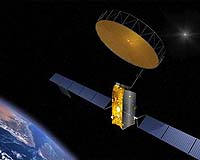
Maritime customers will benefit from enhanced coverage across the Indian Ocean Region from May 28 when the new Inmarsat-4 (I-4) satellite is currently scheduled to enter commercial service.
The time for the hand-over from I-3 to the new generation I-4 satellite has been set for 20:00 hours UTC on May 28, subject to confirmation nearer the day.
Existing users of maritime spot-beam services will benefit immediately from enhanced coverage right across the Indian Ocean Region (IOR) once transition is complete.
The switch-on and handover of traffic to the I-4 is expected to be seamless.
For the first time, subscribers to services such as Fleet F77 128kbit/s, Fleet F55 and F33, and maritime mini-M, will be able to use their equipment to the full in areas where previously Inmarsat-3 spot-beam coverage was incomplete.
To take full advantage, users just select the IOR in the usual way when they log on with their terminals.
When the I-4 goes live, these and other existing services will migrate to the 19 wide spot beams on the new spacecraft – providing unbroken coverage right across the ocean region.
The following services will benefit from the coverage enhancement:
Services supporting the Global Maritime Distress and Safety Services (GMDSS) – Inmarsat B, C, E and Fleet F77 – are already global and will remain unaffected.
Piers Cunningham, Inmarsat’s head of maritime market management, said: “The improved network infrastructure we have put in place for the I-4s, and the powerful new satellites themselves, will ensure the long-term availability and continued evolution of our maritime services.
“The unrivalled power and flexibility of the I-4s will allow us to make service enhancements that will be of immediate benefit to the global maritime community.”
