
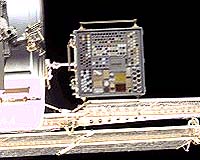
Attached to the International Space Station’s doorway, the Quest Airlock, a square suitcase-sized package holds hundreds of materials. The Materials International Space Station Experiment, or MISSE, includes samples of materials used for solar power cells, spacecraft shielding, thermal control, optics and other purposes.
MISSE was delivered last summer and will be exposed to the space environment for about nine more months.
Then, the samples will be returned to Earth so that engineers can determine how the space environment affects materials needed to build advanced spacecraft of the future.
Three samples being tested as part of MISSE – all ultra-thin tether materials – are of particular interest to materials scientists in the Engineering Directorate at NASA’s Marshall Space Flight Center in Huntsville, Ala.
Similar tethers have been tested in Marshall’s materials laboratory and will be used on the June flight of the Propulsive Small Expendable Deployer System – called ProSEDS.
This flight — managed by the Marshall Center’s Space Transportation Directorate — will mark the first time a tether system is used to change the orbital altitude of a satellite.
Electrodynamic tether propulsion systems are propellant-free. They draw power from Earth’s electrically charged atmosphere and transfer this energy to satellites or other objects to raise or lower their orbits.
The ProSEDS tether mission will last no longer than three weeks, but tethers used as permanent space tugboats would be expected to be durable, reusable systems in service for long periods. The MISSE materials tests will give engineers data on how the tether material fares when exposed to the harsh space environment for a year.
