
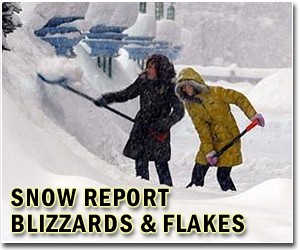
As the second big snowstorm this winter hammered the Washington area Friday, some blamed El Niño, the phenomenon where unusually warm sea surface temperatures in the Pacific Ocean move east, pulling rainfall along with them.
In general, El Niño brings increased rainfall across the east-central and eastern Pacific and drier than normal conditions over northern Australia, Indonesia and the Philippines.
“It also increases the odds of having a big snowstorm in the mid-Atlantic states, including Washington DC,” Klaus Wolter, a climatologist at the University of Colorado, told AFP.
But cold, snowy winters can’t be pinned solely on El Niño; nor can they always be pinned on El Niño.
“The winter of 1995-96 was a very snowy winter and that was with La Nina,” where ocean waters in the east-central equatorial Pacific are unusually cool, said Wolter.
“If you look at the top 10 winter storms in Washington history, there is an increased risk with El Niño, but then you have other cases that have nothing to do with El Niño,” said Wolter.
“There are at least two players in this game: El Niño and what the North Atlantic is doing,” he said.
Cold weather in the North Atlantic hangs over Europe but also backs up into the northeastern United States and the mid-Atlantic states, said Wolter.
This winter, a blocked North Atlantic pattern brought with it heavy snow and arctic temperatures across parts of Germany and elsewhere in Europe.
“In northern Germany, they are having quite a winter. There are places with all-time record snow on the ground. They even had this in England for awhile,” said Wolter.
“What the North Atlantic is doing, is essentially the other player with El Niño in bringing these storms to Europe and the US.”
The current El Nino began last year, and scientists are saying it’s a strong one.
In addition to being a key suspect in bringing a snowy, cold winter to the usually milder mid-Atlantic, scientists in the Philippines are girding for the phenomenon to bring a drought that could slash rice yields there.
Scientists believe the strong El Niño of 2009-10 resulted in a mild Atlantic hurricane season, and the heavy rains that sparked flooding that killed 20 in Peru last month and trapped thousands of tourists visiting the ancient Inca city of Machu Picchu.
