
The proposed US national missile defense is under fire as the investigative arm of the US Congress released a report questioning its efficiency, costs, and timeline as well as the ability to asses the threats it is designed to fight.
In a report released Monday, the General Accounting Office (GAO) indicated that it would be difficult to determine whether or not the system would work properly because of strict limits on testing.
“The performance and schedule risks remain significant because of the technical challenge, test limitations and the ambitious schedule,” for deployment, the report said.
The office also said it was unable to assess the threats of missile attack against the United States.
“The intercontinental missile threat posed by rogue nations is uncertain, which increases performance risk,” the report said.
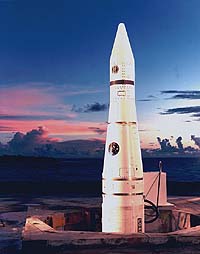
The national missile defense system under development by the United States is designed to hit a missile with a missile in space by using early warning satellites, radars and computers to guide the interceptor missile to its target.
According to the GAO, the technical challenges the system faces increase the likelihood that its deployment will be delayed and the cost of its development will increase. The cost is currently estimated at 60 billion dollars.
“Because the program has a very aggressive schedule, it is vulnerable to delays,” the report said.
President Bill Clinton is to decide later this year whether to deploy the first phase of the system, consisting of 100 Alaska-based interceptors linked to a phased array radar and early warning satellites.
Copyright 2000 AFP. All rights reserved. The material on this page is provided by AFP and may not be published, broadcast, rewritten or redistributed.
