

China Tuesday again lambasted Washington for letting Taiwan’s defence minister attend a military conference in the United States, saying the visit would damage relations.
“The United States, in disregard to the opposition of the Chinese side, bent down and allowed Tang Youming to go to the United States,” foreign ministry spokesman Sun Yuxi said.
“We express our strong dissatisfaction and indignation.
“This will give rise to the arrogance of Taiwan forces for independence and will damage (Sino-US) bilateral ties and cross-strait relations,” he said.
Tang on Sunday checked into a luxury Florida resort where he is attending an conference sponsored by top US arms companies.
The visit has cracked the veneer of cordiality between the China and the US carefully maintained by presidents Jiang Zemin and George W. Bush during talks in Beijing last month.
This had followed improved Sino-US relations in the wake of Beijing’s backing for the US-led campaign against terrorism post-September 11.
China reacted furiously to the announcement of Tang’s visit last week, summoning the US ambassador to Beijing, Clark Randt, for a dressing-down and branding the trip a “gross violation” of Sino-US agreements on Taiwan.
The United States countered by saying Tang was travelling to the conference in a purely private capacity and was not on official business.
The meeting comes after China last week announced a 17 percent rise in its defence budget — a move which triggered disquiet in Taipei and suspicion among sectors of the US military establishment which view China as a looming threat to US interests.
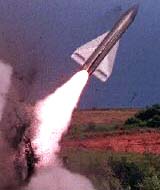
China has at least 300 ballistic missiles along its south-east coast trained on Taiwan and the island’s defence ministry expects the number to reach 800 by 2006.
Beijing routinely objects to any visits by Taiwanese officials to the United States, which in the past fudged the issue by granting them only transit visas to pass through its territory. Tang however has apparently been granted an entry visa.
China also feels threatened by continued US arms sales to Taiwan, observers say.
Although the ousted Nationalist government fled the mainland for Taiwan after a civil war in 1949 and established a de facto separate state, Beijing considers the island part of its territory and has sought to prevent Taipei formally declaring independence.
