
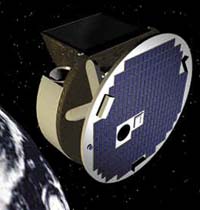
The Canadian Space Agency, said Wednesday it was awarding two contracts totalling $13 million to Bristol Aerospace of Winnipeg to build an all-Canadian science satellite. SCISAT-1, Canada’s first science satellite since 1971, will study ozone depletion in the atmosphere. It is scheduled for launch in 2002.
“These contracts demonstrate Canada’s commitment to leading the development and application of space knowledge for the benefit of all Canadians. They show the Canadian government’s determination to take concrete action for the betterment of our environment,” said Minister Manley.
“SCISAT-1 will improve our understanding of the chemical processes involved in the depletion of the ozone layer, with particular emphasis on the processes occurring over Canada and the Arctic.”
“The SCISAT-1 contracts build logically on Bristol’s long history of space payload development, and recognize our commitment to innovation in design and quality in manufacture,” said Mr. Jim Butyniec, General Manager of Bristol Aerospace.
“We are proud to play this major role in this project and welcome the opportunity to refine our capabilities and expertise in this area. We see the SCISAT-1 program as a key step in Bristol’s entry into the commercial space business, and ultimately, our involvement in international programs.”
The ozone research to be undertaken by the SCISAT-1 mission will be headed by Dr. Peter Bernath of the University of Waterloo. ABB Bomem of Quebec City is developing the scientific instrument for the mission.
Funding for SCISAT-1 is provided under Canada’s Space Program. The Canadian Space Agency is the federal government agency responsible for implementing all activities of the Canadian Space Program.
Bristol has contributed to space science research for over 30 years. It is a world leader in the manufacturing of sounding rockets and has produced more than 130 payloads for rocket and space shuttle missions.
