

Boeing chief executive officer Phil Condit on Thursday downplayed the possibility that the company might pick up some of the contract work for the Joint Strike Fighter (JSF).
Given that Lockheed Martin Corp., the company which scooped the estimated 200-billion-dollar contract for the next-generation US fighter jet in October, had already signed up two contractors, the opportunities for Boeing to snag any meaningful work were “less likely,” Condit said.
But Condit noted that the JSF does not go into production until 2009, “and a lot of things could change by then.”
“There’s a very good chance that unmanned fighters (could be) the next wave” of fighter aircraft, Condit told reporters in a morning briefing.
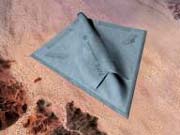
Boeing missed out on the richest warplane contract in history but is developing three versions of an unmanned combat air vehicle, or UVAC, for the US Defense Department.
The aircraft, which is still in development, is scheduled to make its maiden flight at the end of the first quarter next year.
The plane is expected to have combat capabilities, moving beyond the current unmanned or drone aircraft such as the Predator or Global Hawk that US forces are using over Afghanistan for reconnaissance and surveillance.
The Chicago-based corporation has been seeking to strengthen its military aircraft and missiles unit as it diversifies away from its core business of building commercial jets in order to better insulate itself from cyclical downturns in that sector.
