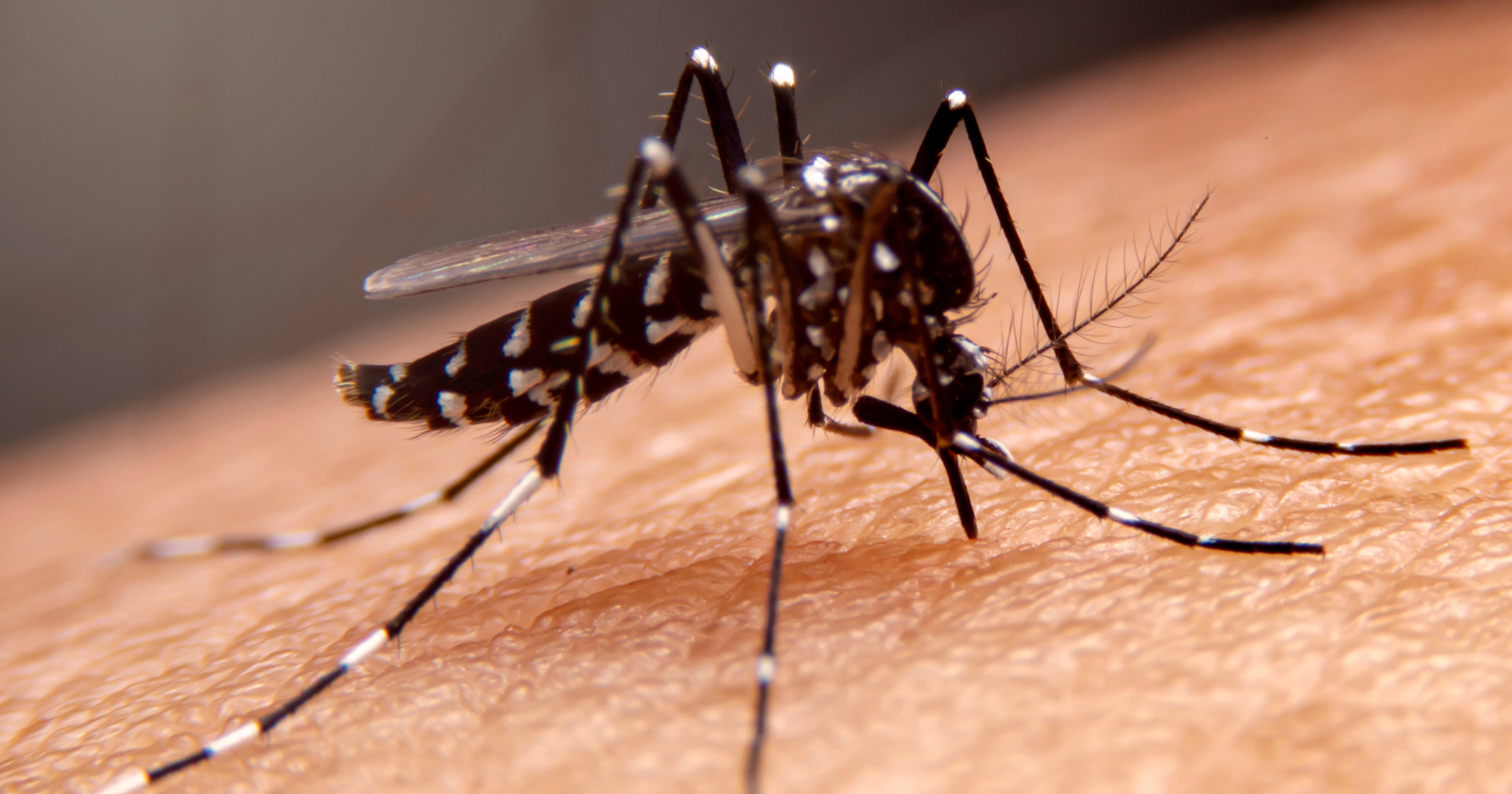
If you told most people that a country’s public health strategy involved deliberately breeding and releasing millions of mosquitoes a week, they would assume something had gone terribly wrong. Mosquitoes are the enemy. You spray them, you drain their breeding sites, you cover yourself in repellent. You do not, under any circumstances, run a facility that produces them by the millions and sends employees out on scheduled morning shifts to let them loose in residential neighbourhoods.
But that is exactly what the Singapore government has been doing since 2016, and the results are now peer-reviewed, published in the New England Journal of Medicine, and genuinely stunning. Once you understand the trick, this becomes one of the most elegant pieces of public health engineering you will ever come across.
The mosquitoes on purpose
Singapore’s National Environment Agency runs the whole thing under the name Project Wolbachia. At its production facility, technicians breed Aedes aegypti mosquitoes at industrial scale. These are the same mosquitoes that transmit dengue, Zika, and chikungunya. The ones being bred here, however, have been infected with a bacterium called Wolbachia pipientis, specifically the wAlbB strain, which occurs naturally in many insect species but is not typically found in Aedes aegypti.
Once the mosquitoes reach the pupal stage, the facility sorts them by sex. Only males get released, twice a week on weekday mornings, into the residential neighbourhoods where the programme is running. Here is the key point that catches everyone off guard: male mosquitoes do not bite. Only females do. Males feed on nectar. So releasing them by the million into your neighbourhood adds precisely zero to the local biting-mosquito problem.
If you like the idea of a country quietly engineering its own wildlife, this one goes further. Singapore spent sixty years turning itself into the greenest city on earth — and then had to deal with what actually moved in. Worth a watch:
What happens when they mate
The Wolbachia trick works through something called cytoplasmic incompatibility. When a male carrying Wolbachia mates with a wild female that does not carry the bacterium, her eggs get fertilised, they look normal, she lays them, and then nothing hatches. The bacterium disrupts the very first cell division in the developing embryo. Every egg is a dead end.
You can see where this is heading. Do this twice a week for months on end across an entire neighbourhood, with millions of released males competing for every wild female’s attention, and the wild mosquito population starts collapsing. The females run out of viable mates. The next generation shrinks. Eventually you are looking at a neighbourhood where the mosquitoes that could give you dengue have effectively been erased from the local landscape.
The numbers, which are extraordinary
The peer-reviewed results were published in the New England Journal of Medicine in February 2026, and they held up under the most demanding trial design available. Fifteen residential clusters across Singapore, holding a combined 724,428 people. Eight got the Wolbachia releases. Seven got nothing. The researchers tracked every dengue test result from those 15 clusters for two years, from mid-2022 to late 2024.
In the treated clusters, adult female Aedes aegypti populations dropped by roughly 78 per cent, from a baseline abundance index of 0.18 down to 0.041. In the untreated control clusters, the population actually rose over the same period, from 0.19 up to 0.277. And the dengue outcomes matched: residents in the release areas were 71 to 72 per cent less likely to contract dengue than residents in the untreated areas. The effect held across every age group, both sexes, and every year of the trial.
Where it is going next
You might reasonably wonder how much of Singapore is covered. According to the NEA’s latest update in March 2026, Project Wolbachia is protecting about 35 per cent of Singapore households, on track to hit 50 per cent by the end of 2026, with new release sites launching this year in Bukit Panjang, Little India, Pioneer, Toa Payoh, and Ang Mo Kio. Total household coverage will exceed 800,000 homes.
The programme is not officially a silver bullet. Singapore’s environment minister has been careful to emphasise that Wolbachia releases complement rather than replace the traditional approach of source reduction, insecticide spraying, and public education. But the picture is shifting fast. What started as a small phase 1 trial in 2016 is now a nationwide vector control programme that other tropical cities are studying carefully.
What this actually is
Look, I know this sounds like science fiction. A city that fights mosquitoes by breeding more mosquitoes. Eggs that never hatch because a bacterium interferes with cell division. Millions of male insects released weekly into apartment blocks where no one notices because males never bite. Every piece of it is real, all of it has been through the highest tier of peer review, and it is working better than any dengue intervention that came before it.
The reason it works is that the technique does not try to poison the mosquitoes, trap them, or block them from breeding. It just gives the wild females a whole lot of male suitors whose reproductive contribution is zero. The wild population outcompetes itself. That is judo. And Singapore, of all places, turned out to be exactly the right setting to prove it works.