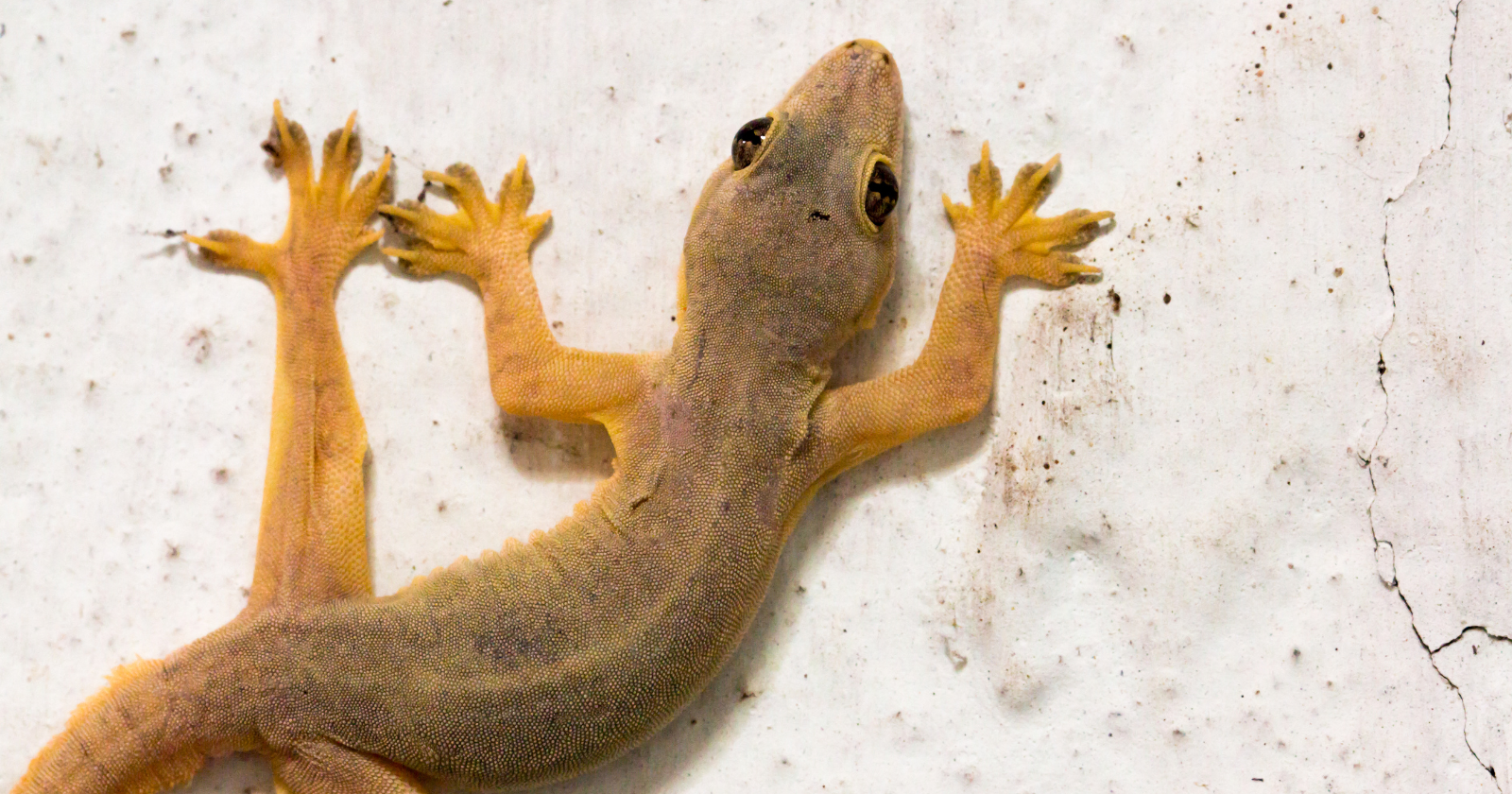
Ten lizards went to a Croatian island in 1971, and nobody came back to check on them for thirty-six years.
They were Italian wall lizards, Podarcis siculus, five males and five females, lifted off a rocky speck in the southern Adriatic called Pod Kopište and carried a few kilometres east to an even smaller speck called Pod Mrčaru. Eviatar Nevo and his colleagues were running a competition experiment, swapping animals between islets to see which species would edge out the other. Then the project wound down, the region went through a war, and ten reptiles were left to get on with it.
They got on with it.
What the survey team found
Biologists came back in the mid 2000s. A group including Anthony Herrel, then at the University of Antwerp, and Duncan Irschick of the University of Massachusetts Amherst, reported in the Proceedings of the National Academy of Sciences that the islet was crawling with wall lizards, at densities well above those of the source population. The original residents, a rival species called Podarcis melisellensis, had vanished. Mitochondrial DNA confirmed the survivors were descendants of the ten transplants, genetically indistinguishable from the population back home.
They had also changed shape. Heads on Pod Mrčaru were longer, wider and taller, and those heads delivered a much harder bite.
Stomach contents explained the reason. Back on Pod Kopište, the animals ate arthropods, with plant matter making up somewhere between 4 and 7 per cent of the diet. On Pod Mrčaru, plants accounted for 34 per cent of what they ate in spring and 61 per cent in summer, roughly half of that being tough, high-cellulose leaf material. Leaves never flee, but they do fight back, armoured in cell walls that an insect-eating reptile has no equipment to break down. Cropping them into smaller pieces takes force, and force takes jaw muscle, and jaw muscle needs a bigger skull to hang off.
The valves nobody expected
Then the team opened up preserved specimens and found something odder than a big head.
Ringing the inside of the hindgut were cecal valves, muscular ridges that pinch the tube shut, slow the passage of food and turn a stretch of gut into a fermentation chamber where microbes do the digesting the lizard’s own enzymes cannot. Herrel’s group recorded them in adults, in juveniles and in a hatchling barely 26 millimetres long with its umbilical scar still visible. The hindguts also held nematodes that break down cellulose, passengers absent from Pod Kopište. Per Irschick, quoted in Phys.org’s coverage of the study, valves of this type show up in well under 1 per cent of known scaled reptile species.
Thirty-six years, about thirty generations, and a piece of plumbing that had never been recorded in the species.
How much of this counts as evolution
The headline version of the story stops there. The follow-up work does not, and it complicates things in useful ways.
Writing in Physiological and Biochemical Zoology, Bart Vervust and co-authors confirmed the skull and gut differences, added a few more (wider teeth, longer stomachs and small intestines) and then ran a test of plasticity. Their preliminary result suggested that at least some of the changes tied to a plant-heavy diet may be plastic, meaning an individual body responding to what it is fed rather than a trait inherited from its parents. That is one experiment, and the authors called it preliminary themselves.
A decade on, Beck Wehrle, Donovan German and colleagues put the digestion itself under the microscope. As documented in their comparison of gut structure and function, the differences between the two islands were subtler than expected and concentrated in the hindgut, with microbial communities and sheer food intake doing much of the lifting. The transplanted population did get more out of plant food, but the machinery was tweaked rather than rebuilt.
Then genomics arrived and made everyone sit up.
Stéphanie Sherpa, Daniele Salvi and a European team sequenced roughly 82,000 genetic markers across three island populations. As reported in their 2023 paper in Ecology and Evolution, the introduced lizards showed a clear founder effect and almost no neutral genetic divergence from their source. A genome scan turned up only a handful of sites with big shifts in gene frequency, some of them near genes plausibly linked to diet. Two readings fit: a small number of genes with outsized effects, or plasticity doing a great deal of the visible work.
What the islet is actually good for
Bodies are less fixed than school biology suggests. A skull can thicken, a gut can grow a valve, a microbe community can move in and start earning its keep, all inside a human lifetime and without much visible change in the genome at all. Whether every one of those shifts is written into the DNA of Pod Mrčaru’s lizards or partly assembled fresh in each animal, the population crossed an ecological line that textbooks once treated as a slow, grinding journey.
Nevo’s team set up one small experiment on one small rock with ten animals and a modest question about competition. Cargo ships, garden centres and pet traders are running the same experiment at industrial scale, thousands of times over, without permits or follow-up visits. The Adriatic version had the decency to leave a control island three and a half kilometres away.