

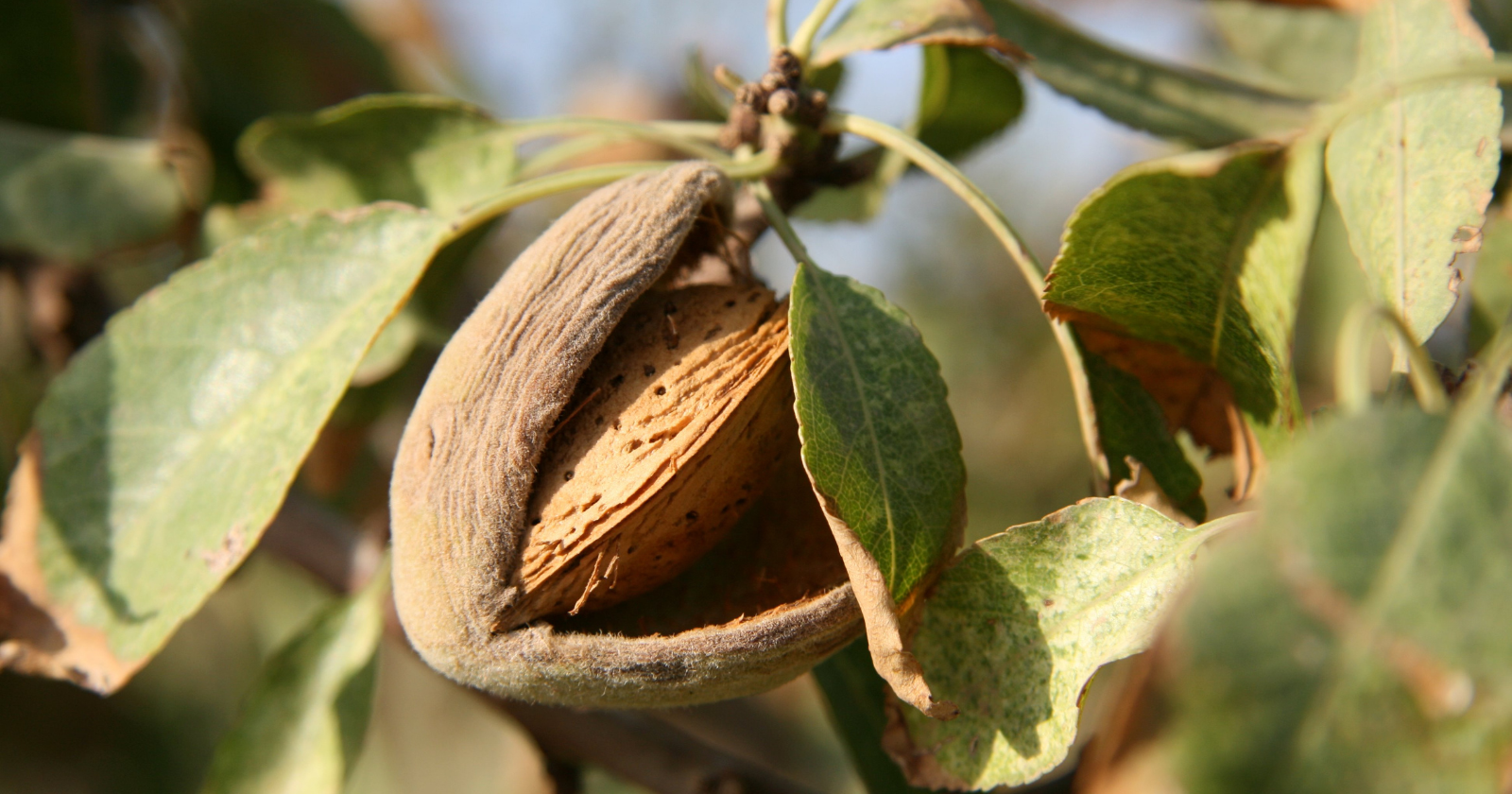
The usual shape of a viral statistic is that it turns out to be wrong, or at least stretched past what the underlying data can support. The “gallon of water per almond” figure that spread through California drought coverage in 2014 did not follow that shape. When an independent water-policy institute actually ran the numbers a year later, the popular figure held up, and then some. The almond wasn’t exonerated — if anything, it was underestimated.
Where the number came from
The claim traces to Mother Jones environment writer Tom Philpott, who wrote in a July 2014 piece that “it takes 1.1 gallons of water to grow a single almond in California, where 80 percent of the world’s almonds are produced.” A companion piece the same year sharpened the comparison further, stating plainly that “it takes a gallon of water to produce a single almond, more than three times the amount required for a grape and two and a half times as much for a strawberry.” The framing landed at the peak of California’s multi-year drought, when almond orchards, an unusually visible target because they cannot be left fallow in a dry year the way an annual crop can, became shorthand for agricultural water waste generally.
What happened when someone actually checked
The person who ran the independent math was Peter Gleick, president of the Pacific Institute, a water-policy research organization. Writing for National Geographic’s Water Currents blog in May 2015, Gleick combined USDA crop and acreage data, USDA yield figures, and UC Davis and California Department of Water Resources irrigation estimates to calculate the water cost per kernel from first principles rather than taking either side’s number on faith. His conclusion was blunt: “Many stories have latched on to an estimate that each almond kernel (nut) requires around a gallon of water to produce… almonds required between 1.6 and 1.7 gallons of water per nut, somewhat higher than the 1 gallon per nut commonly reported elsewhere, but of a comparable magnitude.”
In other words, the number that critics of the “gallon of water” claim expected to collapse under scrutiny instead came in roughly 60 percent higher than the original figure. Gleick’s calculation, using USDA data showing California’s bearing almond acreage had grown from about 510,000 acres in 2000 to 870,000 acres by 2014, converted to roughly 520 to 560 gallons of water per pound of almonds produced, and an estimated 3.1 million acre-feet of water applied to the state’s almond crop in 2010 — a figure Gleick noted was “almost certainly higher” by 2014, though final data for that year weren’t yet available when he wrote.
Where the fight went once the number held
With the per-kernel figure no longer available as a talking point against almonds specifically, the debate over California’s drought-era water use moved to crops that use dramatically more of it in aggregate. NPR’s Dan Charles reported that “the agricultural product that truly dominates water use in California isn’t almonds. It’s alfalfa, plus other forages, such as irrigated pasture and corn that’s chopped into a cattle feed called silage.” Gleick’s own piece made the same pivot, closing not on almonds at all but on the state’s broader supply-demand gap: “In the end, if the gap between water supply and water demand continues to grow, California will have to make fundamental changes to agriculture in a way that ensures both a strong agricultural sector and a healthy environment… In the end, it is about far more than just almonds.”
A separate NPR piece on the same controversy captured how slippery the whole framing had become once any single crop got singled out, quoting UC Davis water economist Jay Lund’s observation that “waste is always water used by other people.” The same piece set two growers’ framings directly against each other: water advocate Tom Stokely arguing that “almonds use more water than all of the indoor water use in all of California,” against almond grower Daniel Bays countering that “almonds really aren’t more thirsty than any of our other crops.” Both were technically defensible, depending on whether the comparison was to a single household tap or to a different orchard crop, exactly the framing gap that let the debate run for years without anyone needing to be wrong.
By the time Philpott returned to the subject at the end of 2015, the target had shifted again, this time toward what happens to almonds after they’re grown rather than how much water goes into growing them. Roughly two-thirds of California’s combined almond and pistachio crop is exported, much of it to Asia, meaning a meaningful share of the state’s irrigation water leaves the state, and the country, embedded in a shipping container.
Groundwater pumping to sustain the expanded orchard acreage was, by that point, showing up as physical land subsidence across a 1,200-square-mile stretch of the southern Central Valley — more than twice the area of Los Angeles — that a USGS-led team had documented sinking by as much as 11 inches a year.
The almond, it turned out, was never the miscalculation. It was just the easiest single word to put a number next to, in a drought where nearly every crop, and nearly every argument about the crop, was drawing from the same shrinking reservoir.