

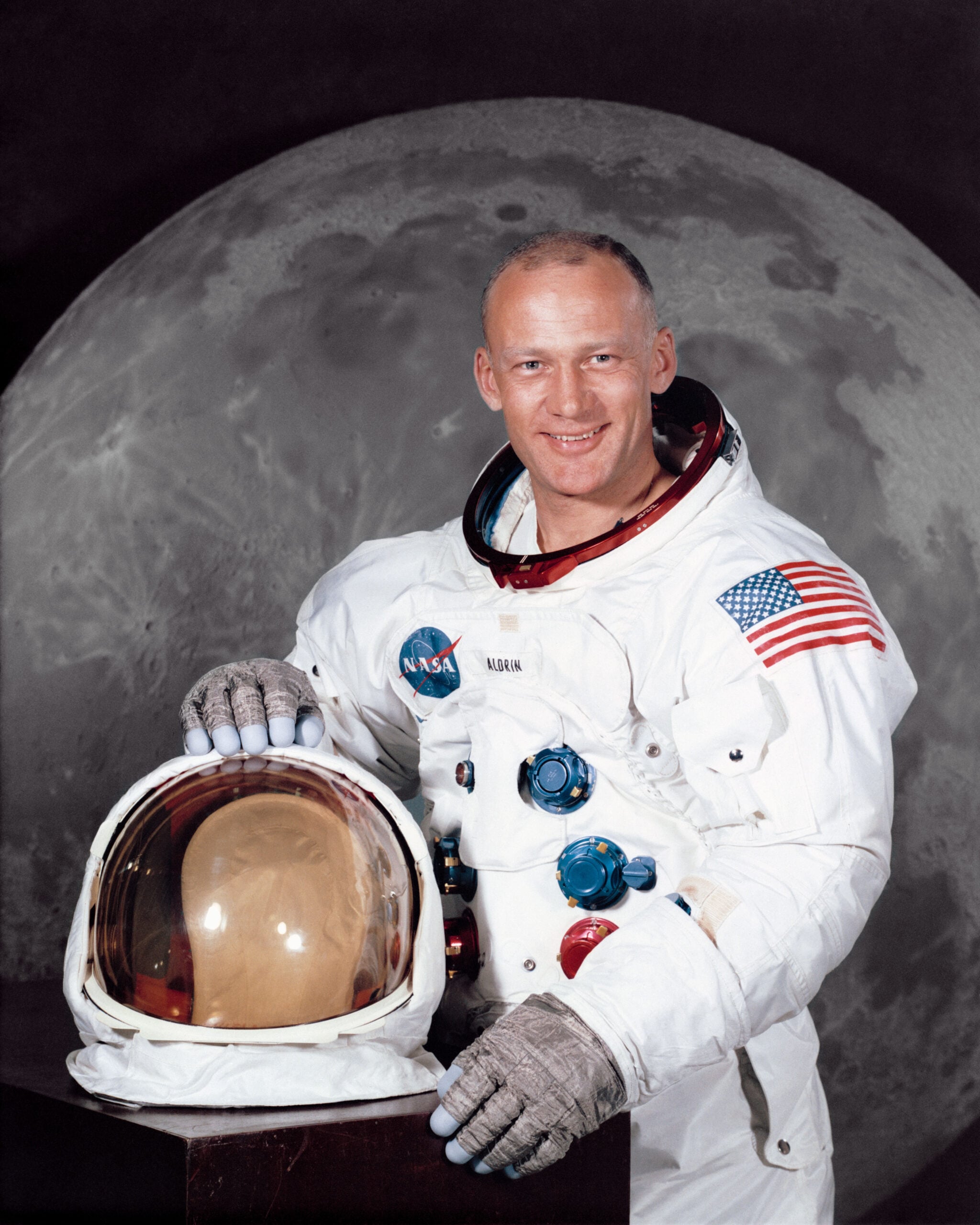
The Apollo 11 mission cost NASA more than twenty billion dollars in 1969 money, or somewhere north of one hundred and fifty billion dollars in modern terms. It was one of the most expensive single scientific undertakings in human history, involving roughly four hundred thousand people across NASA and its contractor network. Everything about it was unprecedented. The Saturn V rocket had never been flown with a crew on a full lunar trajectory before. The Lunar Module had never been landed on a celestial body. The re-entry profile at the return end of the trip had never been survived. Buzz Aldrin flew on the mission as the second of three crew members and walked on the lunar surface on 20 July 1969. He returned home four days later. And when he got back to Houston he filed a routine federal government travel expense claim like any other public employee returning from a work trip. It was for thirty-three dollars and thirty-one cents.
What the voucher actually itemises
Aldrin posted a photograph of the original voucher on Twitter on 30 July 2015 to mark the forty-sixth anniversary of the moon landing. According to CBS News reporting the following day by science journalist Amanda Schupak, the voucher covers the period from 7 July 1969 through to 27 July 1969, which is a week and a half before the launch through to three days after the splashdown. What follows is probably the strangest business trip itinerary in the history of American federal expense accounting. The listed points of travel are Houston, Texas to Cape Kennedy, Florida on 7 July, then Cape Kennedy to Moon on 16 July, then Moon to Pacific Ocean on 24 July, then Pacific Ocean to Hawaii the same day, and finally Hawaii back to Houston on 27 July. The mode of transport listed for each leg is equally striking. Government Air for the two flights inside the continental United States. Government Spacecraft for the leg between Cape Kennedy and the Moon. USS Hornet, which is the aircraft carrier that recovered the crew, for the leg between the Pacific Ocean and Hawaii. And a US Air Force plane for the return to Houston.
The life of an astronaut is truly fascinating – check out the video we made on what every astronaut sees in the mirror:
The federal expense reimbursement system in 1969 did not distinguish between astronauts and any other government employee. If you were travelling on official business you filled out the same form, listed the same route, claimed the same mileage rate for personal vehicle use, and provided the same receipts for any out-of-pocket costs. Aldrin’s voucher was processed by a routine NASA finance office alongside vouchers from technicians attending conferences and administrators travelling to Washington. Nobody appears to have thought the situation odd enough to route it through any special channel. The reimbursement was paid in the normal course of business a few weeks later.
Why the amount was so small
The reason the total came to only thirty-three dollars and thirty-one cents rather than something more substantial is spelled out on the voucher itself. According to BBC Science Focus Magazine’s August 2015 write-up by Rachel Baxter, the document states in plain text that government meals and quarters were furnished for all the dates in question. That covered his food and lodging at the pre-launch quarantine facility at Cape Kennedy, aboard the Saturn V and the Apollo capsule, on the lunar surface itself, aboard the USS Hornet during the post-splashdown recovery, and inside the mobile quarantine facility where he and Neil Armstrong and Michael Collins were confined for twenty-one days after their return in case they had brought back any unknown lunar pathogens. The federal government had covered every one of those things directly, so Aldrin had nothing to claim against any of them.
What the thirty-three dollars and thirty-one cents actually covered was almost certainly the mileage rate for driving his own personal vehicle from his home in Houston to Ellington Air Force Base and back at each end of the trip. Government employees in 1969 were entitled to claim a per-mile rate when using their own car for official business. Aldrin did what everybody at NASA did. He drove to the airfield, got on the government plane, and came home the same way at the end. He submitted his mileage on the standard form. He got his check for thirty-three dollars and thirty-one cents in the mail a few weeks later.
The voucher was not the only piece of Apollo 11 bureaucratic paperwork Aldrin dug out and shared publicly in 2015. He also posted the US Customs declaration that he and Armstrong and Collins had signed on landing in Honolulu after the recovery. The declaration listed their country of departure as Moon and their flight number as Apollo 11. The cargo section listed moon rock and moon dust samples. The question about whether any crew member had been in contact with an infectious disease during the trip was answered by Aldrin in the space provided as “moon disease TBD.” A Honolulu customs inspector had counter-signed the form and accepted it as filed. The crew had cleared customs.
What the whole set of documents represents is one of the more revealing curiosities of the entire Apollo programme. NASA had achieved something in July 1969 that no human institution had ever previously come close to achieving, and the federal bureaucracy processing the paperwork for the people who had done it treated them exactly like every other federal employee returning from a work trip. That was partly because the routine forms were the only ones available. But it was also because the people at NASA didn’t consider themselves exempt from the ordinary paperwork obligations of federal employment. Aldrin filled out his expense form. He submitted his customs declaration. He collected his thirty-three dollars and thirty-one cents. And forty-six years later he still had the voucher in a drawer.