

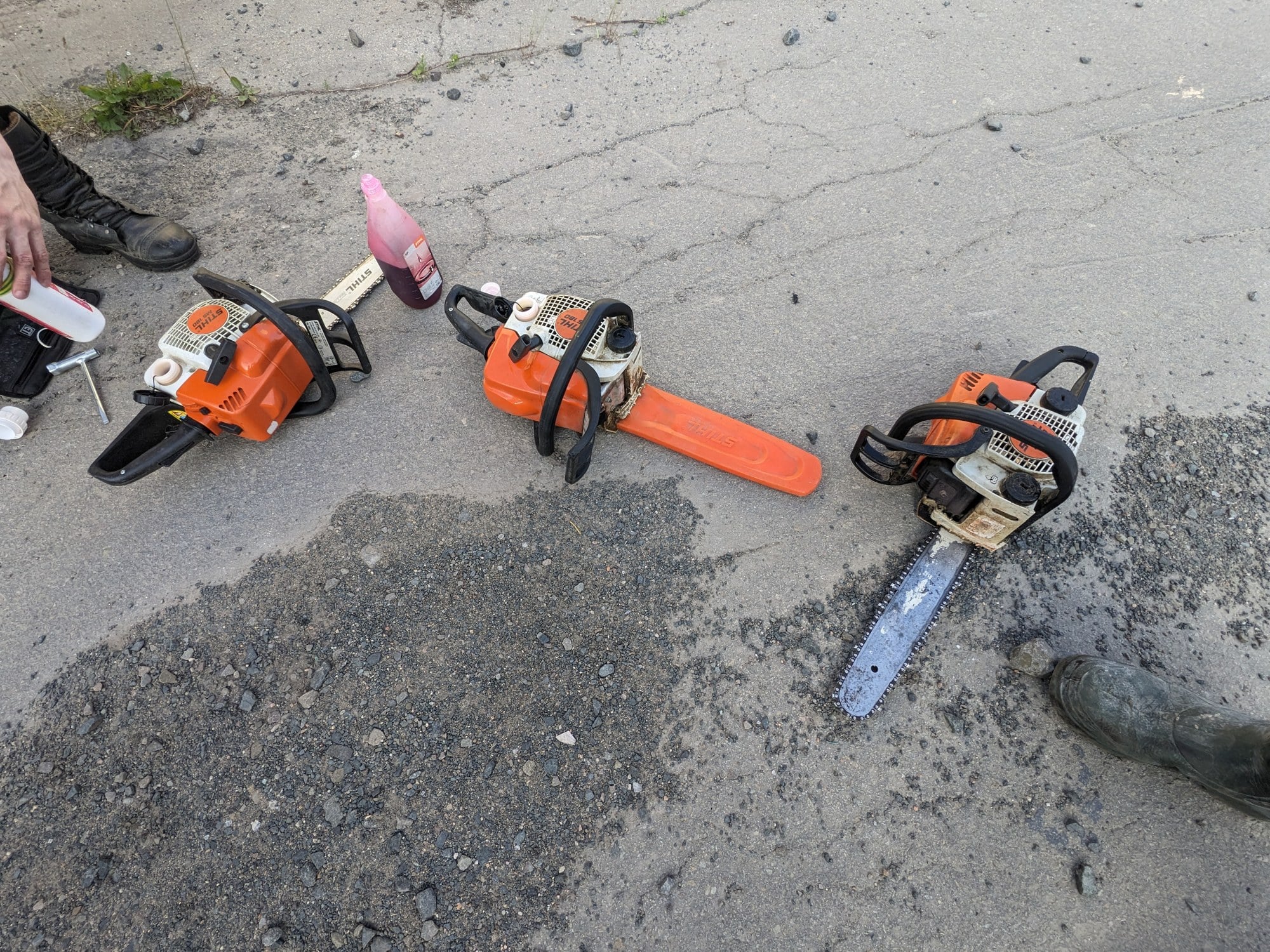
The chairman of the STIHL Advisory Board and Supervisory Board has put a number on the table weeks before Germany’s metalworking and electrical industries open collective bargaining: 40 hours a week, with no pay compensation attached. Dr Nikolas Stihl, the grandson of company founder Andreas Stihl and the third generation at the head of the Waiblingen chainsaw maker, argued in a news write-up published by Euronews that the country’s long-standing 35-hour week has become a cost Germany’s industrial base can no longer carry, and that the coming round — beginning in October — is where that question has to be settled. The framing arrives from an earlier interview reported by Handelsblatt via DPA, in which he was paraphrased as saying the shorter week was affordable in good times and is not now.
The ask, and the productivity argument behind it
The demand is narrow in shape and wide in consequence. Stihl is not calling for longer hours in exchange for a premium, or for a phased trade against wage growth; as reported, he is asking employees in the metal and electrical sectors to work five additional hours a week without any corresponding pay increase. That places the ask squarely inside the bargaining calendar rather than in the looser space of political commentary, since the metal and electrical round that opens in the fall is the venue where working-time norms in German manufacturing are actually written.
His stated reasoning rests on a comparison rather than on a company balance sheet. In his framing, Germany once held a productivity advantage over its main competitors that was large enough to justify unusually high labor costs and unusually short hours; that gap, he argues, has narrowed or closed, leaving the cost structure without the offset that made it work. He has been direct about the size of what he is requesting. In his opinion piece for Euronews, published a day before the news write-up and updated since, he acknowledges that this asks a great deal of unions and of employees, and sets the purpose as keeping production inside Germany and safeguarding jobs there.
Context matters for who is speaking. STIHL, founded in 1926 and marking its centenary this year, reported 2025 revenue of €5.48 billion and 20,246 employees worldwide, and describes itself — a company claim carried in the Euronews coverage — as the world’s best-selling chainsaw brand since 1971. It is a family firm, not a listed conglomerate, and its chairman is arguing from the position of a manufacturer with German plants rather than from an employers’ federation platform. The broader debate over hours in German industry did not begin with him. It was already underway on the Mercedes-Benz side: supervisory-board chair Martin Brudermüller used a Handelsblatt interview earlier in the summer to call for a return to a 40-hour week at the same pay, and CEO Ola Källenius has separately pressed the company’s German workforce to work longer hours without a matching wage increase.
A volume-of-hours package, not a single lever
The 40-hour call sits inside a larger set of proposals in the OpEd, and it is worth reading them as one argument about the total volume of hours worked in the economy rather than as separate policy items. He wants overtime incentivized rather than penalized. He wants working lives extended, with what he describes as fair exceptions for physically demanding occupations — an important qualifier, since a uniform later retirement age is the version of that idea that has drawn the sharpest resistance. He wants better use made of people already available to the labor market: the unemployed, and part-time workers who could move toward fuller hours. And he wants skilled immigration treated as part of the supply, not as an afterthought.
Two of his proposals touch absence rather than hours directly. He argues that sick pay should begin only from the second day of illness, and that the phone-in sick note — the pandemic-era convenience that allows a certificate to be issued remotely — should be abolished. Alongside that sits a fiscal boundary he sets for himself rather than one written into German law: non-wage labor costs, meaning pension, health, long-term care and unemployment contributions taken together, should not exceed 40% of gross wages. He treats that ceiling as the economic limit beyond which German employment becomes uncompetitive.
What he says is at stake, and when it gets tested
The urgency in his account comes from figures he presents as his own reading of the industrial picture, and they should be read that way. He warns of roughly 15% of industrial output lost over the past eight years, of industrial employment shrinking by something on the order of 15,000 jobs month after month, and of private net investment sitting close to zero. On job losses he goes further: as reported by Handelsblatt and DPA, he describes Germany as heading toward some 500,000 lost industrial jobs, with secondary coverage also citing around 200,000 already gone in the past year and roughly half a million at risk. Those are his warnings and his framing, not verified official counts.
The causes, in his telling, are split between the home-grown and the imported. Overregulation, high energy and labor costs, high taxes and what he characterizes as declining education and skills sit on one side; US tariffs, China’s industrial policy and the wider geopolitical picture on the other. His conclusion is that the domestic half is the part Germany can act on, and that hours are the fastest available instrument.
Whether the sector’s bargaining parties treat 40 hours without compensation as a live item — rather than as an opening position from one employer voice — is a question for October, when the metal and electrical round begins.