

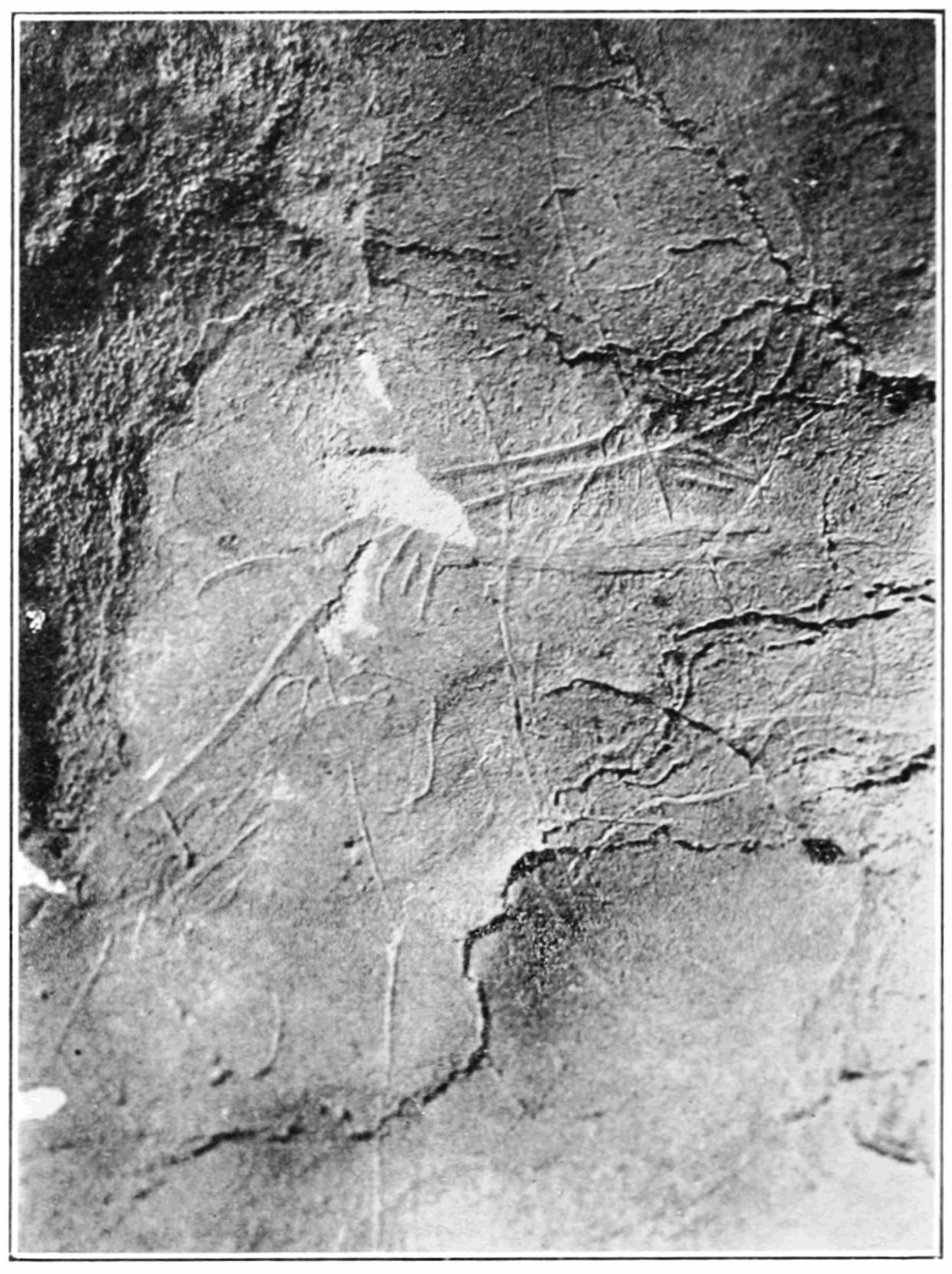
A computer model trained on the characteristics of cave-dwelling and rock-art sites in south Wales pointed archaeologists across the Irish Sea to 28 candidate caves in southwest Ireland — and in eight of them, the Lost Land Bridge Project team says it found engravings, ochre and charcoal paintings, and finger-drawn marks in clay that they believe date from at least about 15,000 years ago, which would place people on the island roughly 5,000 years earlier than the previously accepted evidence, as reported by BBC News.
That is the whole finding in one breath, and each clause carries a different kind of weight. The algorithm is a method. The eight caves are a count. The "about 15,000 years ago" is, for now, a belief the team holds on stylistic and contextual grounds rather than a laboratory verdict — and the project's coordinator, Dr George Nash of Liverpool University, has been careful to frame it as at least that old, and possibly much earlier.
Why a Welsh rock-art specialist started looking west
The idea that sent the survey to Ireland is older than the survey itself, and it begins underwater.
During the coldest stretches of the last Ice Age, enormous volumes of water were locked into ice sheets and sea levels sat far lower than they do now. In the account the project advances, that drop exposed a broad plateau between Pembrokeshire in southwest Wales and the southeast corner of Ireland, near present-day Rosslare — a walkable connection of roughly 46 miles (76 km) coast to coast, carrying forest and grassland rather than open water.
It was not a hospitable corridor. Summer temperatures on that landscape are often put in the range of about −10°C to −20°C, which makes the crossing sound less like migration and more like commuting through a freezer. But the plateau, as the project describes it, supported large herbivores — wild horses, mammoth, bison, reindeer — and for hunter-gatherer groups, that is the entire argument. Animals of that size are calories, hides, bone, and sinew. Where the herds went, people followed, and a land bridge is simply the route the herds could take.
The Welsh end of that story is already well documented. South Wales is understood to have been settled somewhere in the region of 35,000 to 40,000 years ago, and its caves preserve a long developmental sequence of marks made on stone over many thousands of years. Nash's reasoning, as relayed by the BBC, runs along that grain: if people were living and marking caves on one side of the exposed plateau for tens of thousands of years, the far side is not an unlikely place to look — it is the obvious place, and the reason nobody had found much there may have been that nobody had systematically searched.
Ireland's previous oldest evidence of human presence sat at roughly 10,500 years ago, and it arrived, by Nash's characterization, more or less by accident rather than by design. That framing matters to the new work. A baseline established by chance discovery is a statement about where people have happened to dig, not a statement about where people once were.
Twenty-eight candidates, eight with marks on the walls
Rather than walk the coastline hoping for luck, the team built a filter.
The project's approach was to train a computer model on the measurable characteristics of known south Wales cave dwellings and rock-art sites — the kinds of geology, orientation, and setting that repeatedly coincide with human occupation and marking. Turned loose on southwest Ireland, that model returned 28 caves worth investigating. The team, which drew on University College Dublin and the University of Adelaide along with academics from Dubai, Wales, and Portugal, plus caving specialist Shane Diffily and digital mapping consultant Darren Lee, then went and looked.
Eight of the 28 held art.
What they report is not one technique but a spread of them. There are engravings cut into rock. There are paintings made with ochre and with charcoal. There are fingertip line sketches drawn into clay and earth, the softest imaginable medium for the oldest imaginable gesture. And there are flutings — parallel grooves left where fingers were dragged through soft layers on a cave wall, a mark type familiar from Ice Age cave sites elsewhere in Europe and one that records, quite literally, the width of a hand.
The caves themselves have not been named. The project is withholding exact locations to reduce the risk of vandalism and looting, a precaution that is standard practice for fragile prehistoric art and one that has an unavoidable cost: the public gets the count and the categories, not the coordinates.
What "about 15,000" settles, and what it does not
It is worth being precise about the shape of this claim, because precision is what the claim is currently short of.
No radiocarbon dates from a laboratory have been published for this art. The "at least 15,000 years ago, and possibly much earlier" figure is a contextual and stylistic assessment offered by specialists who work on comparable material — a considered read, not a measurement. Ochre, charcoal, clay, and engraved stone can in principle be approached by several dating routes, but until results exist and are examined by other researchers, the age remains an argument rather than a fixed point on a timeline.
The land-bridge migration is likewise a hypothesis the project is advancing, not a demonstrated population history. There is no genetic census of who walked from Pembrokeshire to Rosslare, and no claim here that there was one.
Nash's expectation is that the eight caves are not the end of the list. His reasoning is geographic: people moving inland from a southeastern landfall would not have skipped Wexford, Waterford, and Cork on the way to southwest Ireland, which suggests further sites are waiting in between. That is a prediction, and a testable one — the same model that produced 28 candidates can be pointed at other coastlines.
What the eight caves establish for now is narrower and still remarkable: in a country whose human story was thought to begin around 10,500 years ago, there are walls with fingermarks on them that specialists believe are considerably older, found not by accident but because a machine was asked where to look.