

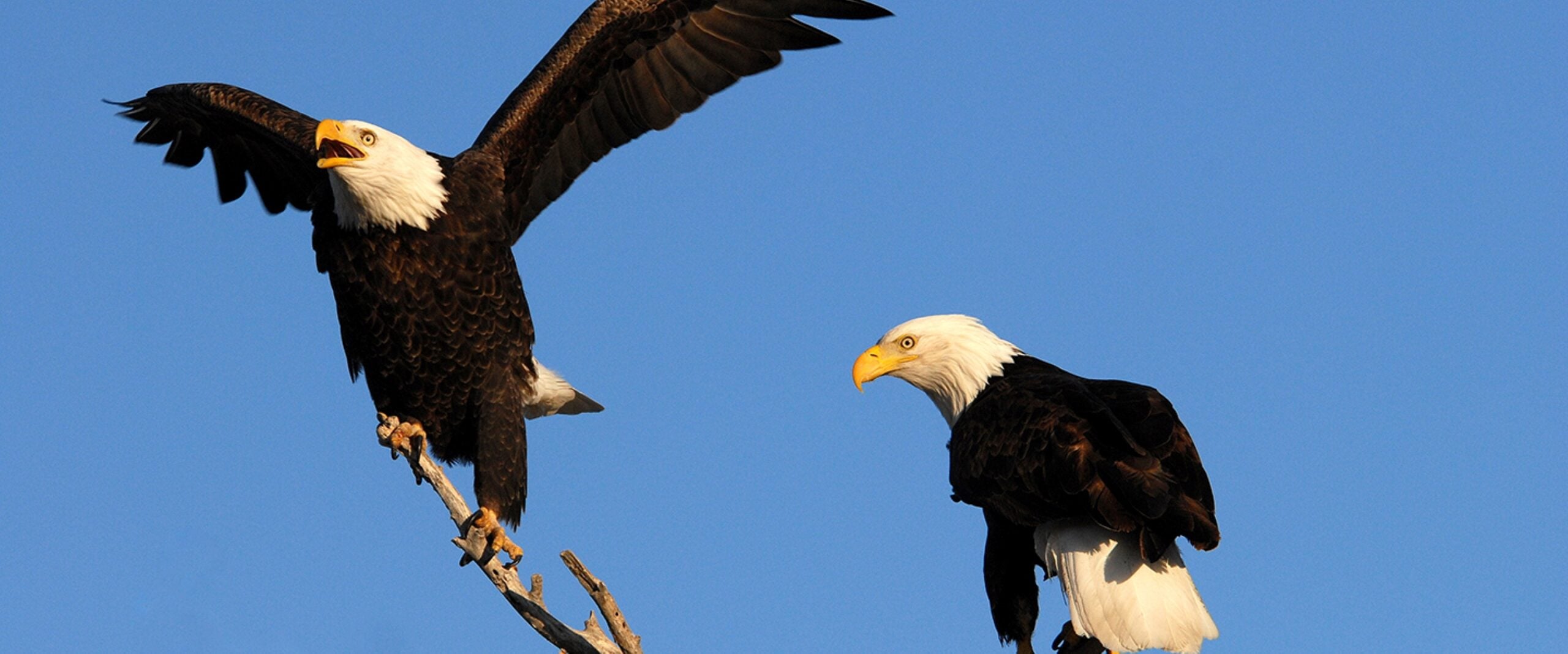
A gift of more than $5.5 million from Anna and Greg Brockman — Greg being the cofounder and president of OpenAI — closed the gap on a roughly $10 million community fundraising target and cleared the path for a land trust to buy the 63-acre Moon Camp property at Big Bear Lake, the last stretch of shoreline that a county-approved plan would have turned into some 50 custom homes and a marina in the valley where the bald eagles Jackie and Shadow have made their fame.
The donation was announced on 24 July 2026 by Friends of Big Bear Valley, the nonprofit whose live nest camera has turned two raptors in the San Bernardino Mountains into a global audience habit, and reported the same day by the Victorville Daily Press. According to the group, the Brockman gift completed a campaign that began in mid-February and drew more than 25,000 separate donations — small money, mostly, which together supplied nearly half the total before the final tranche arrived from a single household.
The 63 acres in question
Moon Camp sits at Fawnskin, on the north shore of Big Bear Lake. Friends of Big Bear Valley describes it as the only undisturbed shoreline left on the lake — a phrase that carries more weight than it first appears, because shoreline is the part of a mountain lake that development reaches first and keeps. Roads, seawalls, docks, lawns and lighting tend to arrive as a package. What remains at Moon Camp, by the nonprofit’s account, is a mosaic that supports rare and endemic plants, San Bernardino flying squirrels, and a heavy traffic of birds and waterfowl, functioning as an ecological corridor between the water’s edge and the forest behind it.
The plan that alarmed the valley was not speculative. San Bernardino County’s board approved the luxury development in September 2025 — roughly 50 custom homes plus a marina — a decision that Friends of Big Bear Valley says followed more than 5,000 emails opposing the project. Approval, in land-use terms, is the moment the clock starts running the other way: entitlements attach to the parcel, and the only remaining lever for opponents is usually the one that requires money rather than testimony.
That lever had already been prepared, quietly. The late Sandy Steers, executive director of Friends of Big Bear Valley and a member of the San Bernardino Mountains Land Trust board, helped negotiate a limited purchase agreement for the property before her death on 11 February 2026. It is the kind of instrument that buys a conservation buyer something narrow and precious: a defined window, a defined price, and the obligation to produce the funds inside it.
How the money arrived
The public campaign began in mid-February 2026, days after Steers died, and it ran on the arithmetic of the nest camera audience. Friends of Big Bear Valley says over 25,000 donations delivered nearly half of the approximately $10 million needed — an average contribution that speaks to reach rather than wealth. Jenny Voisard, the organisation’s spokesperson and fundraising lead, has been the public face of that effort; co-founders Patricia Klous and Roman Silberfeld serve as co-board chairs.
Grassroots campaigns of this shape usually stall in the last quarter. The early money is emotional and fast; the final millions are structural and slow. That is the gap the Brockmans filled. In the organisation’s announcement, Anna Brockman is quoted expressing gratitude toward the community of donors whose contributions came first — framing the family’s gift as the completion of somebody else’s work rather than the substance of it. The couple’s donation, per Friends of Big Bear Valley and the Daily Press, exceeded $5.5 million.
What that money did was procedural, then final. Friends of Big Bear Valley said the San Bernardino Mountains Land Trust planned to complete the purchase by 31 July 2026. Escrow closed in late July, the San Bernardino Sun reported, with the trust taking the 63 acres for permanent conservation and leftover funds earmarked for closing costs, taxes, legal fees and stewardship. You can find the campaign’s own account of the timeline at Friends of Big Bear Valley.
Why shoreline, and why these eagles
Jackie and Shadow nest about 145 feet up in a Jeffrey Pine in the San Bernardino Mountains, according to the Victorville Daily Press — a height that is itself part of the story, since large raptors require mature trees with structural crowns that took a century or more to grow. The nest is not on the Moon Camp parcel, and the campaign has not claimed it is. The argument for the acquisition rests instead on the surrounding habitat: the shoreline, forest edge and open water that a resident pair uses for hunting, perching and movement, and which Friends of Big Bear Valley characterises as a corridor rather than a discrete patch.
The nonprofit also notes a historical figure worth holding lightly: before a nesting pair established itself in the valley, the area saw an estimated 25 to 30 visiting eagles each year. Wintering bald eagles congregate where fish and undisturbed shoreline coincide — which is precisely the combination that a marina and 50 lakeside homes would have revised.
Jackie, for her part, was taken to the Ojai Raptor Center in mid-July after a ground altercation. She died in the overnight hours of 9 August 2026 while still in intensive care — a reminder that the birds who made the fundraising possible remained individual animals with individual risks, independent of what happened to the acreage.
With the land trust’s purchase complete, the 63 acres have passed out of the development pipeline and into permanent conservation — the last undisturbed shoreline on Big Bear Lake held, finally, as shoreline.