

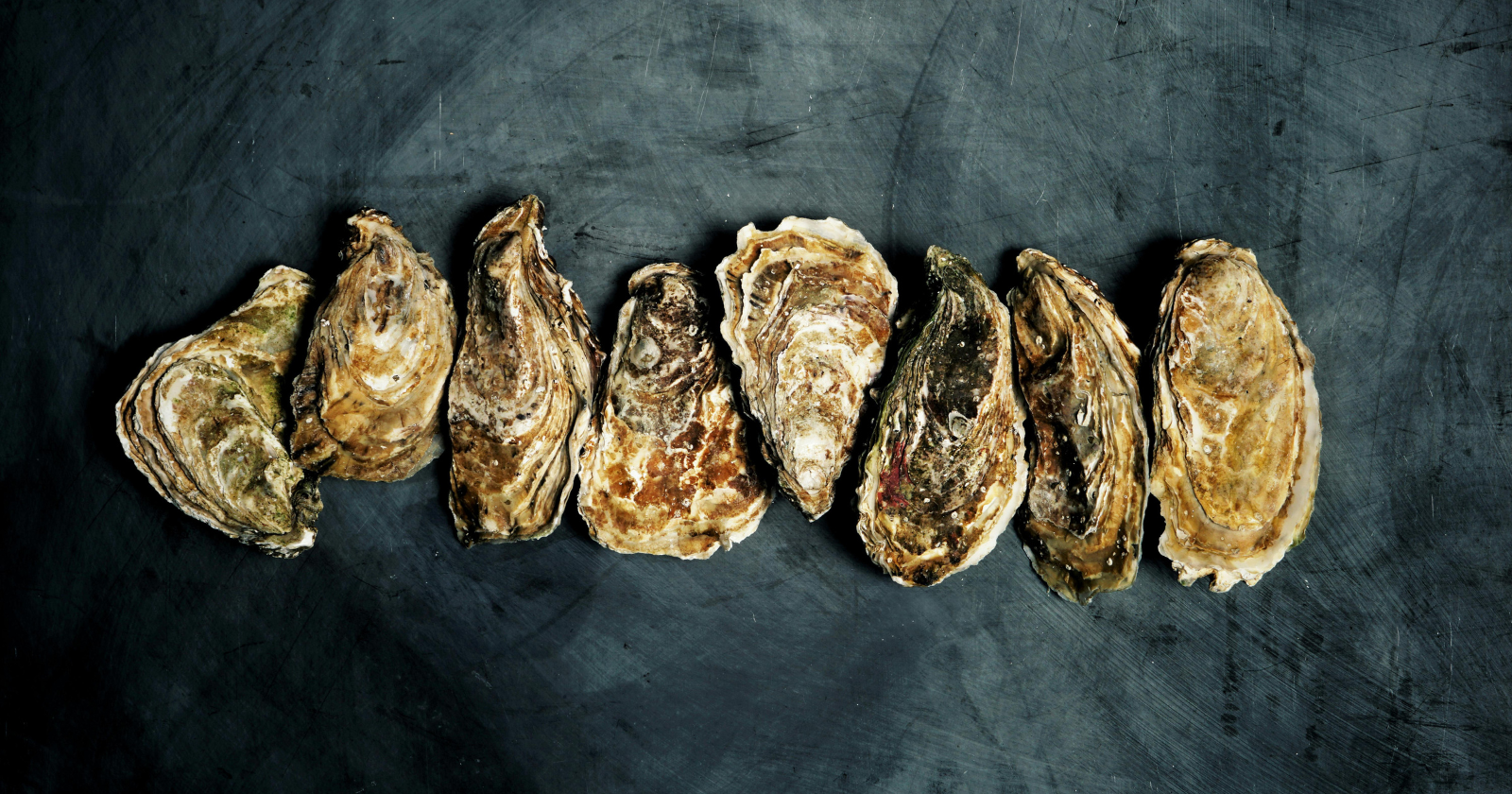
Before New York was the city of anything else, it was the city of oysters.
When Henry Hudson sailed in, the estuary held some 220,000 acres of oyster reef — by many accounts half the world’s oysters — beds so vast and shallow that they were charted as navigation hazards, with ships steering around them. Pearl Street in Manhattan is named for the heaps of discarded shells. Through the 1800s, oysters were the city’s street food, its export, its identity; New Yorkers ate them by the million from carts.
Then the city ate, dredged and poisoned the reefs to death. By the early 20th century, pollution had made the survivors unsafe and the beds were closed. For a hundred years, New York Harbor — once one of the most productive estuaries on Earth — was effectively an oyster desert.
The rebuilding project now underway starts, fittingly, at the dinner table.
The shell loop
The Billion Oyster Project, run from Governors Island and born out of the Harbor School, a public maritime high school, has a target in its name: one billion oysters back in the harbor by 2035.
Its raw material comes off plates. More than 100 partner restaurants across Manhattan, Brooklyn and Queens separate their shells after service — over 2.5 million pounds collected since 2015 — and the shells are trucked to Governors Island, where they cure in the open air for about a year until sun and weather have scoured them clean.
The reason is oyster biology’s one hard requirement: a larva must cement itself to a hard, calcium-rich surface, and the surface it evolved to choose is the shell of its ancestors. The harbor’s problem was never a shortage of larvae so much as a century-long shortage of anything to land on — the old reefs, the accumulated shell of millennia, had been mined away. So the cured shells go into tanks of harbor water seeded with millions of hatchery larvae, the babies attach, and shell-by-shell, the recycled crockery of the city’s oyster bars goes back into the water as the foundation course of new reefs.
Every dozen slurped at a raw bar is, potentially, a housing block.
The count so far
The numbers have compounded well past the title’s claim. By the project’s current accounting, 140 million oysters have been installed — roughly 19 acres of young reef across 18 sites from the Bronx to Staten Island — with the operation now scaling toward 100 million juveniles per year, the rate that makes a billion by 2035 arithmetic rather than aspiration.
What the oysters do once installed is the point. An adult oyster filters tens of gallons of water a day, straining algae, sediment and nitrogen; across the restored beds, the project estimates its animals have already processed water by the trillions of gallons. The reefs bristle with returning life — a keystone species, as the project’s staff put it, whose thriving drags the rest of the food web up with it. And the structures moonlight as infrastructure: reef breaks wave energy, and the project’s Living Breakwaters off Staten Island were built explicitly as storm-surge defense with oysters aboard, a lesson written by Hurricane Sandy.
There are even signs of the thing restorationists barely let themselves hope for: wild oysters — unplanted, self-recruited — turning up in the waterways, the population beginning to reproduce on its own.
The honest asterisk, and the long game
Nobody should order harbor oysters yet. The water that the oysters are cleaning still receives sewage overflow when heavy rain overwhelms the city’s combined sewers, and the restoration animals are strictly not food — a century of contamination doesn’t leave the meat first. The billion target itself is population math, not a finish line: reefs only persist once they’re dense and connected enough to sustain themselves.
But the direction of the loop is what makes this story worth telling. For three centuries, New York ran a one-way pipeline: reef to plate to landfill, until the reef was gone. The project simply bent the pipe into a circle. The same restaurants that once symbolized the harbor’s consumption now supply its reconstruction, diners’ leftovers curing on an island in the harbor their grandparents’ appetites emptied.
The ships no longer need to steer around anything; that’s the loss, measured in navigation. The recovery is measured in the other direction — one shell at a time, off a plate, back to the bottom, with a new tenant attached. The city that ate its reefs is, dinner by dinner, spitting them back.
