

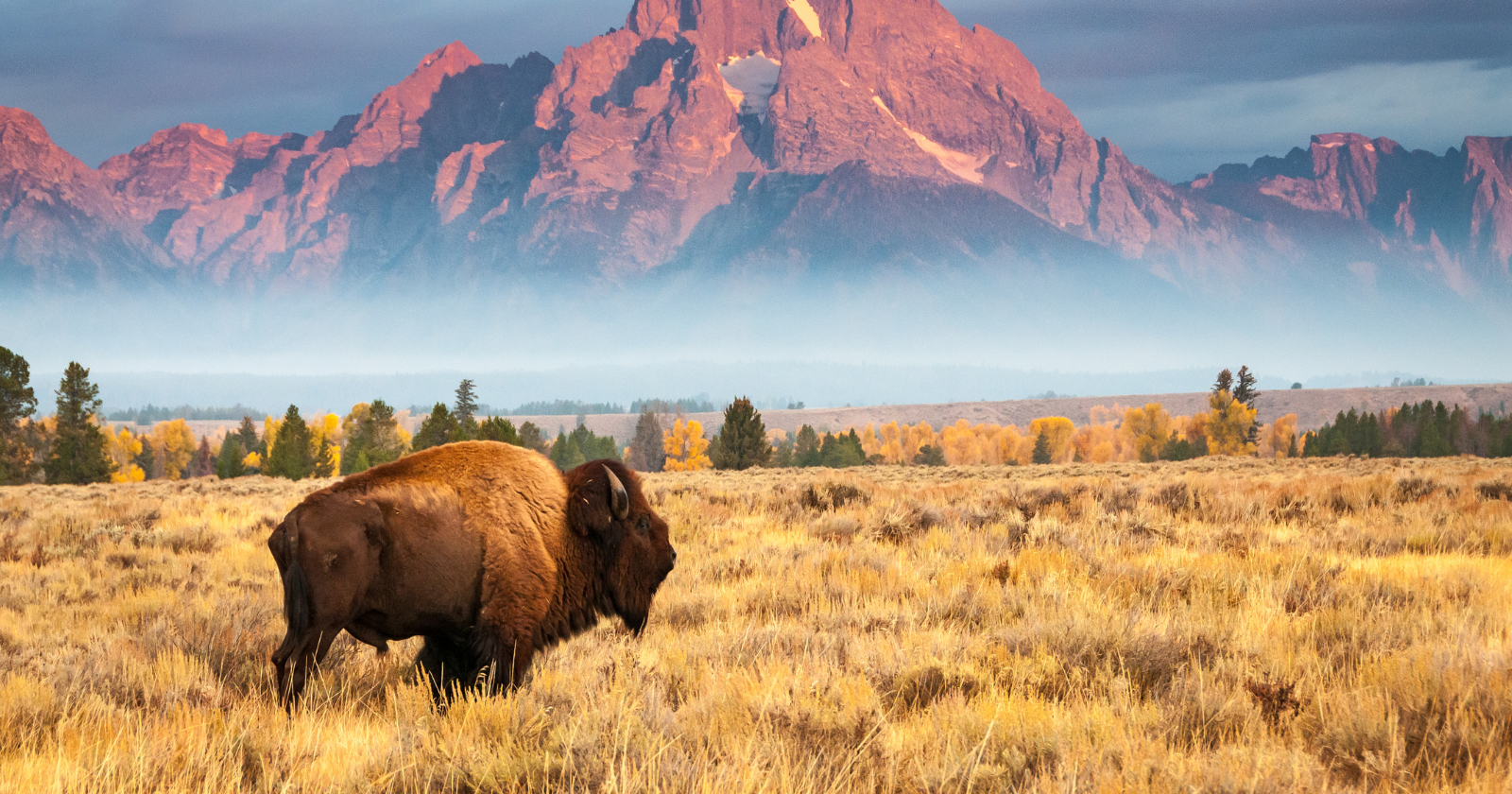
Before the railroads, before the treaties, before the great American hide hunt of the 1870s and 1880s reduced the North American bison from something like thirty million animals to less than a thousand within a single human generation, the Plains was a place where an entire way of life ran on a single species. The Lakota, Cheyenne, Blackfoot, Comanche, Crow, Arapaho, Kiowa, and other Plains nations had built, over centuries, an economy and a spiritual practice and a material culture that were organised almost entirely around the buffalo. And what that looked like in practice, on the daily level of what a family did with a single animal after a successful hunt, is one of the more striking examples in world history of a human culture using every available part of an animal for functional purpose.
What one buffalo actually became
According to the U.S. National Park Service’s own reference material on Plains buffalo use, published as part of the NPS Biological Resources Division’s Bison Bellows educational series, the Plains nations had documented more than 150 different uses for the various parts of a single bison. The meat, cut fresh or dried into thin strips, fed a family through the summer and, mixed with rendered fat and pounded chokecherries into a preservable food called pemmican, through the winter as well. The tongue and hump were prized cuts. The blood was drunk or added to soups. The heart, liver, kidneys, and intestines were eaten. The stomach lining was cleaned and used as a cooking vessel, water heated inside it by dropping heated stones through the opening. The bladder was cleaned, dried, and used as a canteen for carrying water on long journeys.
The hide, which weighed roughly forty kilograms when green, was the single most versatile material a Plains family had access to. Twelve of them were required to build the covering of an average tipi. Others were made into robes for winter warmth, shields for warriors, moccasins, dresses, leggings, drums, ropes, saddle pads, boat coverings, and cordage. The hair could be twisted into rope or used as pillow stuffing. The tail became a fly swatter. The horns were carved into cups, spoons, ceremonial ornaments, and gunpowder containers once firearms arrived. The hooves were rendered into glue. The scapula, meaning the shoulder blade bone, made an excellent hoe for the farming communities along the Missouri River, and could also be used as a serving tray or a snow shovel.
Related – watch here how Buffalo work the land in a way that benefits all of us:
The sinew, the tough tendon running along the buffalo’s back, was cleaned and dried and separated into fine strands. Those strands were the strongest natural thread available to any Plains family. They were used to sew the seams of tipis and clothing. They were braided into bowstrings capable of drawing an arrow that would penetrate the ribcage of another buffalo. They wrapped the arrowheads onto the shafts.
The bones themselves became the tool inventory of the entire settlement. Awls were fashioned from rib bones for punching holes in hide before sewing. Leg bones became fleshers for scraping the fat and connective tissue off a fresh hide during tanning. Jawbones became clubs or digging tools. Vertebrae became children’s toys. Ribs were shaped into runners for children’s sleds. The skull was reserved for ceremonial use and preserved with reverence as a great medicine object. Nothing was thrown away that could serve a functional purpose. Which is what the Oglala Lakota chief Red Cloud, in a widely preserved statement recorded in the late nineteenth century, meant when he said of the buffalo that “its meat sustained life,” and that “its bones afforded material for implements and weapons, its skull was preserved as great medicine, its hide furnished blankets, garments, boats, ropes, and a warm and portable house, its hoofs produced glue, its sinews were used for bowstrings and a most excellent substitute for twine.”
According to the Buffalo Bill Center of the West’s Plains Indian Museum reference material for its “Buffalo and the People” gallery, drawing on direct quotations from Plains elders including Gerard Baker (Mandan/Hidatsa), Chuck Ross (Dakota), Curly Bear Wagner (Blackfeet), and Alma Snell (Crow), the underlying principle behind the completeness of use was not utilitarian efficiency alone. It was ceremonial. The buffalo was, in the theological understanding of most Plains nations, an animal that had given its own life so that the people might continue theirs. To take an animal and use only some of it, leaving the rest to rot, would have been an insult to the specific gift the buffalo had made in dying, and to the underlying spirit that the Plains nations understood to inhabit the whole living world around them.
What the hide hunters did instead
Which is the pattern that broke, and quickly, once the commercial hide market opened up east of the Mississippi in the early 1870s. The industrial tanning industry in the eastern United States had, by that decade, worked out how to process buffalo hides into cheap industrial leather suitable for machinery drive belts, carriage upholstery, and winter overcoats. Buffalo robes had already been a fashionable status symbol for eastern sleigh riders for some years. The completed transcontinental railroad, finished in 1869, made shipping heavy hide loads east from any point on the Great Plains commercially viable for the first time. And a specific rifle, the Sharps buffalo gun, had recently become available in a chambering powerful enough to kill an adult bull at four hundred yards.
The result was one of the fastest and most complete commercial slaughters of a large mammal species in recorded human history. Between 1871 and 1883, professional hide hunters operating in teams of five to ten men each, with wagons, skinners, and cook staff, worked their way through the Southern Plains and then the Northern Plains, killing bison at a rate that peaked at somewhere between two thousand and one hundred thousand animals per day. A single hunter named Orlando Brown personally claimed six thousand kills. The average professional hide hunter killed hundreds per week during the active season.
The pattern of use was the inversion of what the Plains nations had done. The hide hunters took the skin. Some took the tongue as well, considered a delicacy in eastern restaurants. Almost nothing else was recovered. The carcasses, meaning eight hundred to a thousand kilograms of meat, organs, bones, and sinew per animal, were left on the prairie where they had fallen. Contemporary observers riding through the Great Plains during those years described scenes of thousands of skinned bison carcasses stretching across the horizon in every direction, rotting in the sun, picked over by wolves and coyotes and eventually by bone collectors who, after the flesh had decomposed, harvested the skeletons for shipment east to fertiliser factories. A single survey party on the South Fork of the Republican River counted 6,500 skinned carcasses in one location.
By 1883, the organised hide trade was essentially over. There were no bison left to kill on the Southern Plains. By 1884, the Northern Plains herds were gone as well. The population, estimated at somewhere between thirty and sixty million animals when the hunt began in 1871, was down to fewer than a thousand animals by 1889. The Plains nations, whose entire economy had run on the abundance of the buffalo, were reduced to famine and forced onto reservations within the same decade. The federal government, on the record of General Philip Sheridan’s own testimony at the time, had explicitly supported the commercial slaughter as a means of subduing Indigenous resistance by destroying its material base.
Which is the piece of the story that ties the two halves together. A single Plains family, working from the body of a single buffalo, could produce food for months, shelter for years, clothing for a season, tools that lasted decades, and ceremonial objects that outlived the people who made them. A single hide hunter, standing over the body of the same species, could produce roughly three dollars’ worth of leather and leave everything else to rot. Both scenes happened on the same prairie, within a hundred years of each other, using the same animal. The difference was in what each culture believed the animal was for.