
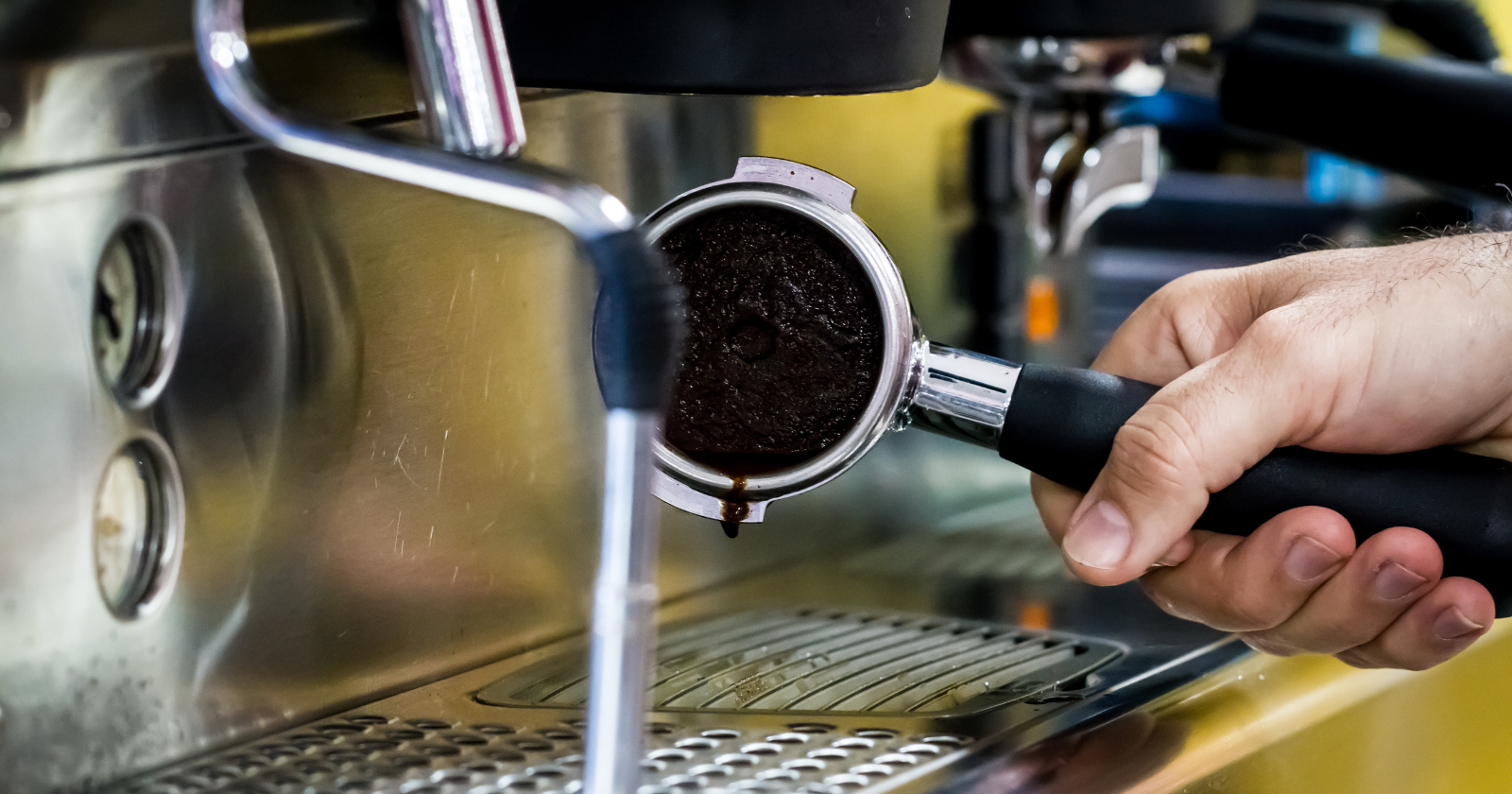
There’s a satisfying tidiness to the idea. You drink a coffee, the grounds are disposed of, and somewhere down the line that same waste comes back as a fire log that heats your living room. It sounds like the kind of closed loop that ought to exist more often than it does.
For about a decade in Britain, it actually did. And the product that made it real is worth a close look.
The firm was bio-bean, a clean-technology company founded in London in 2013. Its Coffee Logs took used grounds from cafés, offices, restaurants, coffee factories and transport hubs across the UK, dried them, and pressed them into blocks for wood burners and multi-fuel stoves. Each log held the grounds from around 25 cups of coffee. A bag of 16 logs came to roughly 400 cups of coffee waste kept out of the bin.
The waste problem behind the log
To see why this matters, it helps to know what usually happens to a spent coffee ground. Most of it goes to landfill. Lekto Woodfuels, a UK wood-fuel supplier, puts the figure at about half a million tonnes of wet grounds sent to UK landfill each year. Wet organic matter rotting in a tip isn’t neutral. As it breaks down it releases methane, a greenhouse gas far more potent than carbon dioxide over the short term.
Bio-bean’s pitch was that catching those grounds before they rot and turning them into fuel is a better fate. The company said its process cut greenhouse-gas emissions by around 80% compared with sending the grounds to landfill. That’s a company figure, not an independently checked one, so take it as bio-bean’s own accounting rather than settled fact. The basic logic is sound, though: divert the waste, dry it, compress it, and you have a fuel that would otherwise have been a source of methane.
What the maker claimed
This is where the two sides of the story start to separate. The core of bio-bean’s marketing was performance. The logs were sold as burning 20% hotter than kiln-dried wood, and some retailers went further, calling them 20% hotter and longer burning. The reason given: coffee packs a lot of energy, and once dried the logs hold very little moisture.
That last point checks out. One tester who measured a batch found them at around 10% moisture, which sits between seasoned and kiln-dried firewood. Dry fuel burns cleaner and hotter than damp fuel, so the moisture claim isn’t in dispute. The open question is whether low moisture adds up to the specific 20% edge on the packet. That’s a marketing number, and marketing numbers deserve a second look.
What testers actually found
The people who put the logs in real stoves came back with a gentler picture than the label.
One thing to flag first: most of these reviewers got free samples, and one sells a related product, so none of this is lab-grade independent testing. It’s hands-on impression, which is still more useful than a marketing line.
Perhaps, the most careful of them, Ignite Stoves & Fireplaces, ran the logs in a showroom stove and reported that “we felt it was roughly the same temperature as when we burn kiln-dried wood (on the same air control settings).” Not hotter. Roughly the same. On burn time, the same team found the logs “not quite as long-lasting as the kiln-dried logs we use, with one sizeable kiln-dried log lasting longer”, though they fairly noted that the kiln-dried log was bigger than the two coffee logs it was beaten against. Lekto put a single coffee log’s burn at just an hour, roughly an hour less than kiln-dried oak.
Claim versus experience
Set the maker’s claim against the testers’ experience and the honest summary is this: the logs burn about as well as kiln-dried wood, not clearly better. The 20% figure looks like the optimistic end of a range rather than a reliable everyday result. One reviewer at Fireplace Universe said the logs “mostly live up to” the claim in their experience, so it isn’t fantasy. But “mostly, in our experience” is a long way from a guaranteed 20%.
None of that undoes the recycling case. A fuel made from waste that burns about as well as the wood it replaces is still a good outcome. The environmental logic doesn’t depend on the log being hotter than a tree. It depends on the grounds not rotting in a tip, and the fire being fed by something already used once. On that measure the product held up whatever the marketing said.
The catch before you go looking for a bag
There’s a practical problem with buying Coffee Logs today: the company that made them is gone. In late March 2023, according to trade outlet The Grocer, “a fire at its coffee grounds recycling plant in Cambridgeshire in late March scuppered investment plans as vital machinery was damaged.” The fire wasn’t the whole story. The report lists it alongside high energy costs and the fact that the firm had never turned a profit. The business was forced into administration and around 30 staff lost their jobs.
This was a company that had won Richard Branson’s Virgin Media Business Voom competition in 2016 and reached Tesco, Waitrose, Morrisons and Asda shelves. Its assets were later acquired by Envar Composting in July 2023, but the branded logs themselves stopped being made. What’s left on shelves now is old stock, and fuel that’s been sitting around for years is worth approaching with caution.
