In 1986, a small team of astronomers noticed something that did not add up. They were measuring how fast and in what direction galaxies around us were moving, and the numbers kept drifting the same way, as if the Milky Way and thousands of its neighbors were all being tugged toward the same unseen spot in the sky.
According to Britannica, that spot sits an estimated 147 million light-years away, roughly in the direction of the constellations Hydra and Centaurus, and astronomers eventually gave the whole mystery a name that stuck: the Great Attractor.
Why the source stayed hidden for so long
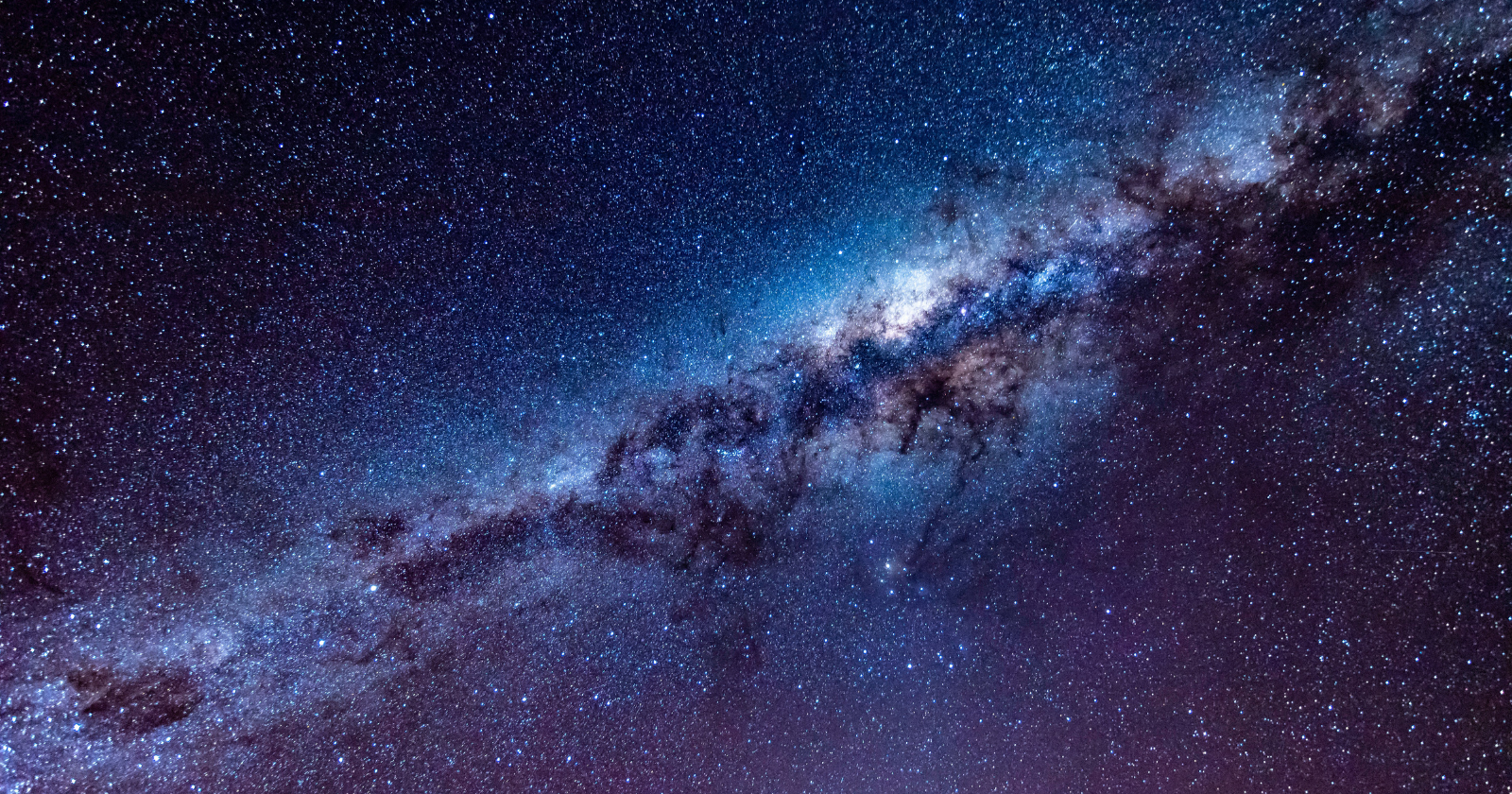
Naming something is not the same as finding it. The trouble was location. The calculated direction of the pull put it almost squarely behind the flattest, most crowded part of our own galaxy, the dense band of stars and dust that makes up the Milky Way’s disk.
Astronomers call that strip of sky the Zone of Avoidance, and it is not a thin sliver either, covering roughly a fifth of the entire sky at visible wavelengths, a permanent blind spot every survey of the universe has to work around. “The Milky Way is very beautiful of course and it’s very interesting to study our own galaxy but it completely blocks out the view of the more distant galaxies behind it,” says Lister Staveley-Smith, an astrophysicist at the University of Western Australia node of the International Centre for Radio Astronomy Research. For years, that meant the single biggest known mass concentration in our cosmic backyard was also one of the least photographed.
Astronomers have gotten unusually good at building instruments that hear or see things they were never designed for. Voyager 1’s plasma antennas were built to study Jupiter and Saturn up close, and NASA simply left them switched on afterward. Decades later, drifting through interstellar space with almost no other working senses left, that leftover instrument picked up a real, audible tone from the near-empty gas between the stars, a discovery nobody expected and one that took years of patiently re-listening to old data to confirm. We tell that whole story in this video, and it is a strangely good companion to this one: another case of scientists proving something is there long before anyone could point to exactly where.
Looking through the dust anyway
Finding the cluster at the heart of it
Getting past the dust meant switching instruments. Visible light scatters off dust grains and stars in the way, but X-rays and near-infrared light punch through much more of it. Using both, a team led by astronomer Renée Kraan-Korteweg published a 1996 paper in Nature identifying a massive galaxy cluster, Abell 3627, sitting only about 9 degrees off from the Great Attractor’s calculated center. A separate X-ray survey that same year confirmed it: a cluster carrying roughly five thousand trillion times the mass of our sun, right where the math said something enormous ought to be. The paper’s own language put it almost literally on the nose, describing the cluster as sitting at or near the bottom of the Attractor’s gravitational potential well. Astronomers now usually call it the Norma Cluster, and it remains the single most massive structure known in that direction.
Mapping the rest of the crowd
Finding one cluster did not mean the search was finished. Twenty years later, a team using CSIRO’s Parkes radio telescope went back through the same patch of hidden sky with a receiver built to pick out the faint radio signal that hydrogen gas gives off, a signal dust cannot block the way it blocks visible light. According to a report on the survey, they logged 883 galaxies altogether, roughly a third of which had never been catalogued before. “Finding hundreds of new galaxies hidden behind the Milky Way points to a lot of mass we didn’t know about until now,” Kraan-Korteweg said, describing what the count meant.
Not everyone read the same result as a breakthrough. Astronomer R. Brent Tully of the University of Hawaii, who was not part of that survey, offered a more measured take: “So they did the survey and what they find is, yeah, there are hundreds of galaxies, but there’s nothing really super big back there.” Both things turned out to be true. The zone was more crowded than expected, and the single biggest object in it was still the cluster already found twenty years earlier. The same broad hunt through that hidden strip of sky has since turned up an even bigger structure a little farther out. In 2016, a separate team, again including Kraan-Korteweg, announced the Vela Supercluster, a family of more than twenty individual galaxy clusters roughly 800 million light-years away with a combined mass later estimated at close to 34,000 trillion suns. It is a different, farther structure from the Great Attractor itself, not a replacement for it, but it makes the same point twice over: the small strip of sky the Milky Way blocks out was hiding a lot more than one cluster.
None of this fully closes the case. The Great Attractor’s exact edges are still fuzzy even in the newest analyses, and no single paper has managed to weigh every hidden structure behind the dust at once. What has held up across three decades of increasingly better instruments is the basic shape of the story: something enormous really is out there, it really was hiding almost exactly where the earliest, cruder measurements said it would be, and finding it took patience rather than a single lucky look.
A confirmation forty years in the making
The most satisfying update came this year, and from a familiar name. Alan Dressler, one of the seven astronomers who first flagged the mysterious pull back in the 1980s, returned to the problem decades later with new, far more precise distance measurements. The 2026 paper he co-authored with Andrew Monson used those measurements to confirm that the flow of galaxies really does converge to almost nothing once you pass roughly 70 megaparsecs in the Great Attractor’s direction, exactly the pattern you would expect if the Attractor itself, centered on that same crowded, dust-buried region, is genuinely the dominant force behind our galaxy’s motion through space. One of the people who first spotted the anomaly got to spend part of his career confirming what was actually causing it.
I find something oddly comforting in a story that takes forty years to close. My own maxim for most things, work included, is that how you do anything is how you do everything, and this story carries a slow, patient version of that same idea. Nobody solved the Great Attractor by rushing the Milky Way’s dust out of the way. They built better instruments, went back to the same unglamorous patch of sky a few more times than anyone would have liked, and let the answer arrive on its own schedule. I think about that same trade-off on a much smaller scale most weeks, choosing to protect a few things done consistently over chasing whatever looks most urgent that day, mostly because a fast, distracting world will happily pull you in a dozen directions if you let it and never tell you which one actually matters.
We are still moving toward that patch of sky right now, at roughly 600 kilometers a second, a little over a million miles an hour, carried along with every other galaxy near us. Nobody on Earth will live long enough to notice the trip.