
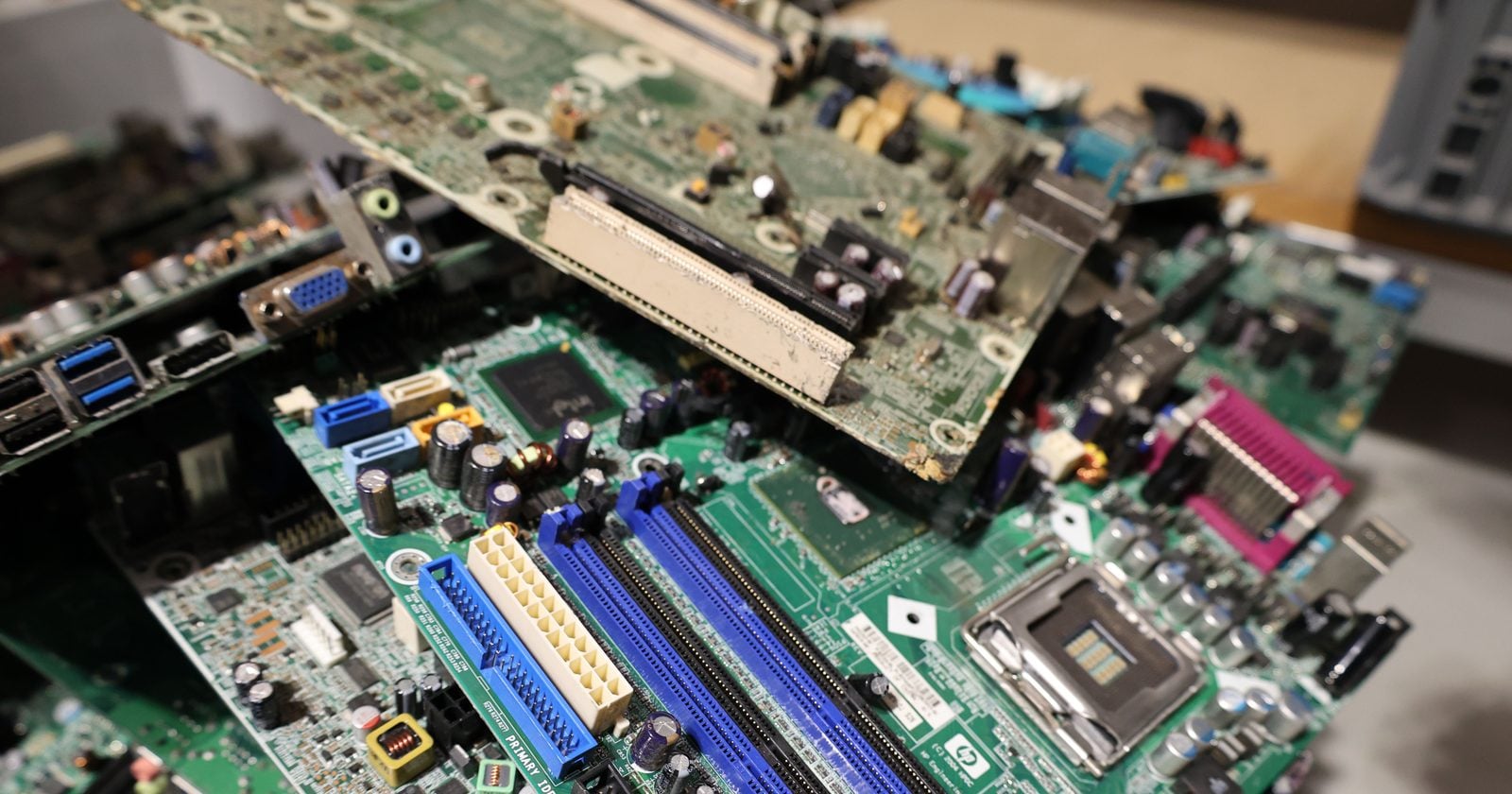
Feed a tonne of discarded circuit boards into the right process and the material can contain something around 280 kg of copper. A scrapped circuit board is, gram for gram, a much richer copper source than most of the ground being mined for the metal right now.
The number gets exaggerated a lot. You’ll see claims that boards hold thirty or forty times the copper of ore. The peer-reviewed figure is more modest and still worth attention: one study notes that a tonne of waste printed circuit boards can contain about 280 kg of copper, roughly 10 to 26 times the concentration found in copper ore.
A separate review lands in almost the same place, reporting that waste circuit boards contain about 13 to 26 times more copper than primary mining resources, while their gold concentration can be around 100 times higher than natural ore. Different papers, overlapping range, same conclusion.
A quick note on what this is and isn’t. We’re not metallurgists, chemists, or recycling engineers, and none of what follows is guidance on handling electronic waste, which can be genuinely hazardous. This is us reading the research and trying to say plainly what it does and doesn’t show.
Why the boards are so rich
The math is less exotic than it sounds. Circuit boards pack copper into every tiny wire and layer that carries a signal, and the copper can run as high as about 30% by weight. A copper mine, by contrast, works rock that averages only about 0.6% copper. One lab study of shredded computer boards measured a copper content of over 28%, against the well-under-1% grade of the rock a mine actually processes.
Nature spreads copper thinly through stone; manufacturing concentrates it into a thin, deliberate film. The gap is also widening from both ends. The easiest, richest deposits keep getting worked out, and the average mined grade has fallen from around 2% to about 0.6% today. The rock keeps getting poorer while the boards stay rich.
Not just copper, and why ‘urban mining’ stuck
Copper is the headline because there’s more of it than anything else, but it isn’t the only metal in there.
Boards also carry gold, silver, and palladium in amounts that would make a geologist take notice. That’s why the field has a name for the idea: boards are treated as a “valuable secondary resource” for urban mining, meaning the recovery of metals from things we’ve already built and thrown out rather than from the ground. For those precious metals the gap is even wider than for copper, and that’s where a lot of the hidden value sits.
The value is not hypothetical. The Global E-waste Monitor 2024, produced by the ITU and UNITAR, estimated that the metals in the electronic waste thrown out in a single year were worth around $91 billion, with copper alone worth roughly $19 billion of that.
Concentration is potential, not payout
A rich source only becomes metal if you can actually get it out cleanly, and most of the world’s boards never reach a process that can.
The same 2024 monitor found that the world threw out 62 million tonnes of electronic waste in 2022, and that only 22.3% of it was properly collected and recycled. The rest is buried, stockpiled, or handled informally.
Informal handling is where both the metal and the safety margin get lost. Boards are often burned or dissolved in acid to free the copper and gold. That crude route leaks value, so the concentrated source gets partly thrown away in the act of trying to recover it.
The human cost is heavier than the material one. According to the World Health Organization, informal recyclers chasing exactly these metals face steep exposure. The WHO’s report estimates that “Workers, aiming to recover valuable materials such as copper and gold, are at risk of exposure to over 1,000 harmful substances, including lead, mercury, nickel, brominated flame retardants”.
And that contamination doesn’t stay at the worksite. Marie-Noel Brune Drisse, the report’s lead author, described its reach: “A child who eats just one chicken egg from Agbogbloshie, a waste site in Ghana, will absorb 220 times the European Food Safety Authority daily limit for intake of chlorinated dioxins”.
How we’d read the number
A tonne of scrapped boards really does out-copper a tonne of ore by a wide margin, ten to twenty-six times over, which makes electronic waste one of the most concentrated metal sources we have.
The trouble is that having the metal and getting the metal out are two different problems. The copper is there in amounts that would embarrass a working mine. Whether it comes out as recovered copper or as smoke over a dump depends entirely on who handles the board and how.
The more interesting question, as we read the research, isn’t whether e-waste is valuable. The papers settle that. It’s why so much of that value keeps ending up in landfill instead of back in the supply chain, when the source is sitting right there, richer than the rock, already dug up and delivered.
If you or someone near you works in informal e-waste recovery, a local occupational-health or public-health service is the right place to raise exposure concerns.
