
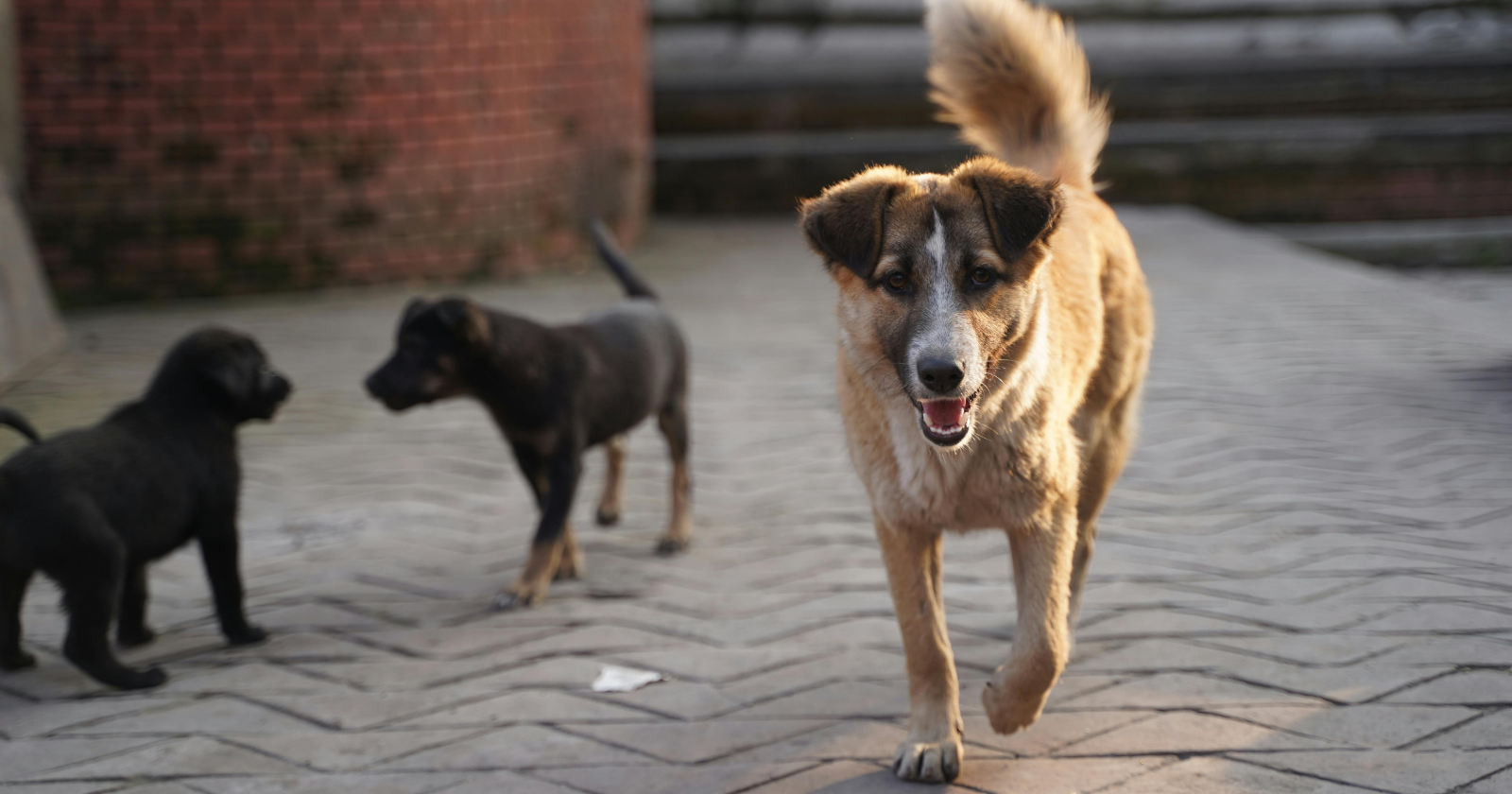
Put a hungry street dog in front of two bowls. One is grey and has a piece of chicken on it. The other is yellow and has nothing at all. Which one does the dog go to first?
Most of us would bet on the food. In one experiment, most dogs went to the yellow bowl first.
A quick note before going further: we are not veterinarians or animal-behavior researchers, and this is one study read closely, not advice about your own dog. The work is experimental, done with one specific population of free-ranging dogs in one part of India. A pattern across a whole group is not a rule about any individual animal.
What the researchers actually did
The study, “Ready, set, yellow! color preference of Indian free-ranging dogs,” was published in Animal Cognition by a team led by Anamitra Roy IISER Kolkata. They worked with free-ranging dogs, the untrained street and community dogs that live alongside people, rather than trained dogs used in many earlier color studies.
The setup was simple. Put out bowls in different colors and see which one the dog approaches first. The colors were yellow, blue, and grey. Each dog was tested only once, so no dog could learn the game through repetition. In total the team ran four experiments with 458 adult free-ranging dogs in urban, semi-urban, and rural sites in West Bengal.
Why those colors? Dogs have two classes of cone photopigment, compared with three types of cone in typical human color vision, giving them dichromatic vision along a blue-yellow spectrum. The researchers therefore used yellow, blue, and grey as hues visible to dogs. As the authors put it, “It was hitherto unknown if and how untrained dogs are affected by color cues in their environment”.
The result that made it interesting
The first test set all three colors against each other. In that round of 134 dogs, 72 chose the yellow bowl. Yellow was picked more than half the time; blue and grey each came in under a quarter, per the study’s reporting. A separate two-choice test found no significant preference between blue and grey.
Then came the test that makes the result harder to dismiss. The researchers pitted an empty yellow bowl against a grey bowl with food placed on top, first a quarter of a biscuit, then about 15 grams of raw chicken. With the biscuit, 41 of 52 dogs approached yellow first. With chicken, 47 of 61 chose the empty yellow bowl and 14 chose the grey bowl with chicken. That works out at roughly 77 to 79 percent choosing yellow first across the chicken and biscuit conditions. In the authors’ words, “the dogs ignored the food (biscuit or chicken) to approach the yellow object first indicating the color preference to be quite strong”.
What the yellow pull probably means
This is where I want to slow down, because it is the point where a fun result gets stretched into a story it cannot support. The honest answer to “why yellow?” is that nobody yet knows. The paper offers possibilities and holds them loosely.
One idea is about food. One of the researchers, Anindita Bhadra floats a hypothesis about what these dogs scavenge. “I have a feeling that this preference got heightened with dogs’ co-evolution with humans, especially in India, where we use a lot of spices in our food and all the garbage they’re scavenging is loaded with turmeric,” she says. The paper itself notes that turmeric, dried chilli, raw meat and blood can all appear yellowish in dog vision. But this remains a hypothesis, not a demonstrated cause.
“Looking for yellow might have an ecological advantage for them,” Bhadra also suggests. Might. The study does not show that seeking yellow helps a dog survive or eat better.
Whether the preference is inborn, learned, or some mix is still open. The authors also say they cannot rule out a “pop-out effect” in which the yellow bowls simply stood out more strongly from the other bowls or their surroundings.
Where the study stays honest, and where you shouldn’t over-read it
The authors flag several reasons for caution. The food rewards were limited by the setup: the chicken pieces were about 15 grams, and larger amounts should be tested. They also note that a dog looking for yellow while scavenging would encounter plenty of false positives, including inedible human rubbish.
These were Indian free-ranging dogs, not a stand-in for all dogs everywhere. The authors themselves point to a study of free-ranging dogs in Morocco in which dogs showed no pre-existing preference between yellow and blue objects, although that experiment was designed to study social learning rather than color preference.
So the takeaway is not “dogs prefer yellow to food.” It is that in this setup, with these dogs and these food amounts, yellow was approached first far more often than chance would predict.
If there is a practical point, it is a modest one. The study shows that color can influence the first choices of these free-ranging dogs strongly enough to compete with a food reward.
