

A NASA ensemble forecast for a coronal mass ejection on 8 August landed on an unusually precise result. It placed the disturbance’s arrival near Earth at 10:32 UTC on 11 August. The public record now gives the observed shock arrival as 10:32 UTC as well.
That means the central forecast matched the recorded arrival to the minute, comfortably inside the 30-minute claim. It does not mean NASA can now predict every solar eruption that accurately. The same forecast carried an uncertainty window stretching across more than 22 hours.
The result is best read as an excellent hit by a probabilistic model, not as a new standard of routine precision. It also forecast the arrival at spacecraft monitoring the solar wind near Earth, rather than the moment a visible object struck the planet’s surface.
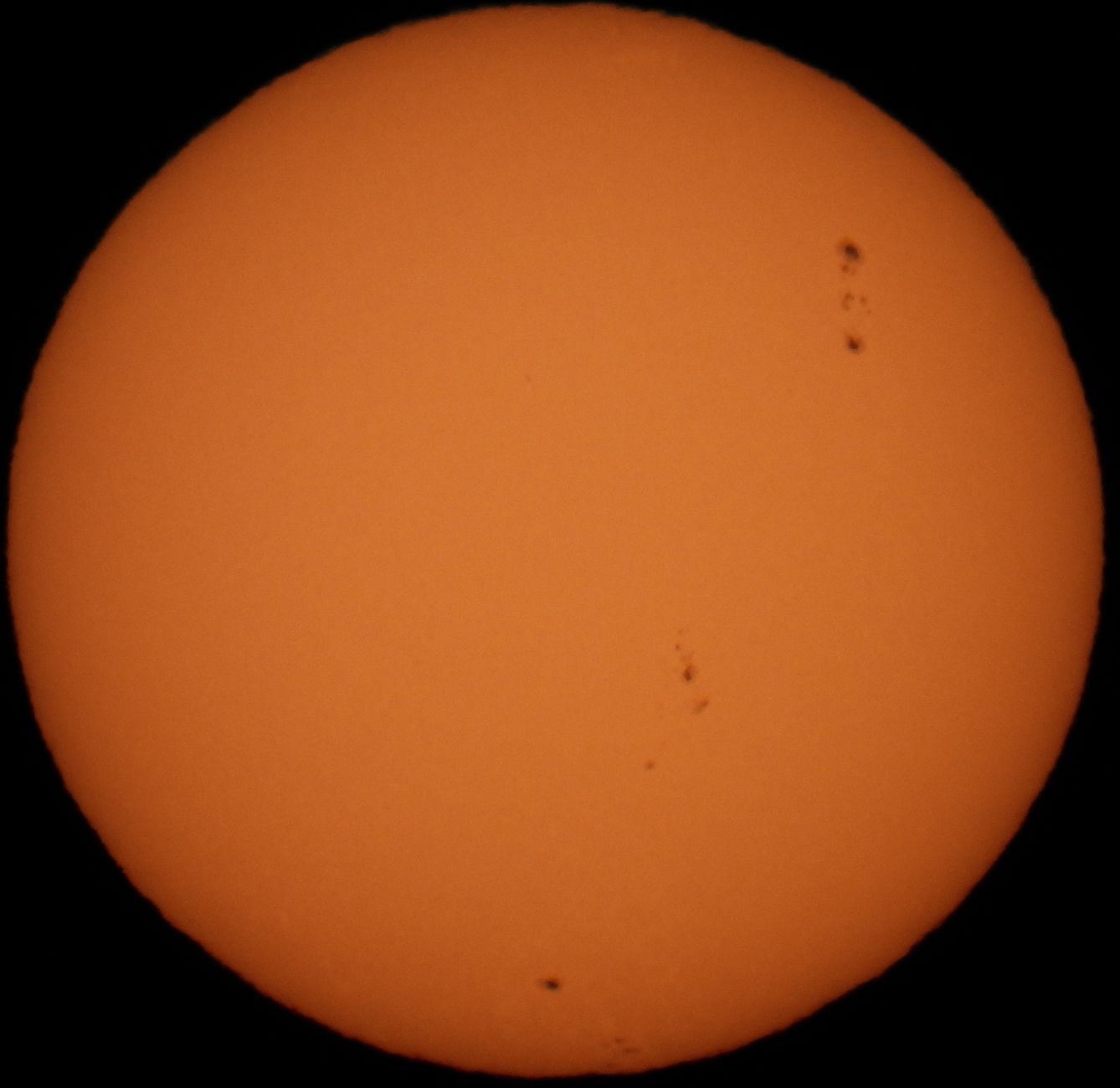
The forecast began with a filament eruption
The event is listed in NASA’s Community Coordinated Modeling Center database as CME 2026-08-08T03:23:00-CME-001. Observations showed a filament lifting from the northern part of the Sun, accompanied by a double-ribbon flare, dimming and rearranging magnetic structures.
A coronal mass ejection, or CME, is a large release of plasma and magnetic field from the Sun’s corona. When one travels toward Earth, forecasters try to estimate whether it will arrive, when its leading disturbance will be detected and how strongly it may disturb the space environment around the planet.
The first NASA Moon to Mars forecast for this event used the WSA-ENLIL+Cone model and put the arrival at 12:56 UTC on 11 August, with a stated uncertainty of plus or minus seven hours. The recorded shock arrived two hours and 24 minutes earlier.
The team then ran an ensemble. Instead of relying on one set of uncertain measurements for the CME’s speed, direction and width, it ran 36 variants. Thirty-five predicted an impact near Earth. Their average arrival time was 10:32 UTC, exactly the time later entered as the observed arrival.
The full event record in NASA’s CME Scoreboard shows the forecast, the observation and the model notes. The ensemble entry was submitted almost 60 hours before the recorded arrival.
The perfect central time came with a wide interval
The model did not claim that 10:32 was certain. Its ensemble members placed the arrival between 00:19 and 23:25 UTC on 11 August. The scoreboard translates that into an uncertainty of 10.21 hours before and 11.88 hours after the central estimate.
This is not a contradiction. A probability distribution needs a central value, and the average happened to land on the final observed time. Before the event arrived, the honest forecast was the average plus the spread, not a promise about one minute on the clock.
The ensemble gave a 97 per cent chance that the CME would affect missions near Earth. It also suggested an 89 per cent chance that the maximum Kp index would fall between 3 and 5, spanning below-minor to minor geomagnetic activity. This was useful space-weather modelling, but not a prediction of a catastrophic storm.
NASA’s scoreboard describes itself as a research-based validation platform and labels its products experimental. It also directs readers to NOAA’s Space Weather Prediction Center for official United States forecasts. That distinction matters when a particularly accurate experimental result moves into a headline.
Arrival itself has to be identified
The scoreboard’s documentation explains that NASA’s Moon to Mars analysts use solar-wind data from the ACE and DSCOVR spacecraft near the Sun-Earth L1 point to establish arrival times. Complicated cases may require additional analysis.
For the August event, the recorded signature included a rise in total magnetic-field strength from 5.6 to 9.8 nanotesla, a solar-wind speed increase from roughly 350 to 400 kilometres per second and simultaneous jumps in density and temperature. Those changes gave analysts a boundary to mark as the shock arrival.
That time is an interpreted physical signature in continuous data. It is more meaningful than a vague statement that the solar storm “hit Earth”, but it should not be mistaken for an impact timestamp as clean as a spacecraft touchdown.
Typical errors are still measured in hours
A 2024 analysis in the journal Space Weather examined 1,702 predictions submitted to the CME Arrival Time Scoreboard through the end of 2023. The authors found a mean absolute error of 13.2 hours and a standard deviation of 17.4 hours. The middle half of absolute errors ran from 4.8 to 18 hours.
The peer-reviewed analysis found only slight improvement over the 11-year record. It argued that uncertainty in reconstructing a CME and representing the background solar wind may be limiting further gains.
That longer record is the right benchmark for the August success. One exact central estimate shows that the method can perform extremely well on an individual event. It does not reduce the established average error to 30 minutes.
Space Daily has previously explained that a fast CME can cross the Sun-Earth distance in less than a day, while slower events may take several days. During that transit, the ejecta interact with a changing solar wind and sometimes with other eruptions, making a simple speed-divided-by-distance calculation inadequate.
NASA did just record a forecast that matched this CME’s arrival to the minute. The more revealing fact is that it did so while openly showing a broad range of plausible times. That is what a responsible forecast looks like: an impressive central hit, accompanied by the uncertainty that existed before anyone knew the answer.