

Most experiments are designed to outlast a grant. This one was designed to outlast the language in which its instructions were written.
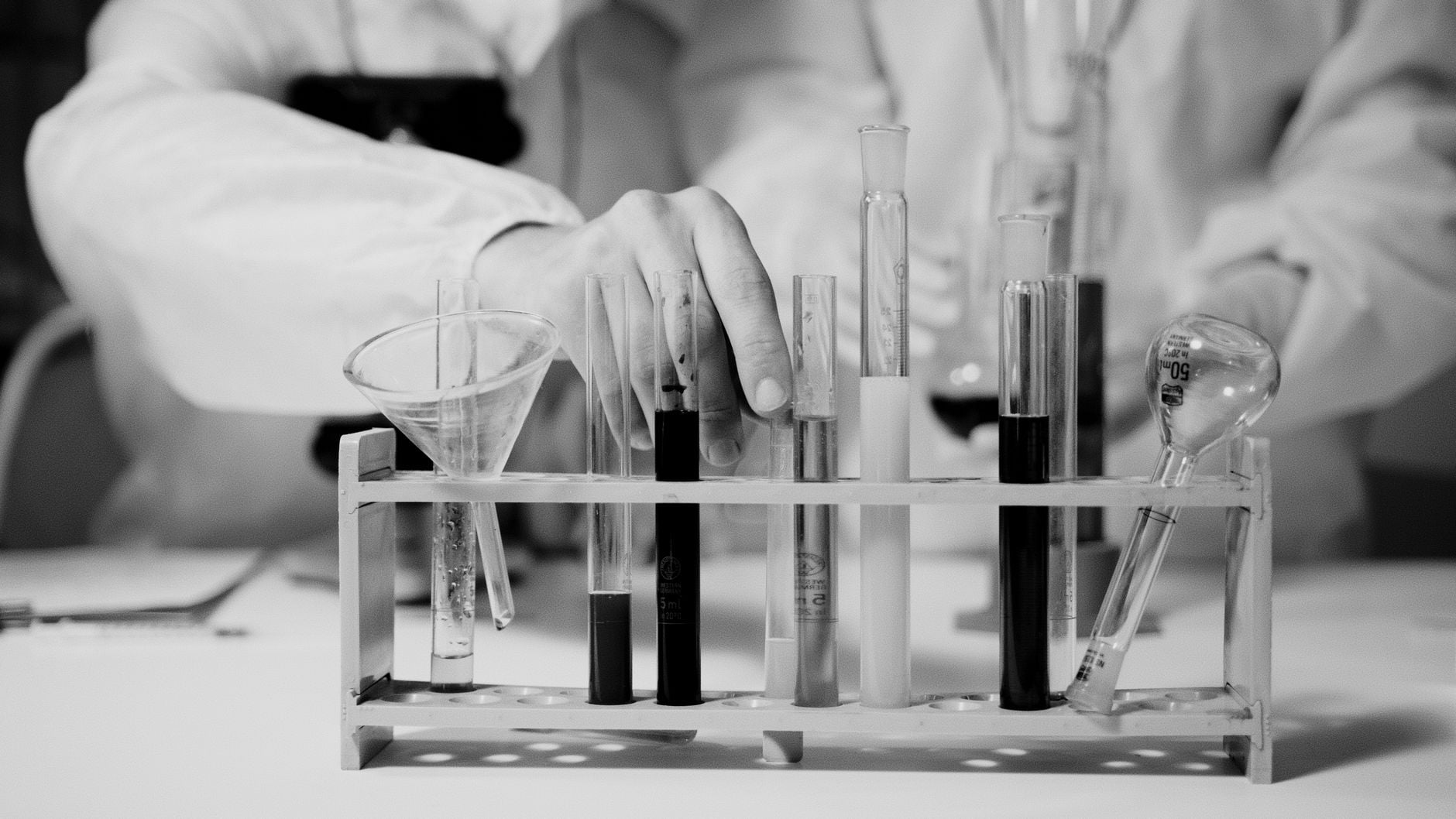
On 1 July 2014, an international team began a microbiology experiment scheduled to finish on 30 June 2514. Its physical machinery is deliberately simple: hundreds of sealed glass vials, two kinds of dried microorganism, silica beads, lead shielding and two oak boxes stored in different institutions.
The difficult part is time.
Researchers who open the final samples will live in a world as distant from us as 1514 is today. The project therefore has to preserve not only microbes, but a scientific question, a method and an institutional memory across generations that cannot meet one another.
Eight hundred vials hold two different survival strategies
The 500-Year Microbiology Experiment was established by researchers associated with the UK Centre for Astrobiology at the University of Edinburgh and the German Aerospace Center, with collaborators in the United States.
Its 800 vials contain either spores of Bacillus subtilis or dried cells of Chroococcidiopsis. The choice allows the experiment to compare two different ways of enduring a long absence of water.
B. subtilis forms endospores, dormant structures that protect its genetic material and can later germinate when conditions improve. Chroococcidiopsis is a desiccation-tolerant cyanobacterium found in extreme deserts, including within and beneath rocks.
The organisms are not being fed, evolved or repeatedly transferred. They were dried, sealed and left dormant. At each sampling point, researchers sacrifice a set of vials, rehydrate the contents, test whether cells can grow, and examine damage to DNA and other molecules.
The protocol does not say the next vial waits until 2039
Some descriptions compress the timetable into a claim that the next vial will be opened in 2039. That is not the schedule in the published protocol.
The peer-reviewed experimental paper states that samples are taken every two years for the first 24 years, beginning with the 2014 baseline. That places the first phase on a two-year rhythm through 2038. Sampling then slows to once every 25 years for the remainder of the experiment.
The same paper says the logistics for that later 25-year phase had not yet been determined. It therefore does not establish 2039 as a “next vial” date. What it establishes is a dense early sequence followed by increasingly long waits, ending in 2514.
At each time point, triplicate vials are used. Replication matters because a single vial could be damaged, contaminated or simply unrepresentative of the stored population.
Two oak boxes protect the experiment from one institutional failure
A complete set is held at the University of Edinburgh, while a duplicate is curated by the Natural History Museum in London. Separating the boxes gives the project some protection against a fire, flood, renovation, administrative decision or other local event that could erase centuries of waiting.
Within the experiment, one set of samples experiences ordinary background radiation. Another is kept behind lead to reduce that exposure. The comparison tests whether the slow accumulation of damage from natural radiation contributes to the loss of viability in dried cells.
The lead does not create a radiation-free environment, and the boxes do not reproduce open space. They isolate one possible source of molecular damage under controlled terrestrial storage.
That distinction is important because the project is sometimes described as if it were testing whether microbes can survive a 500-year space journey. It is not. Separate stress experiments in the same research programme examined vacuum, salt, heat, ultraviolet light and X-rays, but the central oak-box experiment measures long-term desiccated survival indoors.
The first two years produced a baseline, not a 500-year answer
The first peer-reviewed results compared samples from 2014 and 2016. After two years, the B. subtilis spores had an average surviving fraction of 86 per cent, with uncertainty of plus or minus 21 percentage points. The researchers found no statistically significant decline in viability.
That result shows the storage and recovery method worked at the beginning. It cannot tell us whether survival will fall smoothly, remain stable for a long period and then collapse, or leave a small resistant fraction after most spores fail.
The team also ran shorter experiments under other conditions. Space-like vacuum reduced spore survival sharply over 450 days, while several dry storage conditions showed no significant loss over ten years. These were separate tests, not opened vials from later centuries of the core experiment.
Extrapolating a 500-year curve from a few early points would defeat the reason the experiment exists. Its central question is precisely what mathematical shape microbial decline takes over timescales no laboratory career can observe.
The instructions must survive their own obsolescence
Each box contains the protocol on paper and in electronic form. The researchers anticipated that storage media, software, technical terms and even ordinary language would change.
At every 25-year sampling point, future custodians are instructed to copy and update the directions using archival paper and ink. The process is a relay: preserve the meaning of the procedure without quietly changing the procedure itself.
This is one of the experiment’s most unusual controls. A vial can remain chemically intact while its label becomes unreadable, its file format becomes inaccessible or the department responsible for it disappears. The project treats continuity of knowledge as part of the apparatus.
In a NASA astrobiology interview, project leader Charles Cockell explained that the duplicate locations should also produce two data sets from slightly different environments. Even a carefully stored box remains part of a changing building, city and institution.
A terrestrial box can still answer a space question
The experiment matters to astrobiology because dormancy stretches the boundary between living activity and recoverable life. If a microbe can remain viable without metabolism for very long periods, that affects how scientists think about life preserved in rock, ice or permafrost and about organisms carried accidentally on spacecraft.
Space Daily has previously examined why planetary protection tries to stop terrestrial microbes hitchhiking to other worlds. Survival time is central to that problem. A cell that remains recoverable after a long dormant interval poses a different contamination question from one that rapidly loses viability.
The project will also leave future scientists material that can be analysed with instruments its founders could not imagine. Its designers asked about viability, DNA, lipids and proteins, but later researchers may find measurements that do not yet exist.
No current scientist will see the final result. That is not a flaw in the design. It is the point: the timescale belongs to the microbes, while responsibility for observing it belongs to a chain of people extending five centuries into the future.