

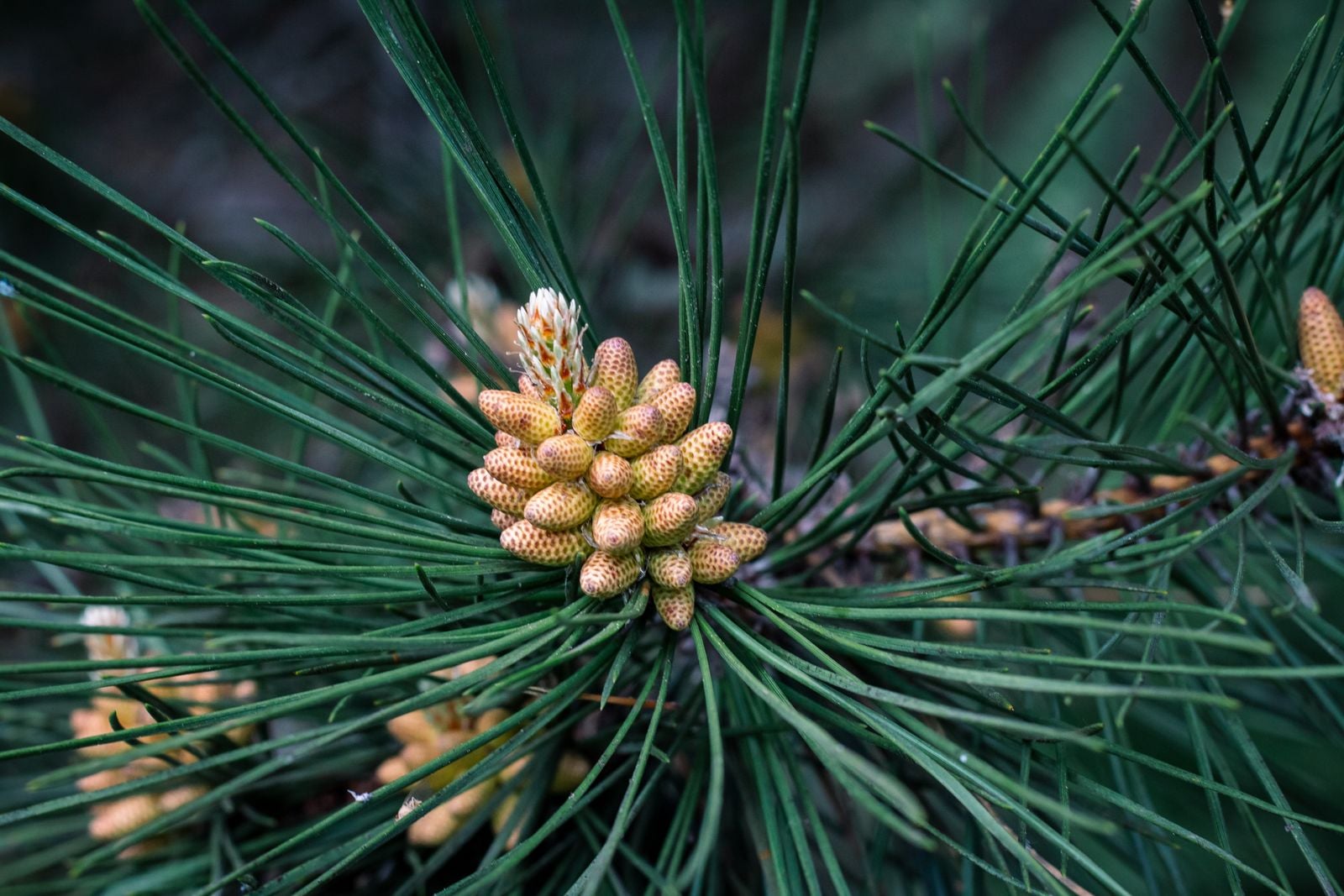
Roughly 150 kilometres north-west of Sydney, at the bottom of a narrow sandstone canyon in Wollemi National Park, stands a grove of trees with bark like bubbling chocolate and needles arranged in flat sprays. A 2020 census counted 89 wild plants across four sites in a single canyon system. Forty-six of them were mature. That is the entire wild population of the species, worldwide.
In September 1994, a New South Wales National Parks and Wildlife Service field officer named David Noble abseiled into that canyon on a weekend bushwalk. He came out with a sprig of foliage he could not place. Nothing matching it had ever been described alive. The nearest thing in the record was fossil pollen, and the oldest of that pollen was laid down about 90 million years ago.
What Noble had was Wollemia nobilis, a conifer whose family had been reduced, across most of the planet, to impressions in rock.
What Noble actually found
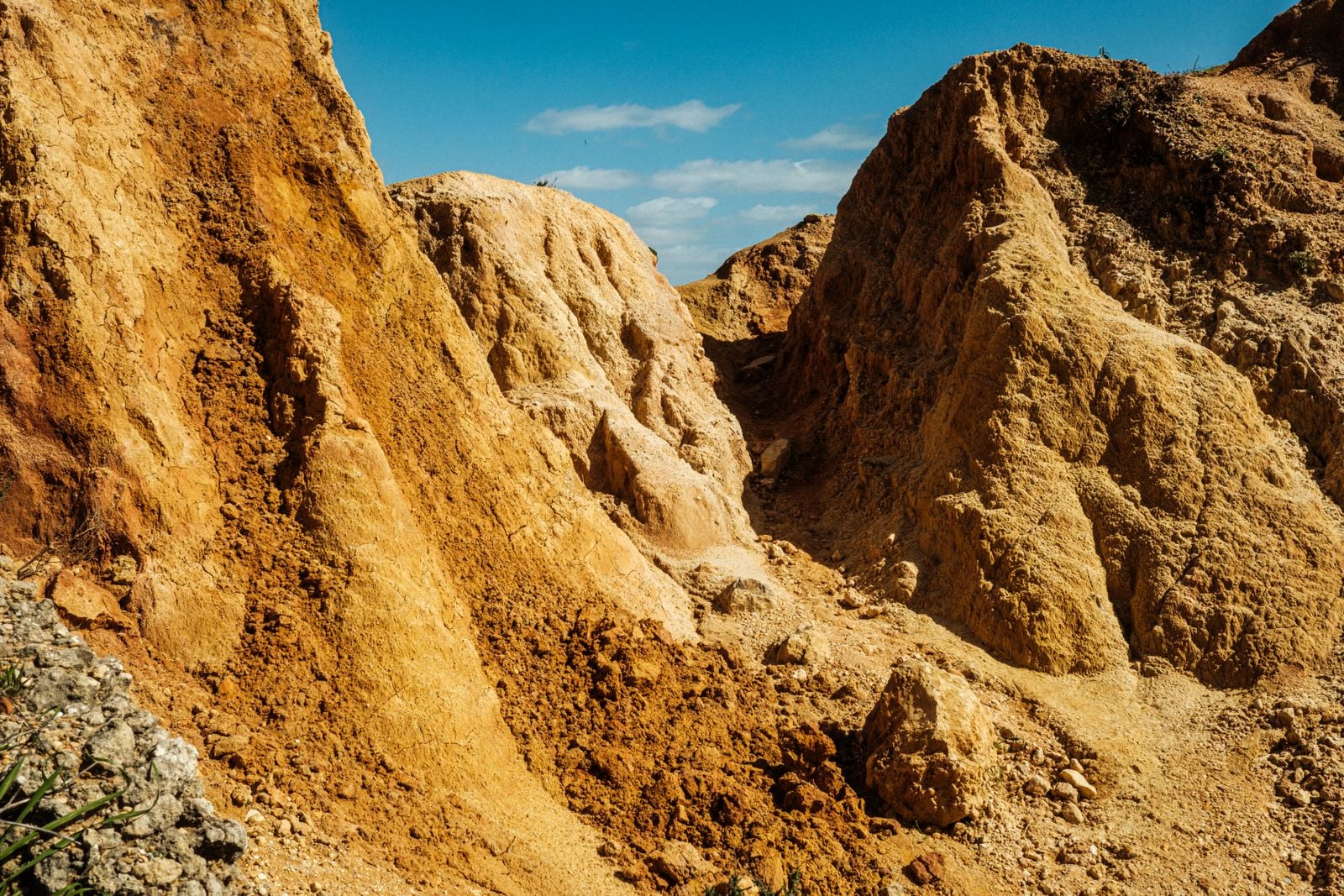
The canyon is one of hundreds cut into the sandstone tableland that spreads west from Sydney into the Blue Mountains and, further north, into the Wollemi wilderness. Most have never been walked. They are too narrow, too wet, too choked with ferns and fallen rock, and they only open up if you rope in from the rim.
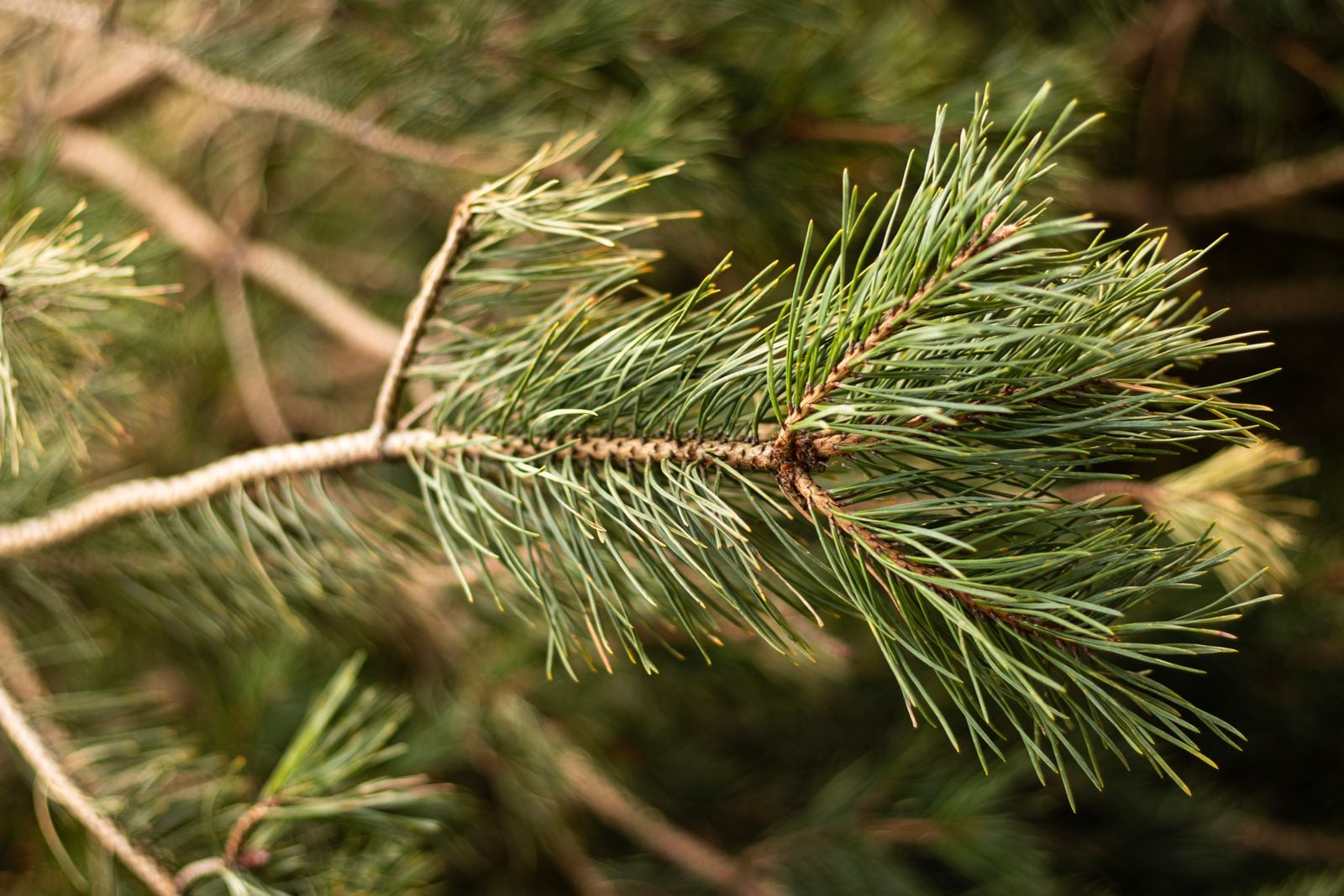
Noble was an experienced canyoner who had explored hundreds of them. He stopped at the base of one drop, looked up at a stand of tall trees he did not recognise, snapped off a piece of foliage, and put it in his backpack. It was the bark that caught him first. The trunk surface of a mature Wollemi pine is knobbled and nodular, and the comparison that stuck in Australian coverage was Coco Pops. Speaking at the National Arboretum in Canberra two decades later, Noble made the point that the find turned on a coincidence of person and place. As The Canberra Times reported, he said it had to be the right person at the right time, because it is one thing to be out there canyoning and another to be paying attention to the flora while you are.
Back in Sydney, the sample defeated the standard keys. It matched nothing living. The tree was eventually described as a new species in a new genus in 1995 by three people: Wyn Jones, a National Parks naturalist; Jan Allen, a horticulturist at the Blue Mountains Botanic Garden; and Ken Hill, a botanist at the Royal Botanic Garden Sydney. The species name honours Noble.
The fossil link came from pollen rather than leaves. Grains almost identical to Wollemia pollen had been catalogued for decades under the name Dilwynites, recovered from oil-exploration cores across southern Australia and later from New Zealand, East Antarctica and Patagonia. The morphospecies that most closely resembles modern Wollemi pollen, Dilwynites granulatus, is traceable to the Turonian age of the Late Cretaceous, between 89.8 and 93.9 million years ago.
Nobody had known what plant produced it. The macrofossils were worse than useless, because Araucariaceae leaf and cone fragments are hard to tell apart and the Wollemia characters sit awkwardly between the two genera anyone had to compare them with. The pollen had a name. The tree did not.
Why the lineage was written off
The Araucariaceae are an ancient conifer family. Their close relatives, the monkey puzzles and Norfolk Island pines and kauris, were once widespread across Gondwana. Dilwynites pollen turns up in sediment laid down when Australia was still joined to Antarctica and both were still joined to South America.
Then the record thins. American Scientist traced the decline: the pollen peaked in abundance during the Paleocene and Eocene, then fell away steadily as the planet cooled and Australia drifted north into drier latitudes. The most recent known Dilwynites came out of two-million-year-old sediment beneath the floor of Bass Strait, between Tasmania and the mainland. That is the early Pleistocene. After it, nothing.
Two million years of silence is enough for any palaeobotanist to close the file, and the file stayed closed until 1994.
The technical term for what Noble found is a Lazarus taxon: a group known first from fossils, then found alive. The coelacanth, hauled up off East London in South Africa in 1938, is the famous marine example. The Wollemi pine is the botanical one, and the gap it closes is longer.
How forty-six trees survived when the rest of the family did not
The canyon that holds the wild grove is a specific kind of refuge. Deep, narrow, permanently shaded, fed by a creek. The walls block wind. The overhang blocks most of the direct sun. Temperature barely fluctuates across the year and the humidity stays high.
These are the conditions Australia’s east coast used to have across far more of its area. As the surrounding country turned into dry sclerophyll forest and in places semi-desert, most of the moisture-loving Cretaceous flora died back. A handful of tiny pockets, canyon floors and permanently damp gullies and cloud-catching mountain tops, kept the old conditions going.
The trees also have a trick. Wollemi pines coppice prolifically, throwing new trunks from a single below-ground root mass, with some individuals carrying more than forty stems. Individual trunks can pass 400 years. The root systems are far older. Genome resequencing published in 2023 found the population has been relictual since the last major glacial and drying period in Australia, around 120,000 years ago.
Fire is the standing threat. In January 2020, as the Gospers Mountain fire moved through Wollemi National Park, air tankers laid retardant ahead of the front and specialist remote-area firefighters were winched into the gorge by helicopter to set up an irrigation system that wet the ground fuels. Helicopters water-bucketed the fire edge as it closed. Around 90 per cent of the park burned. The grove came through it singed but alive.
The classified coordinates
The exact location of the wild stand has never been made public. New South Wales treats it the way it treats sensitive infrastructure: need-to-know, restricted access, penalties for trespass. The National Parks and Wildlife Service kept the 2020 firefighting operation quiet for the same reason, and only described it publicly after the fire had passed.
The concern is not theft. It is pathogens, and the concern is no longer hypothetical. Phytophthora cinnamomi, a soil-borne water mould that colonises and kills root systems, was detected in the largest subpopulation in 2005, and a second species, Phytophthora multivora, in 2009. Both are thought to have arrived on the footwear, clothing or equipment of unauthorised visitors. Infected mature trees have shown extensive stem and canopy dieback, though none is known to have died outright.
Rangers and approved researchers now follow a decontamination protocol that would not be out of place in a biosecurity lab, and are flown in and out to avoid tracking material along an approach path. Seed has been harvested from the canopy by helicopter.
The other structural weakness is genetic. For two decades after the discovery, repeated surveys could find no variation at all between wild individuals. Then researchers at the Royal Botanic Garden Sydney and the University of New South Wales sequenced whole chloroplast genomes from 65 trees covering all four wild sites. They found three chloroplast lineages, one dominant and two rare. It was the first variation ever detected in the species. It also confirmed how little there is.
Why the tree is now on sale in garden centres
The counterintuitive part of the conservation strategy is commercial propagation. Cuttings from the wild trees were rooted, grown on, and licensed to nurseries. Wollemi pines are now sold as ornamental garden trees in Australia, the United Kingdom, Europe, North America and Japan, and a share of the proceeds funds the recovery program.
The logic is simple. Every backyard specimen is an insurance policy. If the wild grove burns or the Phytophthora spreads, the species does not go with it. The nursery line is genetically narrow, mostly cloned from a handful of parents, but it exists in the thousands.
The serious conservation work is a step beyond that. Because the nursery trees carry so little of the wild variation, the Botanic Gardens of Sydney built a genetically diverse living collection at the Australian Botanic Garden Mount Annan, then shipped more than 170 saplings abroad to seed a metacollection. Six went into the ground at Bedgebury National Pinetum in Kent in 2023, with the rest distributed to 28 botanic gardens across the UK and Europe, plus five Australian gardens and one in Atlanta.
On the thirtieth anniversary of the discovery in September 2024, a backup collection went in at the Blue Mountains Botanic Garden Mount Tomah, and translocated populations inside Wollemi National Park were topped up to more than 835 saplings. A wild population of 89. A cultivated and translocated population in the thousands.
What ninety million years actually looks like
Try to hold the timescale. When the oldest Dilwynites pollen was settling into Australian sediment, the Atlantic was still opening. Flowering plants were a relatively new evolutionary experiment. Tyrannosaurus rex would not appear for more than another 20 million years. Australia was attached to Antarctica, and both were attached to South America.
The lineage was already old then.
It survived the asteroid strike at the end of the Cretaceous, apparently in small refugia. It survived the drying of the continent through the Miocene. It survived every glacial cycle of the Pleistocene. It survived roughly 65,000 years of Aboriginal land management and two centuries of European botanical surveying that concluded it did not exist.
It survived because one canyon stayed wet.
Before 1994 the working assumption in Australian botany was that the continent’s flora had been surveyed thoroughly enough that no large, distinctive, unknown tree could still be standing. The grove sits about a two-hour drive from the country’s largest city. Aircraft had flown over it. Bushwalkers had passed within kilometres of it for a century. Nobody had looked down into the right canyon. An earlier Space Daily piece worked through the tension that follows: the species needs public attention to be funded, and the population needs public ignorance to be safe.
The grove is doing about what it was doing on the morning of Noble’s abseil, and what it was doing for the two million years before anyone arrived to describe it. The adult trunks are slowly adding rings. New stems are coming up off the same root masses. Cones drop. The creek runs. The overhang holds back the sun. Somewhere on a New South Wales government server the coordinates sit in a restricted file, and a few dozen people know them.
The rest of us can go and look at the cultivated ones, at Kew, at Bedgebury, at Mount Annan, in a suburban backyard in Adelaide. The bark still knobbles the way it did in the canyon. The needles still come off in flat sprays. The tree is still doing what it was doing when the pollen that would become its only record was drifting down into a Cretaceous seabed.
It just took someone with a rope to notice.