
On Saturday, wildfires burning across the Krasnoyarsk region of central Siberia covered roughly 16,656 hectares. By Wednesday morning, that figure had climbed to 62,600 hectares, according to regional authorities. Nearly 90 separate fires were burning at once, most of them in remote taiga far from any road. The regional wildfire centre, explaining why the fires spread so much faster than the hot, dry weather alone would suggest, pointed to something that had killed the trees long before any spark reached them: a years-long infestation of the Siberian silk moth.
A four-day jump authorities did not expect
The Krasnoyarsk region declared a wildfire emergency on 10 June 2026, and the burned area kept expanding through the week that followed, according to reporting by The Moscow Times. Smoke from the fires had already begun settling over Siberian towns days earlier, and by the time the emergency was formalised, officials were describing two separate problems layered on top of each other. The first was ordinary and expected for the season: high temperatures across a region that regularly sees serious fire activity each northern summer. The second was less visible from a distance but, per Moscow Times reporting on the wildfire centre’s account, did more to determine how fast the fires actually moved: high temperatures combined with severe Siberian silkmoth infestations that had killed off vast swaths of trees and left behind large amounts of highly flammable deadwood.
That second factor is why a four-day near-quadrupling is being treated as more than a bad stretch of weather. Standing deadwood from a moth outbreak does not behave like healthy forest when fire reaches it. It carries less moisture, ignites faster, and burns hotter, and a stand killed by insects several years earlier can still be sitting there, untouched by any cleanup, when the fire season arrives.
What the response actually looked like on the ground
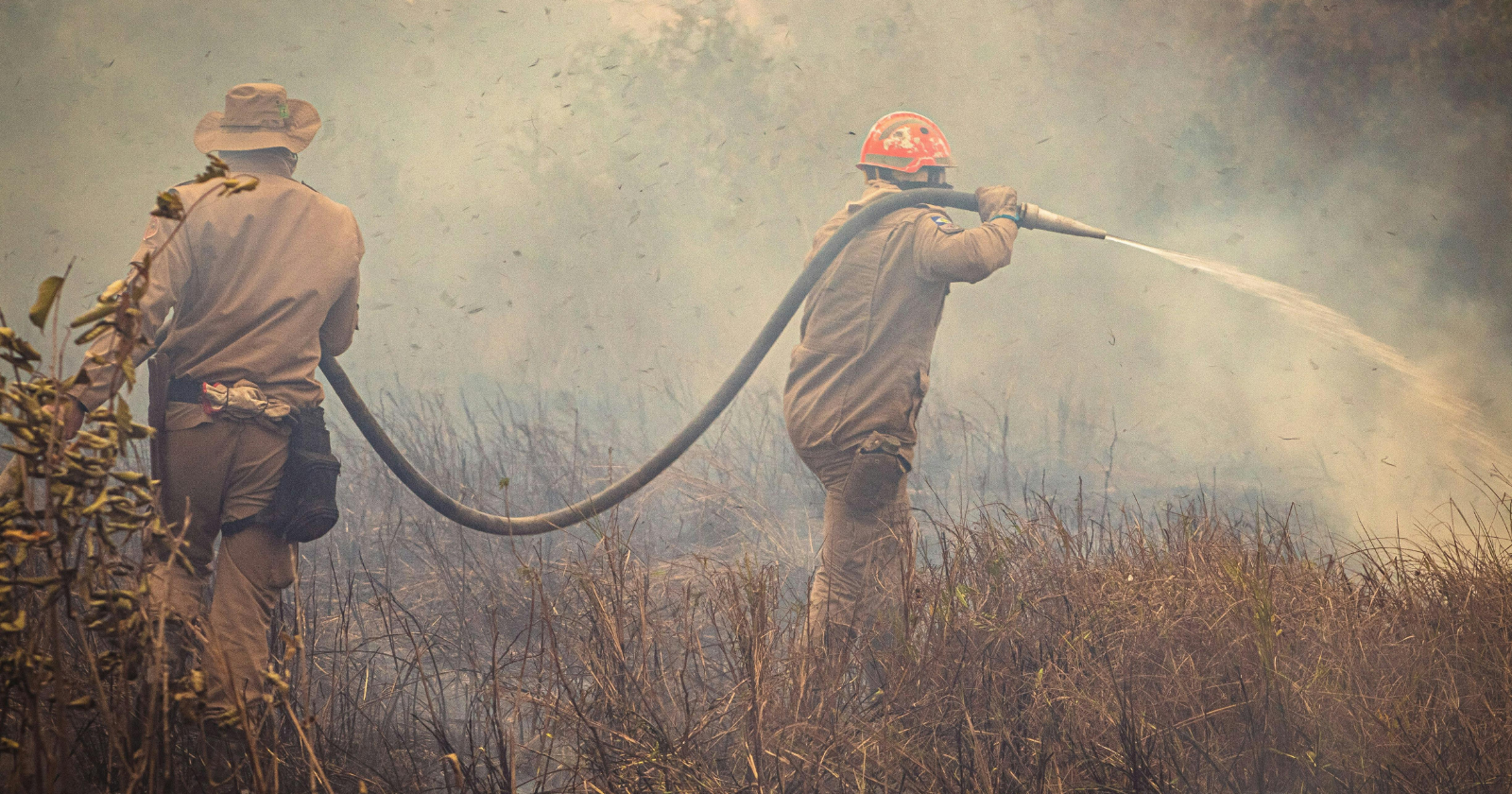
Fighting fire across terrain this remote is largely a logistics problem before it is a firefighting one. Regional authorities mobilised more than 1,400 specialists and around 30 aircraft, alongside roughly 30 pieces of ground equipment, and Krasnoyarsk requested and received more than 350 additional personnel from the neighbouring Buryatia and Zabaikalsky regions once it became clear local crews could not cover the spread on their own. With close to 90 fires active simultaneously, aircraft were doing much of the work that ground crews could not reach in time, dropping retardant and water over stands that no vehicle could get near.
Alongside the physical response, authorities imposed the standard restrictions that accompany a declared wildfire emergency in Russia: limits on public access to forest land, and bans on campfires and any open burning in and around the affected areas. Those restrictions do less to stop fires already burning than to prevent new ignition sources from adding to a fire load that emergency crews were already struggling to keep ahead of. Hot, dry weather and the large amount of dead timber left behind by the moth outbreak were, by the crews’ own account, continuing to complicate suppression even after the emergency declaration.
An insect most people fighting the fires will never see
The insect behind the deadwood problem, Dendrolimus sibiricus, is commonly known as the Siberian silk moth, and it does its damage almost entirely before any fire starts. Its caterpillars strip needles from fir, spruce, larch and pine across huge stretches of Russia, Mongolia and northern China during outbreak years, and a stand that loses its needles repeatedly over consecutive seasons can die outright well before it ever burns. The trees killed this way do not disappear. They remain standing, drying out, for years, turning a healthy stand into standing fuel long before any fire arrives to make use of it.
That lag between insect damage and fire risk is part of what makes outbreaks like this one hard to plan around. A moth infestation that peaked several seasons ago can leave behind exactly the kind of deadwood field now feeding fires in Krasnoyarsk, with the connection between the two events becoming obvious only once a fire season like this one arrives and moves faster than the weather alone explains.
Smoke reaching towns before the fires do
The fires had already made themselves felt well beyond the taiga before the emergency was declared. Reports from earlier in the week described wildfire smoke settling over Siberian towns, cutting visibility and air quality in populated areas well outside the immediate fire zone, a familiar pattern in Russian fire seasons where smoke plumes travel far ahead of any flame front. Krasnoyarsk’s fires are also visible from orbit in most bad seasons, tracked through satellite imagery that agencies including NASA have used in past years to map burn scars across the region. NASA’s own imagery from this outbreak, captured by the VIIRS instrument on June 17, confirms the same growth curve reported on the ground — well before any ground survey could confirm the same acreage.
Siberia and the wider Russian Far East have had severe fire seasons before this one — Sakha Republic alone lost an estimated 2 million hectares of forest in 2024 — so a Krasnoyarsk total of 62,600 hectares four days into an emergency is not yet in that territory. What distinguishes this stretch is less the raw total than the rate, a near-quadrupling in ninety-six hours, and the wildfire centre’s own explanation for that rate settling on the moth-killed deadwood rather than the heat alone.
What a four-day figure does and does not tell you
A jump from 16,656 to more than 62,600 hectares in four days is a striking number on its own, and it is the number driving the emergency response. But it is worth being precise about what it measures: it is the area actively on fire at two points in time, not a final tally of anything, and Siberia’s fire season in a bad year runs for months rather than days.
Whether this particular outbreak’s deadwood keeps driving the spread, or whether firefighting crews and a shift in weather manage to get ahead of it, will not be settled by this week’s figures. It will be settled by how the rest of the season plays out, fire by fire, across terrain that most of the roughly 1,750 personnel now assigned to it will spend the summer reaching on foot or by air, one remote stand at a time.
