
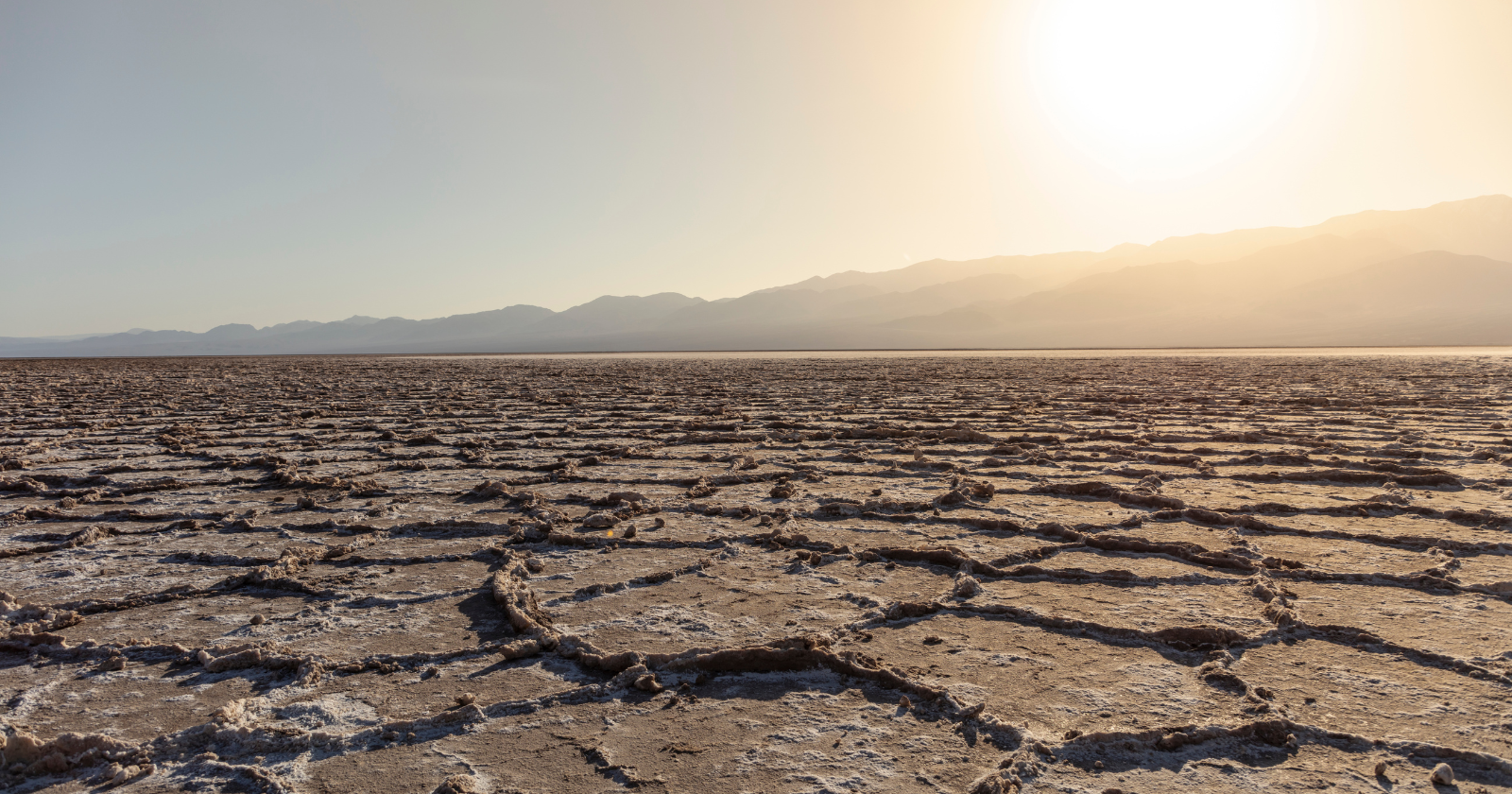
There is a number sitting at the top of every list of weather extremes, and the people who have looked at it most carefully are the ones least willing to defend it.
The reading is 134 degrees Fahrenheit, about 56.7 Celsius, taken in Death Valley on July 10, 1913. Officially, it is the hottest near-surface air temperature ever measured on Earth. It is also, according to a good number of the meteorologists who have studied it, almost certainly wrong.
What we keep circling back to here is not the heat. It is what happens to a fact once it becomes official.
Consider how the 1913 reading reached the top of the list in the first place. For most of the last century the record belonged to a 136.4-degree measurement from El Azizia in Libya, recorded in 1922. Then the World Meteorological Organization threw the Libya figure out, ruling it the product of a problematic instrument, an inexperienced observer and a measurement that did not match the surrounding conditions. With Libya struck off, Death Valley’s old number slid up into first place by default. It did not win the title so much as inherit it.
Four years later the survivor came in for the same scrutiny. The weather historian Christopher Burt, working with the climatologist William Reid, published a long investigation concluding that the 1913 Death Valley reading was, in their words, “essentially not possible from a meteorological perspective”. Their case is quietly damning. The monthly peak at Greenland Ranch was 18 degrees above its July average, while nearby stations were only 7 to 11 degrees above theirs. The measurements did not fit the weather around them.
A study published this year in the Bulletin of the American Meteorological Society pushed the point further, estimating that the true peak that day was about 120 degrees Fahrenheit, roughly 14 degrees cooler than the record claims. That is not a rounding error. That is the gap between a brutal desert afternoon and a physical impossibility.
And still the 134 stands. The WMO continues to list it as the official world record, even as it has described Death Valley’s much more recent readings of 130 degrees, reached in both 2020 and 2021, as the highest recorded anywhere in the world since at least the 1930s. So the organization’s best modern numbers are lower than the historical one it keeps at the top of the table.
Why does the doubtful figure survive? Not because anyone is mounting a strong scientific defence of it. It probably survives because taking it down requires someone to act, and the system is built so that doing nothing is the easy path. The Libya reading fell because a committee convened, investigated and issued a ruling. No WMO committee has publicly issued a fresh ruling on Death Valley. The evidence against it keeps accumulating in journals and specialist investigations, none of which carries the authority to change the entry. A correction needs an owner, and this one has never found one.
We think that is the more useful thing to take from this than any fact about the desert. We tend to imagine that official numbers are official because someone checked them and stands behind them. Often the truer story is that a number is official because it once cleared a low bar, and removing it would take more effort and more nerve than leaving it alone. Certainty, in a lot of institutions, is just inertia wearing a uniform.
None of which changes how hot Death Valley gets. It is still one of the most punishing places on Earth, and 130 degrees is a real, recorded, terrifying figure. The 134 is different. It is a reminder that the record books are not a mirror of reality so much as a ledger nobody quite has the standing to close.
