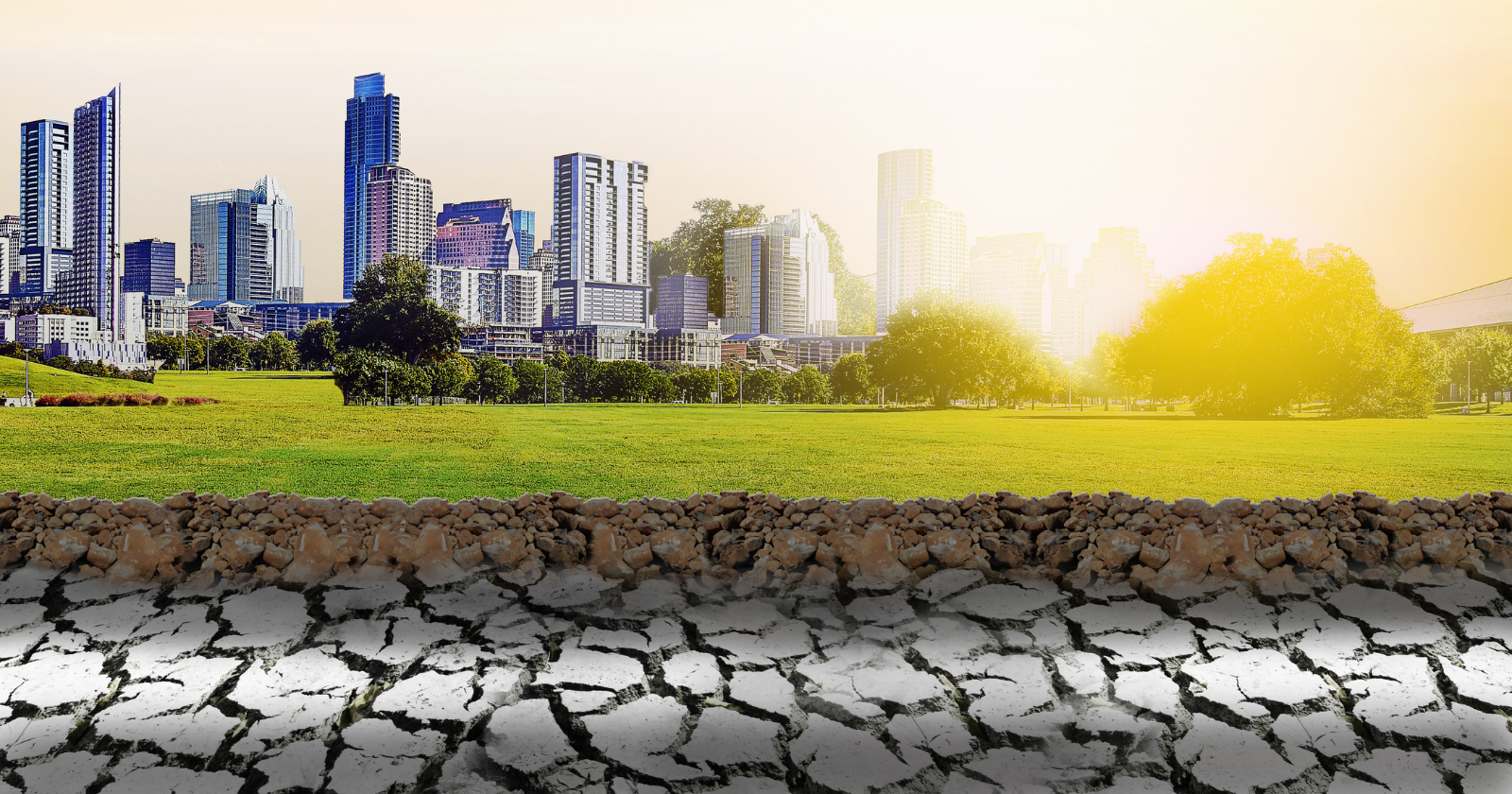
In a modern city, the tap works. Water comes out. Teeth get brushed, kettles boiled, faces washed, and none of it happens on any visible margin. The whole invisible machinery of pipes and reservoirs and pumps behind that one tap is treated by almost everyone as a settled feature of the world, the way we treat the ground being solid or the sun coming up in the east.
And then, in one city after another over the past few years, that machinery has quietly started to fail. Not all at once. Not everywhere. Not in a way that has made a single global headline the way a war or a stock market crash would. But steadily, in enough different places, and for reasons that are structural rather than one-off, that the phrase Day Zero has moved from being a term used only by climate researchers to being a planning category inside the offices of city governments.
And the list of cities on the watch list is getting longer.
What Day Zero actually means
The phrase entered the global vocabulary during the Cape Town water crisis of 2018, when three years of severe drought brought the reservoirs feeding a city of nearly five million to within weeks of the threshold at which the pipes would be switched off. Cape Town beat it. Residents were rationed to about 50 litres of water per person per day, well below what most modern city-dwellers use to flush a toilet twice, and heavy rains eventually returned. The city has since been treated as a case study in what a well-organised municipal response looks like.
What has happened since is that the set of conditions that produced the Cape Town crisis — a stack of overlapping structural failures made suddenly visible by a bad drought — has now been replicated in at least a dozen major cities on four continents. And in some of them, the situation is materially worse than what Cape Town faced.
On a related note, we created this video on the impact AI is having on the water levels – it’s quite the eye-opener:
Tehran, November 2025
The most immediate example is a city of more than 15 million people. According to reporting on the 2025 Iran water crisis by Iran Focus, Dr Banafshah Zahraei, a professor of water resources management at the University of Tehran, warned on 20 July 2025 that the four main dams supplying water to Tehran would dry up by late September. In interviews around the same time, she and other Iranian water experts described the country as approaching what they called a doomsday scenario, with drinkable water potentially running out in a matter of weeks.
By the summer, some residents in Iranian cities had gone without running water for three consecutive days. The temperatures were above 40 degrees Celsius. Students in dormitories at Shiraz, Ahvaz, and Tabriz were studying by candlelight, without water or reliable power. Mass protests began at Shahid Beheshti University on 3 May 2025 and spread. On 21 and 22 July, protesters were gathering outside the governor’s office in Sabzevar, as Iran International later reported. One protester’s statement to the press, translated from the Persian coverage, described a city without water in summer heat with a kind of directness most Western readers have never had to use. “In over 40-degree heat, we have no water or electricity. We have children, we have the sick, and yet no one seems to hear us.”
By early November 2025, the situation had reached the point that Iranian state media itself was carrying the specific warning. Al Jazeera, citing the IRNA news agency, reported that Behzad Parsa, the director of Tehran’s water company, had said the Amir Kabir Dam — one of the five main reservoirs supplying drinking water to the capital — was down to 8 per cent of capacity and could run dry within two weeks. On 6 November, Iranian President Masoud Pezeshkian publicly warned that if rain did not arrive by December, water in the capital would be rationed, and that if the drought continued into 2026, parts of Tehran might need to be evacuated. That is not something a functioning government of a country of 90 million says lightly.
Bogotá, April 2024 to April 2025
The Colombian capital of Bogotá is a city of approximately nine million people. According to National Geographic reporting by David Shortell, published in June 2024 and updated in May 2025, the Chingaza reservoir system that supplies about 70 per cent of the city’s drinking water dropped to under 17 per cent capacity in April 2024. The city government responded by dividing Bogotá into nine zones and cutting off running water to each zone on a rotating 24-hour cycle, roughly three times a month. Households that exceeded their monthly water allotment were fined on the next utility bill.
Mayor Carlos Fernando Galán publicly requested that couples shower together where possible, and that residents skip showers entirely on days they were not leaving the house. This was not a communications gaffe. It was the water-conservation guidance issued by the elected leader of a modern capital city.
The Chingaza system partially refilled during the mid-2024 rainy season, then fell again during the following dry months. As a result, rationing continued in some form for a full year, and was only lifted on 12 April 2025, once inflows had stabilised. Mayor Galán, announcing the end of the measures, described it as one of the most complex water crises the city had ever faced. What officials in Bogotá have said since is that they had believed for many years that the reservoir system serving the city was resilient to drought. On the evidence of 2024 and 2025, that belief was wrong.
Mexico City, right now
Mexico City is a megacity of approximately 23 million people. In June 2024, at the peak of a historic reservoir deficit driven by years of drought and worsened by El Niño conditions, the city’s Cutzamala reservoir system was sitting at around 27 per cent of capacity, and more than 550 individual neighbourhoods had already had their tap water shut off or their pressure severely reduced. Residents were reported filling whatever containers they could find at irregular tanker deliveries that arrived at unpredictable times and charged unpredictable prices.
The Cutzamala system was projected to reach Day Zero by late June if heavy rains did not arrive. That is, the reservoirs would stop pumping altogether, and about a quarter of the city, including zones that had never previously experienced serious shortages, would find the water simply not coming out. José Luis Luege, a former head of Mexico’s national water commission who helped bring the Day Zero framing into the national conversation, told reporters at the time, “We’re in a truly awful situation. At this point, I’m really betting on a miracle.”
The rains, eventually, arrived. The immediate crisis was postponed. What has not been resolved is the underlying picture. Approximately 70 per cent of Mexico City’s water comes from aquifers, and those aquifers, on the current hydrogeological assessments, are being drawn down faster than they can be replenished. The city has been sinking, in some places by as much as 30 centimetres per year, because of the ongoing depletion of the ground beneath it.
What every city on the list has in common
The list of cities in comparable trouble is longer than any single article can properly cover. Bengaluru in southern India, which has grown into one of the world’s largest technology corridors, saw its reservoirs approach critical levels in 2024 and is being watched again ahead of the 2026 summer. Chennai, which experienced a full-scale water collapse in 2019 when its four main reservoirs dried out simultaneously, is again at around 23 per cent combined capacity as of early 2026. São Paulo, which came close to running out in 2015, is being watched again as its Cantareira system loses forest coverage in the surrounding mountains. Cairo, Jakarta, Istanbul, Kabul, Los Angeles, and Barcelona all sit on regularly updated municipal-planning lists as cities where the arithmetic of demand and supply is now permanently uncomfortable.
What every one of these cities has in common is not a single dramatic cause. It is a stack of overlapping structural failures. Climate change is making the droughts longer, drier and more frequent. Urban populations have grown faster than the infrastructure feeding them was ever designed to handle. Aging pipes are losing enormous volumes of treated water to leaks before it ever reaches a tap. Sabesp, the state utility that serves São Paulo’s metropolitan region of more than 28 million people, currently reports water losses of around 29 per cent, most of it to leaks in ageing infrastructure and non-revenue connections. In Delhi, disputes between the states sharing a river feed have made the underlying supply agreements insufficient. In Johannesburg, the local term for the phenomenon is water shedding, coined by residents in explicit parallel with the country’s long-running power crisis.
None of these problems, on their own, would cause a city to run out of water. It is the combination, in each individual place, that produces the outcome. And what climate researchers have documented since Cape Town is that the combination is becoming more common, not less.
What the pattern reveals
The uncomfortable observation that follows from all of this is not that any particular city on the current list is doomed. Cape Town avoided it. Barcelona avoided it. Bogotá rode it out. Mexico City got its rains. Tehran, at the time of writing, has not yet reached the threshold at which the taps stop coming on.
The observation is that the invisible machinery every modern city depends on — the stack of reservoirs and aquifers and pipes and treatment plants and inter-state agreements and monsoon patterns and reliable snowmelt that means the tap works when the tap is turned on — is being asked to function in conditions it was never designed for, in more places, more of the time, and on tighter margins than at any point in the industrial era. And the municipal response, in city after city, has moved from “this cannot happen here” to “we now have a Day Zero contingency plan” over a period of about seven years.
What the pattern actually reveals, on the accumulated evidence of the past decade, is that the assumption most modern city-dwellers make about the tap — the assumption that it is settled, that it is guaranteed, that it is not something to think about — is one of the assumptions that has stopped being true. Not everywhere. Not yet. But in a growing number of places, and for the first time in modern urban history, the officials whose job it is to plan for the worst have started writing plans that name a specific date.
And the list of cities where they are doing so is longer than it was a decade ago, and lengthening.