
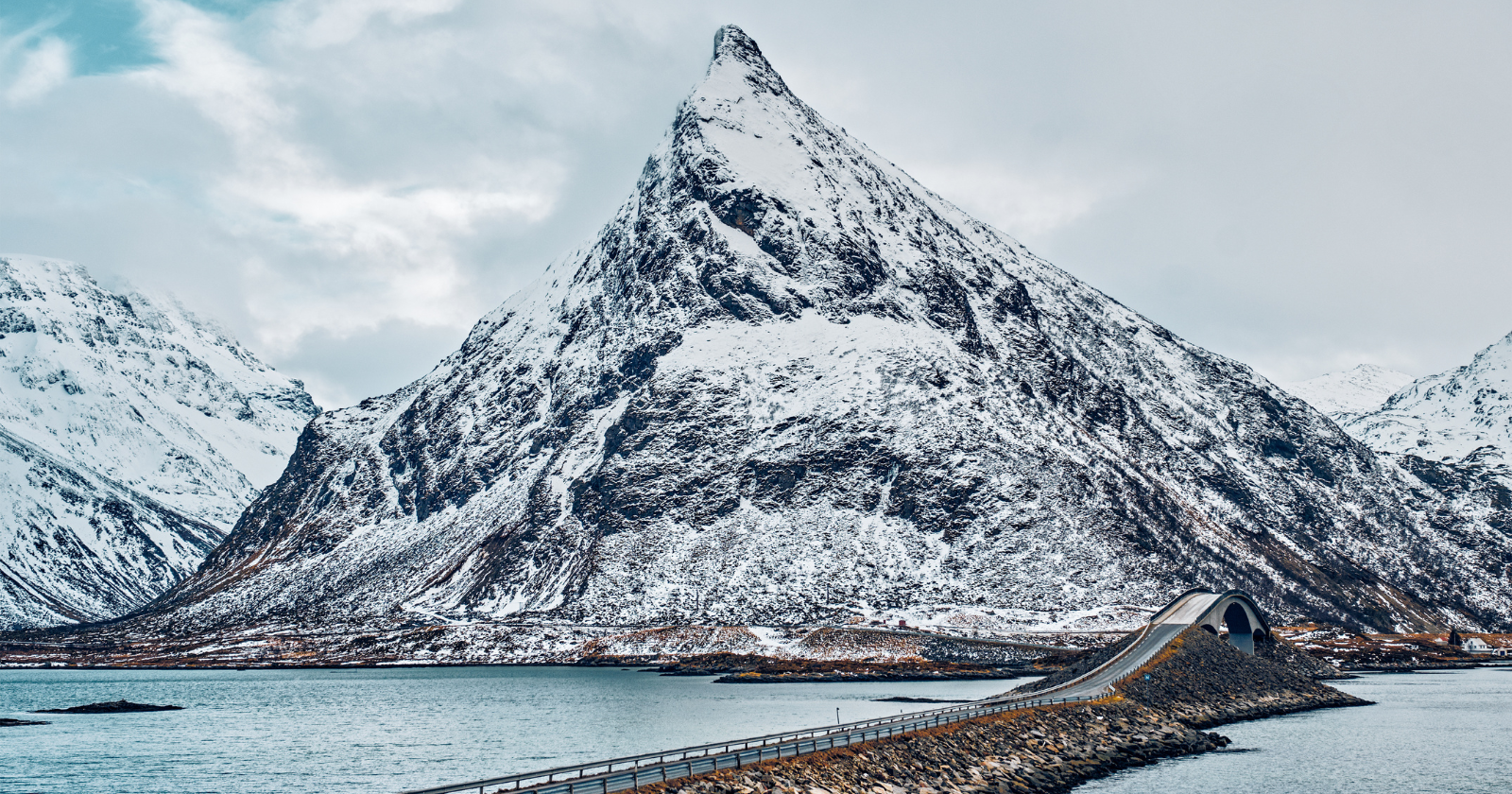
The Svalbard Global Seed Vault holds more than 1.3 million seed samples, sealed roughly 120 metres inside a sandstone mountain on the Norwegian island of Spitsbergen. It is often described as a doomsday vault, an image of a sealed ark waiting on the end of the world. A truer description is more useful and more ordinary. It is a backup drive for the world’s seed banks.
Its job is to hold copies of the collections kept elsewhere, so that if a local collection is lost, the material can be regenerated from the duplicate in the Arctic. It opened in February 2008 and is run jointly by the Norwegian government, the Nordic Genetic Resource Center (NordGen), and the international nonprofit Crop Trust. Seeds arrive most quarters, are catalogued, and go into cold storage.
What the vault actually holds
The facility is designed to store up to 4.5 million distinct seed samples, each typically holding around 500 seeds. It is far from full. As of the October 2025 deposit, the collection stood at 1,378,238 samples across 68 separate deposit events, according to the Norwegian Ministry of Agriculture and Food. More than 130 genebanks in nearly 90 countries have now placed backups there.
What sits in the mountain is duplicates, not originals. Worldwide, more than 1,700 genebanks keep active collections of food crops, and many are fragile. As the Crop Trust points out, something as mundane as a poorly functioning freezer can ruin an entire collection. Svalbard exists so a local loss does not become a permanent one. Its site was chosen for cold, remoteness and geological stability, on the reasoning that rock and permafrost would keep the seeds frozen even without power.
The deposit rhythm shows what the vault is for. Genebanks ship seeds roughly three times a year, in February, June and October. In 2024, 54 depositors added 64,331 samples. The October 2025 intake alone brought staples such as Filipino rice and Peruvian chilli, along with a large collection of traditional African vegetables from the World Vegetable Center’s genebank in Tanzania. Far from a sealed vault waiting on catastrophe, it takes in parcels most quarters.
The one time seeds have come back out
The backup has been drawn on once.
That depositor was the International Center for Agricultural Research in the Dry Areas, or ICARDA, whose genebank sat at Tel Hadya, about 30 kilometres south of Aleppo. As Syria’s civil war closed in, ICARDA staff had already shipped duplicates of their collection to Svalbard, the last of them arriving in 2014. Between 2008 and 2014 they deposited 116,484 seed samples of crops including wheat, barley, lentil, chickpea and fava bean, much of it drought and heat tolerant material bred over decades.
When the Aleppo facility became impossible to operate, ICARDA asked for its seeds back. A first withdrawal came in September 2015, followed by further withdrawals in 2017 and 2019, as documented by NordGen. Returned material was used to rebuild genebanks in Rabat, Morocco, and Terbol, Lebanon. New seed was then multiplied from those recovered samples and, in part, sent back to Svalbard to restock its shelves there.
ICARDA remains the only depositor ever to withdraw from the vault. One episode is the clearest demonstration of the whole point of the place. A working collection was lost on the ground, its backup came out of the Arctic, and the material was regenerated somewhere safer.
Keeping the building cold
Svalbard leans on its location, though the vault is not left entirely to nature. In the unusually warm winter of 2016 into 2017, meltwater from thawing permafrost entered the access tunnel and refroze inside it. The seeds, stored far deeper in the mountain, were never threatened, and no samples were damaged.
Norway treated it as a maintenance problem rather than a scare. Officials moved to waterproof the roughly 100-metre tunnel, dig drainage channels to divert meltwater away from the entrance, remove heat-producing electrical equipment and install pumps, as reported by Live Science at the time. The seeds themselves are held frozen by a combination of permafrost and mechanical cooling, so a warm season at the surface does not reach them. Its purpose was to keep the tunnel dry, since the collection had never been in danger.
The fragile banks it backs up
What Svalbard is really worth becomes clear only when you look at the collections it copies. Genebanks are exposed to the full range of ordinary failure: power cuts, funding gaps, floods, fires and conflict. Its recent depositor list reads like a map of those pressures. Sudan’s genebank sent sorghum and pearl millet from a collection nearly destroyed during the country’s civil war. A Philippine genebank battered by typhoons and fires deposited critical food crops. A Palestinian contribution of vegetables, millet and herbs came in through the 2024 intake.
Vault operators have said plainly that many crop collections remain at risk from underinvestment, and that a steady flow of deposits does not by itself make the underlying banks secure. In our reading of the coverage, that is the fairest way to describe what Svalbard does. It cannot fund or fix the world’s genebanks, but it can keep one cold, stable duplicate ready for the moment a bank fails.
What to watch
The numbers to follow are unglamorous. How full the vault gets against its 4.5 million capacity. Whether the deposit rate holds as more first-time depositors, recently from the Philippines, Peru and elsewhere, back up material shaped by conflict and a changing climate. And whether the tunnel and cooling upgrades hold through warmer Svalbard winters than the original design assumed.
A good backup spends most of its life doing nothing visible. The story to keep an eye on is not a dramatic opening to save humanity. It is the slower one, about whether the world’s working seed banks stay funded and functional enough that the frozen store in the mountain rarely has to become more than a spare.
