

NASA’s Parker Solar Probe completed its 28th close approach to the Sun on 8 June 2026, once again passing through the corona at roughly 430,000 miles per hour, or 692,000 kilometres per hour. On the usual measure relative to the Sun, no human-made object has moved faster.
At that rate, the probe would cover the great-circle distance from New York to Tokyo in less than 60 seconds.
The comparison needs one qualification. Parker is not cruising towards a destination at constant speed, and it is not diving radially into the Sun. It reaches its peak while following a tightly drawn elliptical orbit through the Sun’s outer atmosphere.
The record is a perihelion speed
Guinness World Records lists Parker’s peak as 192.22 kilometres per second, reached at 11:53:48 UTC on 24 December 2024. The spacecraft was then about 6.17 million kilometres above the visible solar surface, at perihelion, the lowest point in its orbit.
The reference frame matters because Earth, the Sun and every spacecraft are already moving. Parker’s record is normally stated relative to the Sun, and it describes the brief fastest portion of each close pass rather than a sustained interplanetary cruising speed.
Seven flybys of Venus between 2018 and 2024 made the orbit possible. Each encounter removed some of Parker’s sideways motion relative to the Sun, lowering the next perihelion. Solar gravity then accelerated the probe as it fell towards that closer point.
Venus therefore helped Parker slow down in one orbital sense so it could move much faster in another. NASA’s account of the trajectory design also explains why repeated Venus assists were preferred to an earlier Jupiter-assisted plan: the selected path gave the instruments far more time in the near-Sun region.
The corona has an uneven boundary
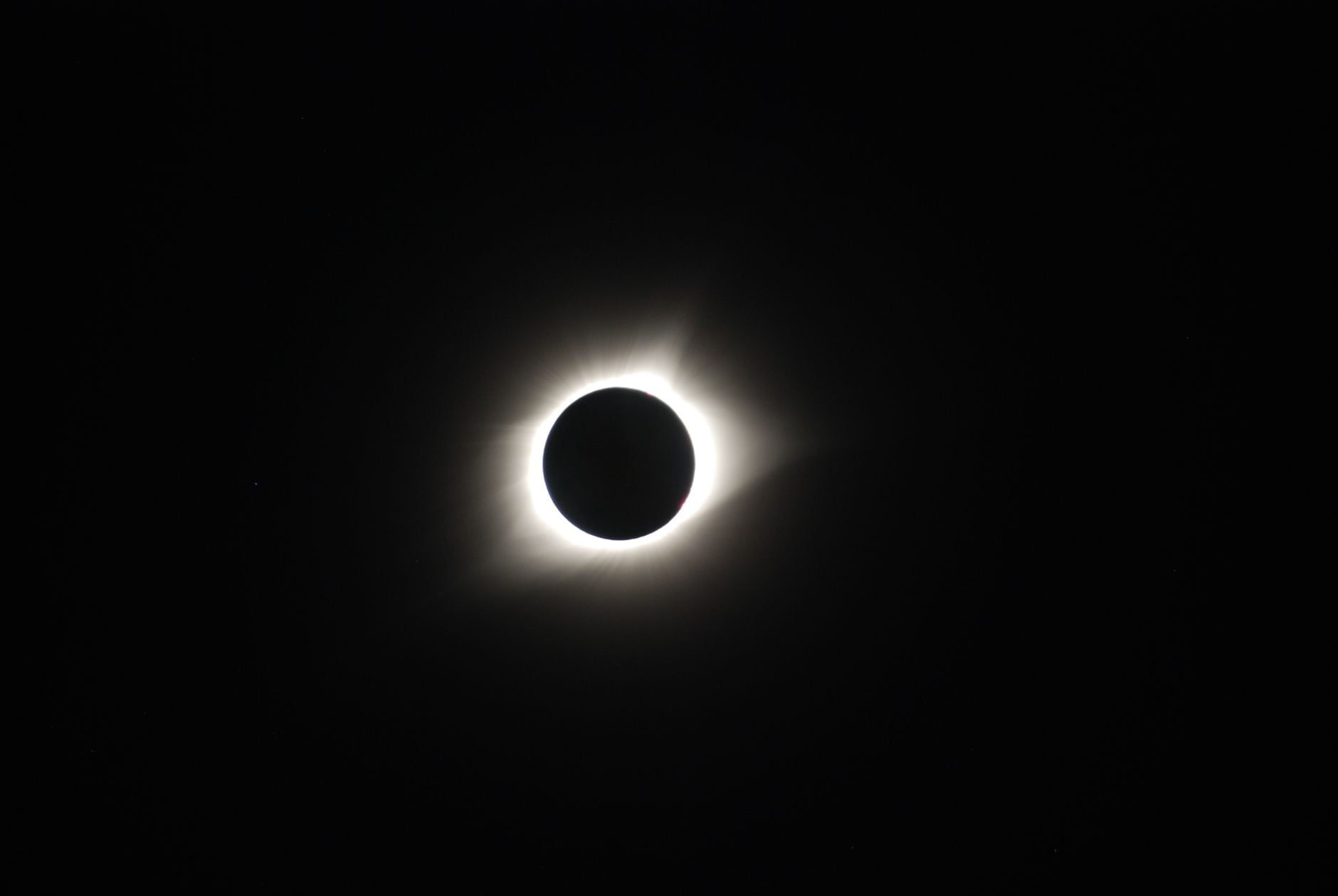
The Sun’s corona has no hard surface. Its outer limit is commonly marked by the Alfvén critical surface. Inside that boundary, waves in the plasma can travel back towards the Sun; outside it, the solar wind is moving outward too quickly for that magnetic communication to continue.
Parker first crossed the boundary on 28 April 2021. In a peer-reviewed Physical Review Letters paper, lead author Justin Kasper and colleagues reported that the probe entered the magnetically dominated corona about 13 million kilometres above the photosphere and remained in sub-Alfvénic plasma for roughly five hours.
That first crossing showed why a simple spherical diagram is misleading. Parker moved in and out of the corona as it passed an uneven boundary. Research published later, using Parker with Solar Orbiter and the Wind spacecraft, found that the Alfvén surface becomes rougher and more extended as solar activity rises. NASA reported the first continuous two-dimensional maps in December 2025.
“Flown straight through” is consequently best read as a description of crossing the coronal region, not the geometry of the flight path. Parker follows an orbital arc and repeatedly passes from the solar wind into plasma that remains magnetically tied to the Sun.
The shield has to keep pointing at the Sun
Parker’s Thermal Protection System is a 2.4-metre carbon-composite shield built around an 11.4-centimetre carbon-foam core. A white coating reflects part of the incoming energy. The complete structure weighs about 73 kilograms.
The shield creates a narrow shadow rather than making the entire spacecraft heatproof. Parker’s main body and most instruments must remain behind it, so autonomous guidance keeps the protected side correctly oriented while communications with Earth are unavailable. Its solar panels retract until only the area needed to produce power remains exposed.
For the June 2026 pass, mission engineers estimated a shield temperature near 1,700 degrees Fahrenheit, or 930 degrees Celsius. The temperatures measured behind it remained consistent across the close approaches, which the team uses as one indicator that the shield is not degrading.
The corona itself reaches millions of degrees, but temperature alone does not describe the heat transferred to a spacecraft. Coronal plasma is extremely sparse. Parker’s thermal problem is a combination of intense solar radiation, energetic particles and the need to keep vulnerable hardware in shadow, not the dense convective heating experienced in Earth’s lower atmosphere.
The speed puts instruments close to the source
Parker carries four instrument suites. FIELDS measures electric and magnetic fields. SWEAP measures the speed, density and temperature of electrons, protons and helium ions. ISʘIS examines energetic particles, while WISPR images structures in the corona and solar wind before the spacecraft samples them directly.
The aim is to determine how the corona is heated, how the solar wind accelerates and how solar particles gain high energies. Proximity lets Parker measure fields and particles before their structures spread and evolve across tens of millions of kilometres. Those processes feed space weather that can affect satellites, radio systems, power grids and crews beyond Earth’s magnetic protection.
The speed record is therefore a consequence of reaching the observing site, not the mission’s scientific objective.
The same close orbit continues
NASA’s 11 June 2026 mission update said Parker had again matched its 3.8-million-mile closest distance and record speed. It checked in after nine days of planned autonomous operation, with its systems operating normally.
Parker will remain in this orbit and collect measurements as the Sun moves away from the active peak of its roughly 11-year cycle. That repetition gives the science teams comparable close-range observations under changing solar conditions.
NASA says the mission’s next steps for late 2026 and beyond remain under review. The next decision is whether, and for how long, the operating mission will be extended.