
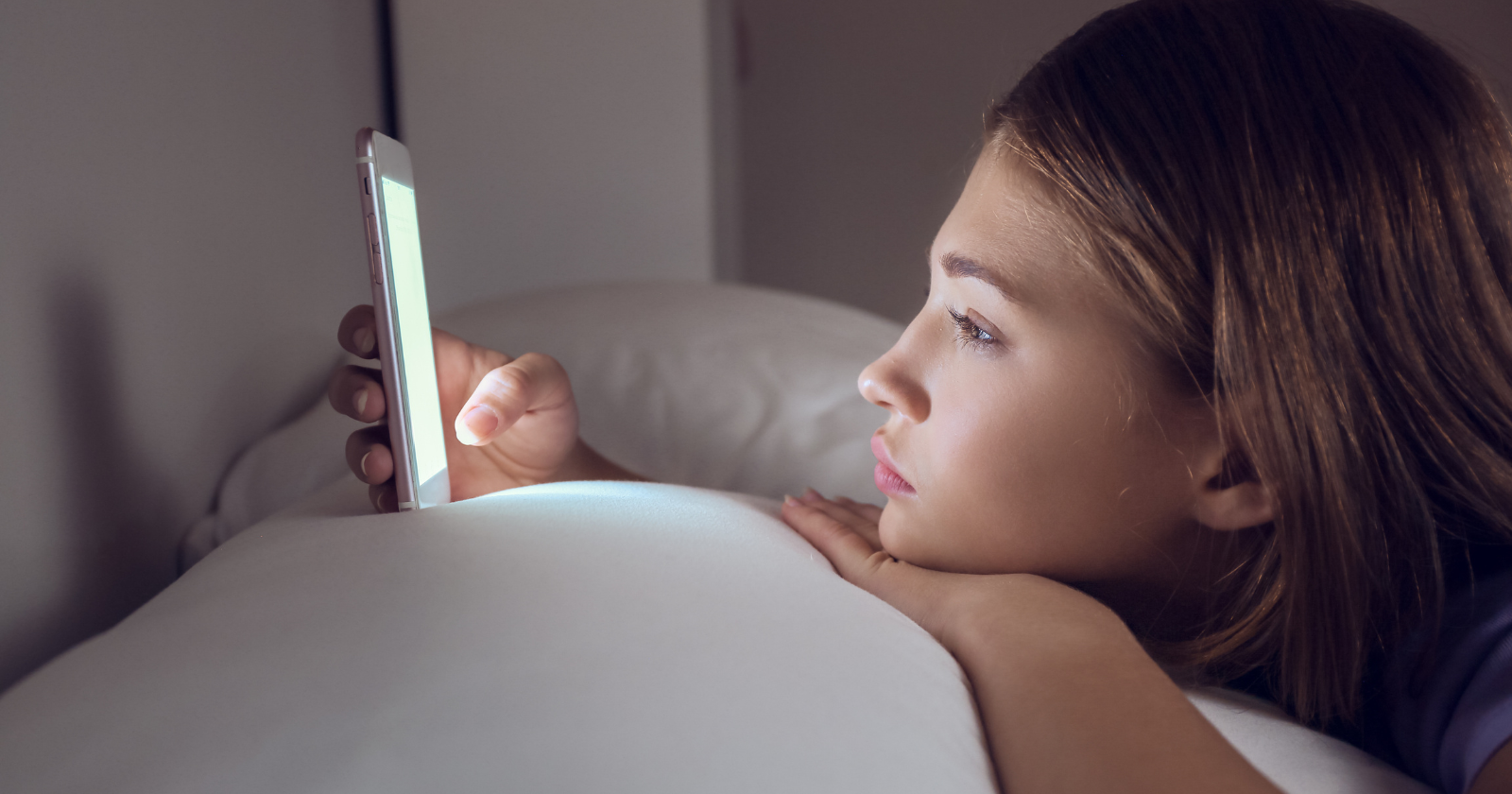
By now the warning is familiar: doomscrolling before bed raises stress, suppresses melatonin, and leaves you sleeping worse, and the people it harms most are the ones who keep reaching for the phone anyway. Every part of that sentence has research behind it. Read together as one causal chain, the story holds together more neatly than the evidence does.
Correction, September 20, 2026: The headline was revised because it fused separate findings about doomscrolling, distress, evening light and sleep into one unsupported mechanism.
What follows is a reading of the research, not medical advice, and it draws on several separate bodies of work rather than one headline study.
That last point matters more than it looks.
The three claims in the popular version come from three different fields that rarely sit at the same table: sleep and circadian biology, media psychology, and the study of self-regulation. Each has measured something real. None of them, on its own, has measured the whole sequence.
The melatonin part is about light, not the news
Start with the most physical claim, because it is the one most often misattributed. The finding that screens suppress melatonin comes from studies of light, not studies of doomscrolling.
In a controlled experiment published in PNAS in 2015, Anne-Marie Chang, Charles Czeisler and colleagues at Brigham and Women’s Hospital had participants read on a light-emitting e-reader for four hours before bed across several evenings. Compared with a printed book, the device delayed melatonin release, pushed back the circadian clock, lengthened the time it took to fall asleep, and left readers groggier the next morning. This is controlled lab work under fixed lighting, some distance from a typical night at home with a phone in a dark room.
The wider point is older still. A 2011 study in the Journal of Clinical Endocrinology and Metabolism, led by Joshua Gooley in the same research group, found that ordinary room light before bedtime suppressed melatonin in almost everyone tested and shortened the body’s internal sense of night by around ninety minutes.
A bright bedside lamp does much of what a screen does. The phone is not uniquely to blame here; it is one bright light among several.
There is also a step in the chain that popular accounts skip. Suppressing melatonin is not the same as ruining sleep. A 2022 study by Christine Blume and colleagues, published in the journal Sleep, exposed twenty-nine volunteers to evening light engineered to differ only in its effect on the melanopic system. The higher-melanopic light suppressed melatonin by around 14 per cent, yet the two conditions produced no measurable difference in how well people slept, how sleepy they felt, or how alert they were. Melatonin is a signal, and on this evidence the link between the signal and the sleep that follows is looser than the simple version implies.
The stress finding is consistent, and it is correlational
The second claim, that doomscrolling and stress travel together, rests on a genuinely growing pile of studies. This is where the evidence is broadest, and where its limits are easiest to forget.
A 2026 scoping review in Mental Health and Digital Technologies, drawing together seventeen studies, reports that doomscrolling keeps fairly consistent company with anxiety, depressive symptoms, psychological distress and reduced wellbeing. A scoping review maps a field rather than pooling numbers, so the size of the effect has to come from the primary studies themselves. Where they report it, a systematic review gathering them, currently a preprint and not yet peer reviewed, puts most associations in the moderate range, around d = 0.3 to 0.55, rather than the large one. The behaviour is usually described as compulsive, reinforced by infinite scroll and algorithmic feeds, and tied theoretically to rumination and to a low tolerance for uncertainty.
The catch is that almost all of this work is cross-sectional. It photographs people at a single moment and finds doomscrolling and distress in the same frame, without being able to say which came first. Anxious people may scroll more, scrolling may make people more anxious, or both may run on a shared engine of worry. The reviews themselves say this openly, and the association holds up across countries.
The direction of the arrow is not settled.
Why the people most affected keep reaching
The most human part of the claim is that the phone pulls hardest on the people it hurts most. Here two separate lines of research meet, and neither closes the case.
One comes from the study of bedtime procrastination, a term coined by the Dutch behavioural scientist Floor Kroese and colleagues in a 2014 paper in Frontiers in Psychology. Their work frames going to bed later than intended, for no good external reason, as a self-regulation problem: people with weaker self-control tend to postpone sleep and then report getting too little of it. A pair of daily diary studies by Katharina Bernecker and Veronika Job, published in the British Journal of Psychology in 2020, added a wrinkle. After a stressful day, people who believe their willpower is a resource that easily runs down delayed bedtime more than they did on calmer days, while people who did not hold that belief showed no such pattern.
The other line comes from media psychology, where trait anxiety and intolerance of uncertainty predict who doomscrolls in the first place. People least comfortable with not knowing tend to keep refreshing in search of a resolution the feed is structurally unable to provide.
Set beside each other, the two literatures sketch a believable loop: the person already carrying more worry, and with less in reserve at the end of a hard day, is both more drawn to the feed and less able to close it. Believable is not the same as established. Both bodies of work are largely correlational and lean on self-report, and the self-regulation framing itself is contested. Jana Kühnel and colleagues argued in a 2018 study that bedtime procrastination looks less like weak self-control than like a mismatch between a person’s body clock and the hours their work demands, with late chronotypes putting off sleep whatever their willpower. Kroese’s group published a reply defending the original reading. The question is still open.
What the evidence does not license
Put the three pieces of literature down together and the gaps become visible. No single study follows one person from the bright screen through suppressed melatonin to worse sleep to higher stress the next day and back to the phone the following night. That full circuit is assembled from separate findings, each measured under different conditions, in different samples, by researchers who mostly do not cite one another.
The phrase “the people it affects most” hides a measurement problem. Working out who is affected most, rather than who simply scrolls most, is hard, and a cross-sectional snapshot cannot separate the vulnerability someone brought to the phone from the harm the phone added. The pre-existing worrier and the person the feed made anxious can look identical in the data.
None of this shows the popular claim is wrong, only that it is less finished than it sounds. The careful version is narrower: bright light in the evening can shift the body clock, heavy consumption of negative news keeps company with distress, and the people with the least regulatory slack at bedtime seem the most likely to stay in the feed. Three defensible statements, held slightly apart, rather than one clean chain.
If bedtime scrolling has tipped into sleep you would honestly call broken, or into stress that no longer lifts by morning, that is worth raising with a GP. An article can map the research. It cannot examine the person reading it.
What stays with us, reading across the three fields, is how well the tidy story suits the anxious mind it describes. It offers one villain, one mechanism, one fix. The research is messier than that, slower to conclude, and it does not yet let anyone say the loop turns the way the popular version says it does.