

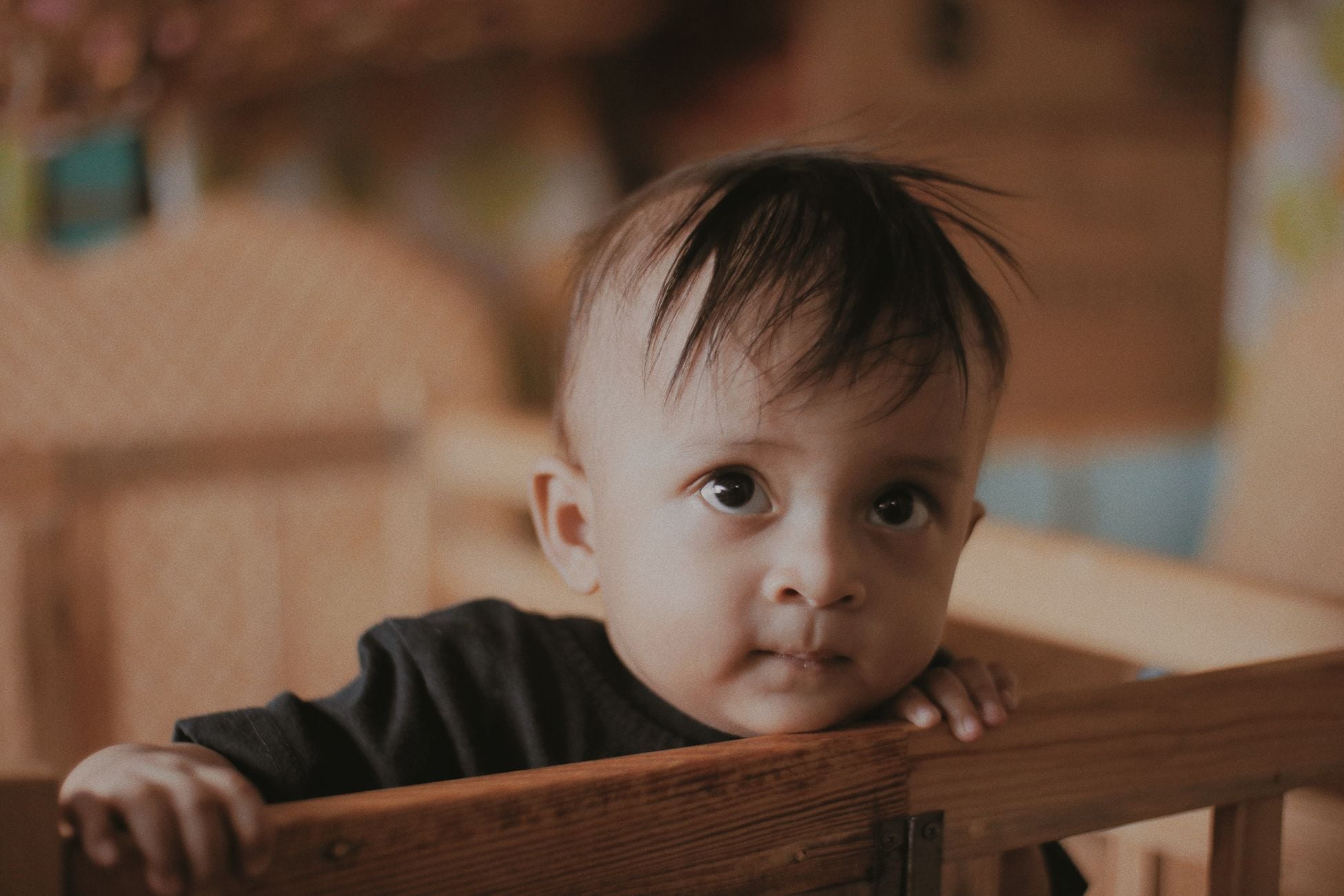
In a small observation room in the late 1960s, Mary Ainsworth and her graduate students watched one-year-olds through a one-way mirror as their mothers stood up, walked to the door, and left them alone with a stranger. Some babies wailed. Some crawled after the door. And some — the ones Ainsworth eventually classified as “avoidant” — kept playing with the toys as if nothing had happened. Decades later, when researchers strapped heart-rate monitors to infants running the same protocol, those calm-looking babies turned out to have pulses hammering as fast as the criers. The indifference was a performance. The stress was identical.
The experiment is called the Strange Situation, and it is one of the most replicated pieces of developmental psychology ever designed. Ainsworth built it as a 20-minute laboratory choreography of eight short episodes — mother and baby together, stranger enters, mother leaves, mother returns, mother leaves again — to see how a child used a caregiver as a secure base. What she did not expect was that the babies who looked most self-possessed were, physiologically, the ones being cooked from the inside.
The room, the toys, the door
The setup is deliberately mundane. A carpeted room, a chair for the mother, a chair for a stranger, a scatter of age-appropriate toys. The infant, usually between 12 and 18 months old, is placed on the floor. Over roughly 20 minutes, Ainsworth’s protocol runs the child through two brief separations from the mother and two reunions, with a friendly stranger cycling in and out. The whole thing is filmed. Coders later score the reunions second by second — does the baby reach for the mother, cling, calm down, resume play?
Ainsworth had spent time in Uganda observing mothers and infants in villages before returning to Baltimore for a longer home-observation study. By the time she designed the lab protocol, she had thousands of hours of naturalistic data on how babies actually behaved around their mothers. The Strange Situation was meant to compress those patterns into something a stopwatch could catch.
Three patterns, and then a fourth
What emerged, and what still shapes clinical practice today, was a taxonomy of three infant styles. The majority of American middle-class babies in Ainsworth’s original Baltimore sample were classified “secure” — they protested when the mother left, greeted her warmly when she returned, and settled back into play. A substantial minority were “anxious-resistant” or “ambivalent” — inconsolable at separation, and clingy but angry at reunion, sometimes arching away from the mother while reaching for her. And others were “avoidant.”
The avoidant babies were the puzzle. They barely reacted when the mother left. When she came back, they looked past her, kept playing, sometimes turned their bodies slightly away. To a naive observer they seemed the most well-adjusted children in the room — independent, unbothered, easy. A fourth category, “disorganized,” was added later to capture infants whose behavior didn’t fit any of the three, often freezing or showing contradictory approach-avoidance movements.
The heart-rate finding
The physiological work that reframed the avoidant pattern emerged in subsequent decades. Researchers began measuring what was happening inside the calm-looking babies. They fitted infants with heart-rate telemetry and, in later studies, collected saliva samples to measure cortisol — the body’s main stress hormone.
The results were startling. Avoidant infants showed heart-rate accelerations during separation that were as large as, and sometimes larger than, those of the crying, distressed babies. Their cortisol levels after the procedure were often the highest in the sample. The babies who looked coolest were, by every internal measure, the most physiologically stressed children in the room. Their apparent indifference was a behavioral strategy laid on top of a body in full alarm.
Attachment behavior came to be understood as an organized system, not a set of surface reactions. The heart-rate data gave that argument a physical anchor. A baby could be intensely activated and still appear placid, if it had learned that showing distress didn’t bring comfort.
Why a baby learns to look calm
The avoidant pattern doesn’t appear out of nowhere. In Ainsworth’s Baltimore home observations, the mothers of babies later classified as avoidant were, on average, less responsive to crying, more uncomfortable with close bodily contact, and more likely to rebuff bids for closeness. The babies weren’t born stoic. They had, over roughly 12 months of repeated experience, learned that reaching out didn’t reliably work — and that turning the volume down on their distress was less costly than turning it up.
That learning is what developmental psychologists now call early emotion regulation. It is not, in the strict sense, suppression — the infant isn’t consciously deciding to mask. It is closer to an adaptive down-regulation of the outward signal while the inward signal keeps blaring. The behavioral masking is protective in the short term: it preserves the caregiving relationship, however imperfect, by not demanding what the caregiver has shown they can’t easily give.
What the coders were missing
For roughly two decades, the coding manuals for the Strange Situation relied almost entirely on visible behavior. A baby who kept playing during separation and didn’t seek proximity at reunion got the avoidant code. The internal state was assumed to match the outward one. The heart-rate work forced a revision: the same behavior could sit on top of radically different physiologies, and the physiology was arguably the truer signal.
This mattered because avoidant babies had been described in the earliest write-ups as independent or even precociously self-reliant. Some parenting guides in the 1970s picked up on the surface reading and treated the pattern as desirable. The interior data made that reading untenable. A one-year-old with a resting heart rate of 140 climbing to 190 while looking untroubled at a wall of toys is not independent. It is coping.
The follow-ups, decades later
Ainsworth’s students and their students followed those babies. Longitudinal studies tracked children from infancy into adulthood. Infants classified as avoidant in the Strange Situation tended, on average, to show more difficulty acknowledging distress in adolescence and adulthood, more reliance on distancing strategies in close relationships, and, in some sub-samples, elevated stress-hormone reactivity to social challenge tasks. The pattern the babies displayed on the carpet with the toys was not a passing mood. It was the beginning of a durable style.
The Adult Attachment Interview gave researchers a way to classify adult attachment patterns from the way people talked about their own childhoods. Adults classified as “dismissing” — the adult analog of avoidant — often described their upbringings in glowing but generic terms, unable to produce specific memories, and their physiological arousal rose sharply during the interview even as their voices stayed level. The signature had survived thirty years.
What the finding is, and is not
The heart-rate result is not a claim that avoidant babies are damaged, or that their parents failed, or that the Strange Situation predicts destiny. Attachment classifications are moderately stable, not fixed, and a substantial proportion of children shift categories between infancy and adulthood in longitudinal samples. Culture matters — Japanese and German samples in the 1980s produced distributions of avoidant and resistant classifications very different from Ainsworth’s Baltimore numbers, in ways that reflect caregiving norms rather than child pathology.
What the finding is, is a warning about reading emotion from the outside. The babies who looked calmest in Ainsworth’s room were not calm. They had learned, before they could speak, to run a public face that did not match a private body. The developmental influence of a caregiver’s responsiveness reaches deep enough, and early enough, that a one-year-old can already perform composure while its heart is doing something else entirely.
The room, still running
Versions of the Strange Situation are still administered in developmental labs from Leiden to Minneapolis to Tokyo, more than fifty years after Ainsworth first taped a piece of colored paper to a nursery door to mark the exit. The underlying framework — that infants build working models of relationships out of thousands of small moments of reach and response — has spread far beyond the original protocol, into therapy rooms, pediatric clinics, and courtrooms.
The video footage from Ainsworth’s original Baltimore sample still exists in archived reels. In those grainy frames, a 14-month-old sits with her back half-turned to the door, methodically stacking rings on a wooden post. She doesn’t cry. She doesn’t look up when her mother returns. She keeps stacking. Somewhere under the dress her heart is doing 180 beats a minute, and it has been doing that for four full minutes, and no one in the room in 1969 could see it.