
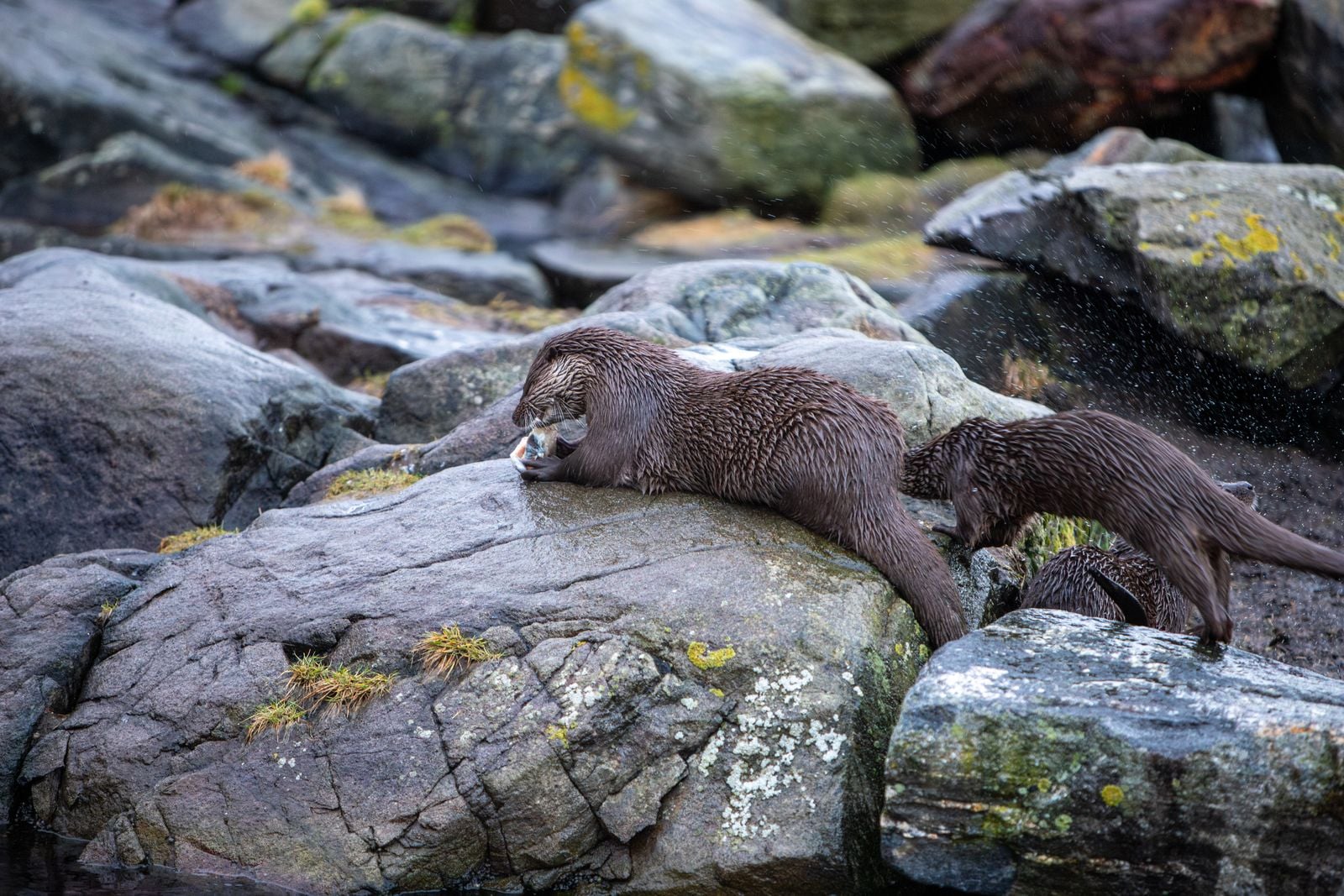
A sea otter floating on its back in Monterey Bay will sometimes reach under its left forearm, pull out a smooth stone the size of a plum, balance it on its chest, and start hammering a mussel against it until the shell cracks. The stone lives in a loose flap of skin — a baggy pocket of loose furred hide beneath each foreleg — and the otter often keeps that same rock for months, years, sometimes for the whole of its adult life. Footage from biologist Chris Law, published alongside a 2024 study, shows the move in slow, deliberate detail.
Sea otters are the only marine mammal that regularly uses stone tools. And of all the tool-using animals on Earth, they are among the very few that carry their tool with them.
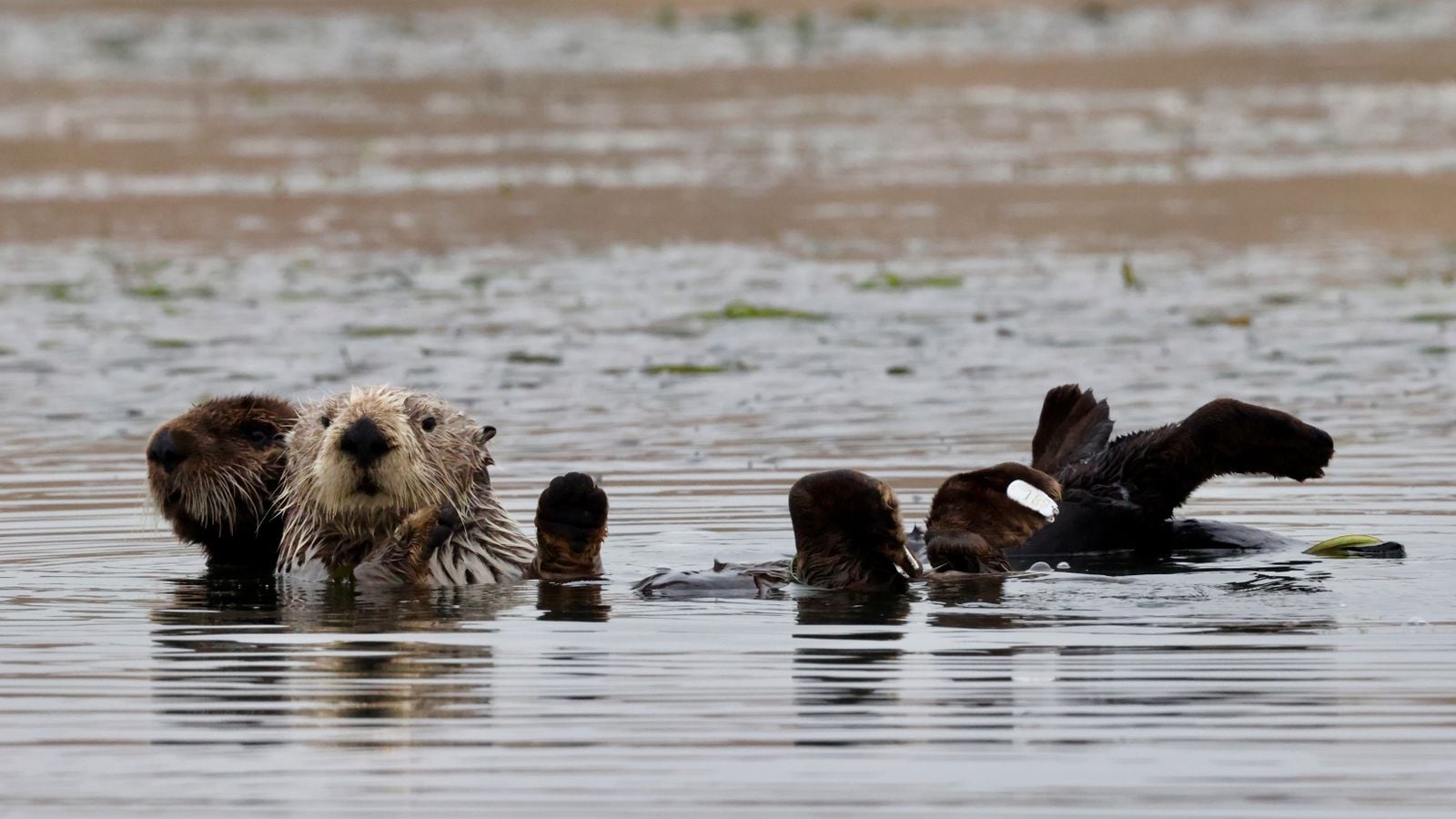
The pouch is real, and it’s evolved for exactly this
The pouch is not a metaphor. Sea otters (Enhydra lutris) have loose folds of skin running across their chest and under each foreleg, and the left-side pocket is the one most individuals seem to prefer. Otters stuff it with food they’ve collected on a dive — urchins, clams, snails, crabs — and, crucially, with a favourite rock kept in reserve for the surface work.
The behaviour has been documented for decades along the central California coast, where southern sea otters live in the kelp forests between Half Moon Bay and Point Conception. The fur trade drove the species close to extinction by 1911; the population has clawed back thanks to protections in the 1970s, as NPR summarised the recovery in a 2024 report on Law’s findings.
Why the rock matters more than it looks
An adult sea otter needs to eat around 25% of its body weight every day to stay warm in cold Pacific water. That’s an enormous calorie load — the equivalent of a 70kg human eating roughly 17kg of shellfish daily. Their teeth take a beating. Cracked molars mean a starving otter.
Law’s team tracked radio-tagged otters in Monterey Bay over years of observation. They found that individuals who reliably used stone anvils had markedly less tooth damage than those who tried to bite prey open directly. Otters whose favourite foods — abalone, urchins — had been depleted by fishing and habitat loss were the ones who leaned hardest on tools, using rocks to break into tougher-shelled marine snails and clams that would otherwise shatter their teeth.
The Guardian’s coverage of the research put it plainly: the tool is what lets a sea otter switch diets when the ocean around it changes. Without the rock, a hungry otter facing a bay stripped of urchins can’t chew its way out of the problem.
Females are the master toolmakers
The most striking finding of the 2024 study was gendered. Female otters use tools far more often than males, and they use them to crack open harder-shelled prey than tool-using males typically tackle. The reason is size. Male sea otters are bigger, with stronger jaws, and can crush a lot of shells by brute force. Females are smaller and weaker-biting, and they also carry pups — meaning higher calorie demands during pregnancy and nursing.
As EurekAlert reported on the release of the paper, tool use is essentially a workaround: it lets a smaller animal punch above its weight, energetically. Mothers also pass the skill on. Pups spend around six months riding on their mother’s chest, watching her hammer, and eventually copying the motion with pebbles of their own.
This kind of same-sex transmission of a learned skill is rare in the animal world. Mongabay’s writeup compared the pattern to female-led tool traditions in some chimpanzee communities, where daughters inherit termite-fishing techniques from their mothers.
How the favourite rock gets chosen
Nobody has published a full study of how an individual otter picks its stone. But researchers observing wild populations describe a rough set of preferences: rocks around 6 to 15 centimetres across, dense enough to shatter shell but light enough to tuck under a forearm, with at least one flat surface. Some otters use the same rock so long that the stone develops a distinctive wear pattern — a smoothed, pitted face where thousands of mussel strikes have landed.
That wear is now traceable in the archaeological record. Researchers have spent years documenting shoreline “anvil rocks” — stationary boulders that otters return to again and again to crack mussels against. Earth.com summarised the results: otters strike mussels at a consistent angle, always with the shell’s hinge upward, leaving a signature diagonal pattern of damage on the stone that researchers can identify from broken shell fragments alone.
In other words, sea otters are leaving behind an archaeological site. Not a metaphorical one — a real one, with tool-wear patterns and butchery debris, indistinguishable in method from what human archaeologists study at ancient hominin sites.
The pouch as a portable workshop
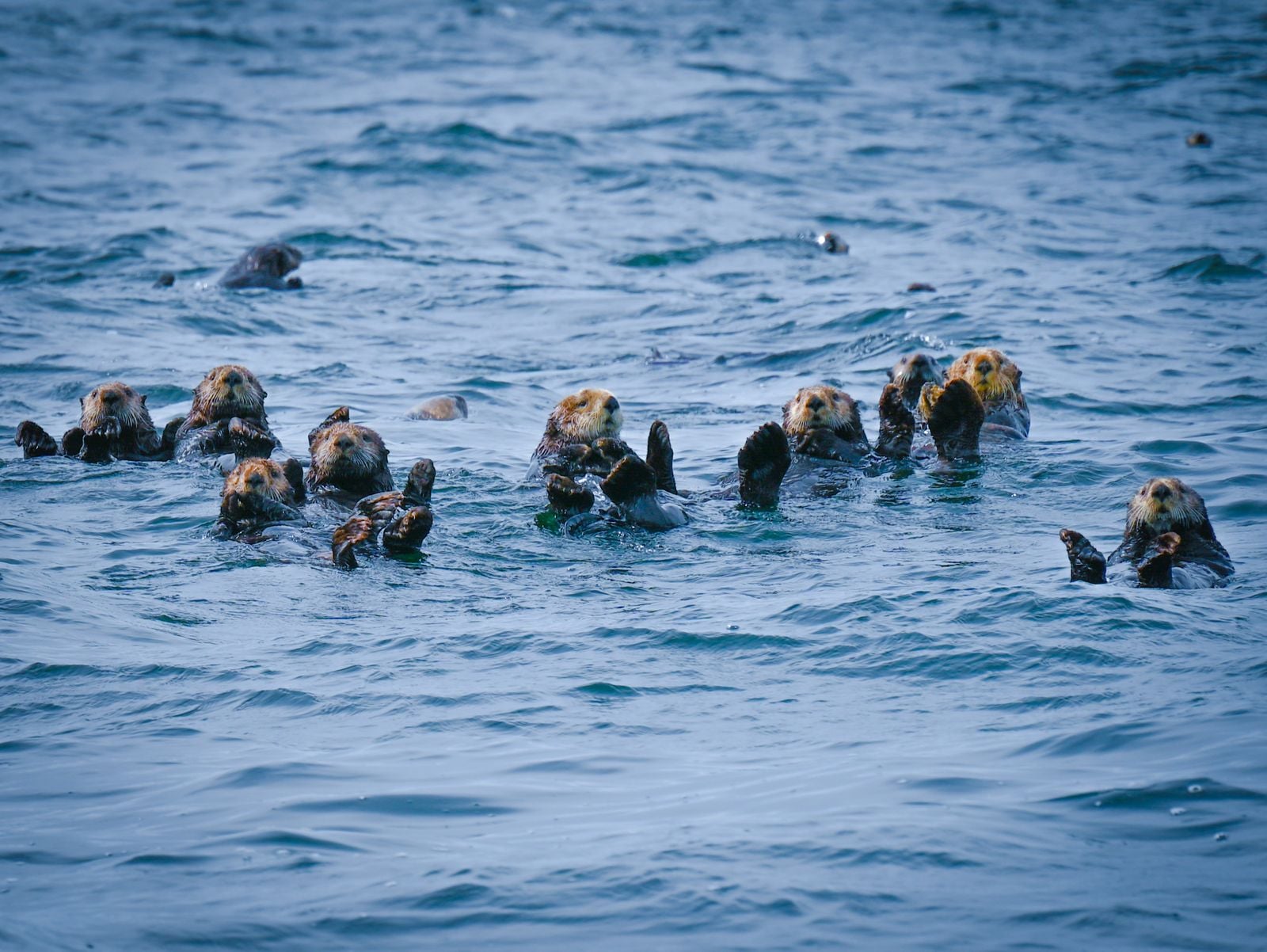
Carrying a rock is different from using one. Chimps use twigs to fish for termites but drop them afterwards. Egyptian vultures pick up stones to smash ostrich eggs but abandon them where they lie. Sea otters, by contrast, keep their stone. They dive with it, surface with it, sleep with it wrapped in kelp.
The left-side preference is not fully understood. Some researchers suggest it’s simply handedness — like most humans favouring a right hand, most otters seem to favour a right forepaw for striking and a left pouch for storage. Others note that otters sleep on their backs with the pouch tucked against the body, and the left side may just happen to be the more secure resting position.
Either way, the pouch is treated with the kind of possessiveness that in other species is reserved for offspring or mates. ZME Science’s writeup notes that otters have been observed picking through dozens of stones on a beach before selecting one, and once they’ve selected, that rock stays with them.
What it means for how we think about tool use
For a long time, tool use was treated as the dividing line between humans and everything else. Then Jane Goodall’s chimps started fishing for termites, and the line moved. Then crows started bending wire, and it moved again. Sea otters push the line further out — not because they use tools, but because they use the same tool, over and over, kept on their person, integrated into daily life the way a carpenter keeps a favourite hammer.
They also do it without hands in the human sense. An otter’s forepaw is a stubby, sensitive pad — good for feeling for urchins in kelp, less obviously suited to precision striking. And yet they’ve evolved not just the behaviour but the anatomy to support it: the loose pouch, the flat sternum that serves as a working surface, the ability to float steadily on their backs while working.
A behaviour under threat
The southern sea otter population is still classified as threatened under the US Endangered Species Act. Kelp forests along the California coast have collapsed in many areas — hammered by warming water, urchin barrens, and pollution.
Which means the rock in the pouch is also a conservation story. Otters that can switch prey — thanks to their tools — are more resilient to ecosystem collapse than otters that can only eat one thing. Law’s team found that individual otters with well-established tool habits were the ones surviving best in bays where preferred prey had crashed.
A pup born this summer in Monterey Bay will spend six months on its mother’s belly, watching her crack shells against a stone she may have carried since before that pup was conceived. Sometime around weaning, the pup will pick up its own first pebble, fumble with it, drop it, try again. If it lives — southern sea otters average around 10 to 15 years in the wild — that rock, or one much like it, may still be tucked under its left arm two decades from now, worn smooth by a lifetime of mussels.
