
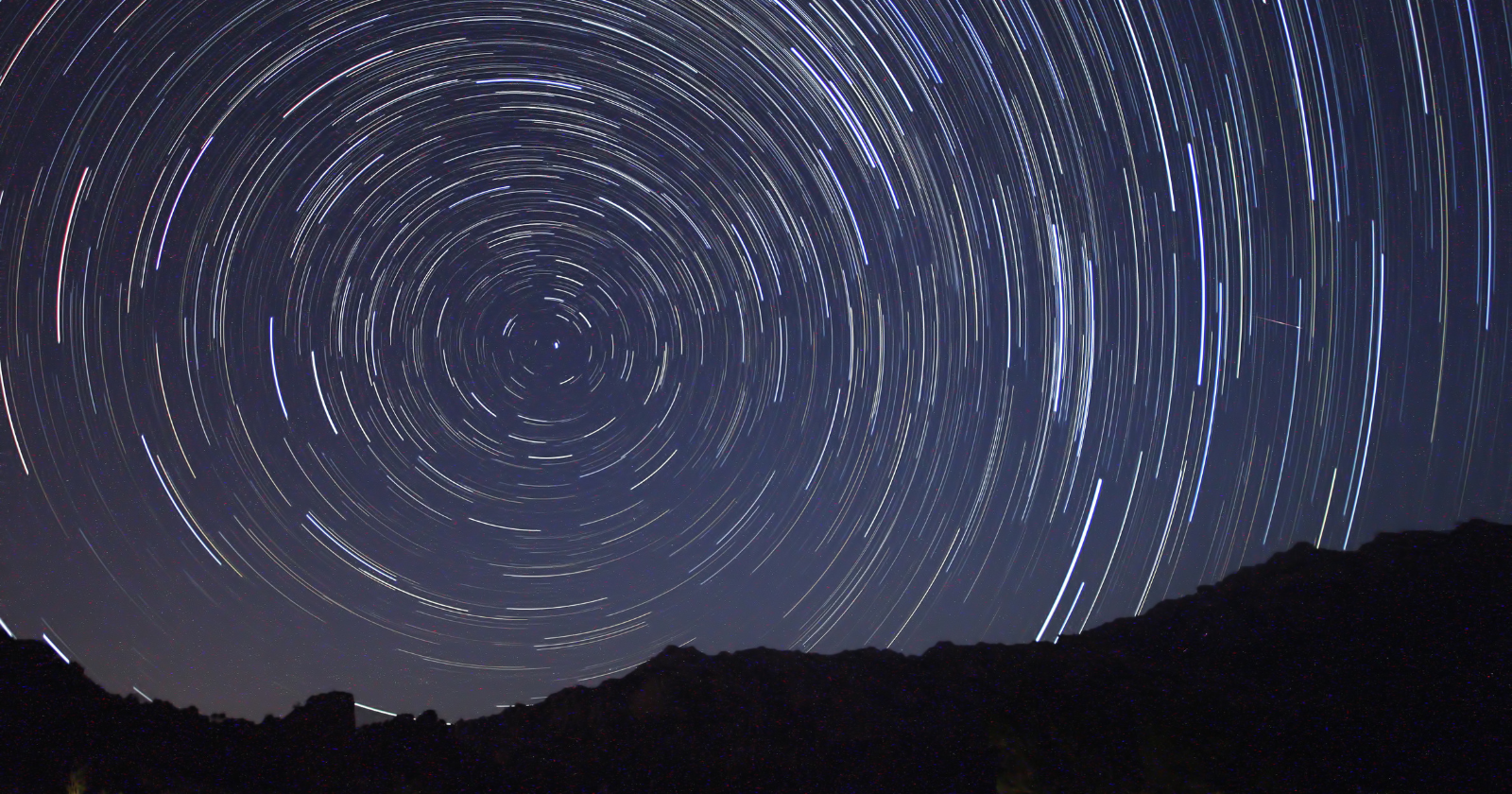
On the night of 9 October 1946, observers across parts of Europe and North America watched the sky above the constellation Draco erupt. The Draconid meteor shower, an otherwise unremarkable early-October display that in most years produces a handful of meteors per hour, reached a zenithal hourly rate estimated at somewhere between 2,000 and 10,000, depending on the source. It was the second of the shower’s two great storms in the twentieth century, after an even larger outburst in 1933 that estimates put anywhere from roughly 5,000 to 30,000 per hour.
What actually happened in 1946
The Draconids, sometimes still called the Giacobinids, are debris shed by 21P/Giacobini-Zinner as it loops through the inner solar system every 6.5 years. Most years, Earth passes through a thin, well-dispersed part of that debris trail and the shower is barely noticeable. In 1933 and again in 1946, Earth instead passed through a dense filament of dust shed by the comet on a relatively recent orbit, and the result was a true meteor storm, thousands of meteors an hour, dense enough that some observers described the sky as full of streaks in every direction. Radar observations in Britain that October recorded rates climbing from roughly ten meteors a minute to around 300 a minute over several hours, a measurement consistent with the visual estimate of thousands per hour.
Those two storms established the Draconids’ reputation as a shower capable of producing, in rare years, something far beyond its usual modest output. That reputation has been reinforced since: outbursts of several hundred to about a thousand meteors an hour occurred in 1998, 2011 and 2012, each tied to Earth crossing a debris filament laid down by the comet on a different past orbit, 1900, 1959 and others, depending on the year.
Correcting the comet’s 2026 position
The comet itself is genuinely back in Earth’s part of the solar system this year, and that detail is worth getting right rather than overstating. 21P/Giacobini-Zinner most recently reached perihelion, its closest point to the sun, on 25 March 2025. That is not the same as a close approach to Earth: the comet’s closest point to our planet during that pass, on 21 March 2025, was an unfavourable 2.0 astronomical units, on the opposite side of the sun, and it brightened only to around magnitude 11, too faint for casual observation.
The comet’s closest approach to Earth since 1946 was not this year. It was 11 September 2018, when 21P passed approximately 0.392 AU from Earth, about 58.3 million kilometres, the nearest it had come in 72 years, according to Sky and Telescope’s coverage at the time. Notably, that close pass did not produce a major storm: the Draconid outburst recorded in October 2018 reached a zenithal hourly rate of around 150, a modest enhancement over background rates, not a repeat of 1933 or 1946. Proximity of the comet and the size of the resulting meteor storm are related but not interchangeable; the storm depends on which specific debris filament, laid down decades or centuries earlier, Earth happens to cross.
By the middle of 2026, live tracking from TheSkyLive puts the comet at just over 5 astronomical units from Earth, well beyond Mars’s orbit, as it swings back out toward its aphelion near Jupiter’s distance before returning again around 2031. EarthSky’s own account of the 2026 shower describes the comet as “relatively close to us in 2026” compared with the more distant stretches of its orbit, a fair characterisation of where it sits within its own 6.5-year cycle, but it is not closer than it was in 2018, and this is not the closest the comet has come to Earth since 1946.
What to expect from this year’s shower
No Draconid outburst is predicted for 2026. Forecasters, including the American Meteor Society’s published prediction cited by EarthSky, expect a typical year: something in the order of five to ten meteors an hour under a dark sky, well short of storm territory. The peak is expected around 1 UTC on 9 October 2026, with the best viewing window running from nightfall on 8 October through the early hours of 9 October, since the Draconids are unusual among showers in producing more meteors in the evening than after midnight. A thin waning crescent moon that morning should not interfere much with viewing.
The absence of a predicted outburst this year does not rule one out. The 2011 and 2012 outbursts were both anticipated in advance by researchers modelling the comet’s debris trails, but unpredicted enhancements have also occurred, and meteor shower forecasting, while considerably more sophisticated than it was in 1946, still carries real uncertainty about the fine structure of a debris stream built up over more than a century of the comet’s passages.
What not to take from this
It is tempting to read “the comet is close this year” as a promise of spectacle, and that temptation is exactly what the 1946 and 2018 comparison should discourage. The comet’s physical distance from Earth in a given year is only loosely connected to whether that year’s shower will be dramatic. What matters more is the specific trail of debris Earth’s orbit intersects, laid down by the comet on one of its many prior passes, and that structure is something researchers can model but not fully predict.
The 1946 storm remains one of the largest meteor displays of the twentieth century. This October’s Draconids, on the evidence available, will not be that. They may still be worth a look, on a clear night, away from city light, with no particular expectation attached.
